Soft and hard hrm Answer Needed
Your question:
What are the key components of a well-structured case study assignment, and how can students effectively approach and complete such assignments?
Soft and hard hrm Answer and Explanation
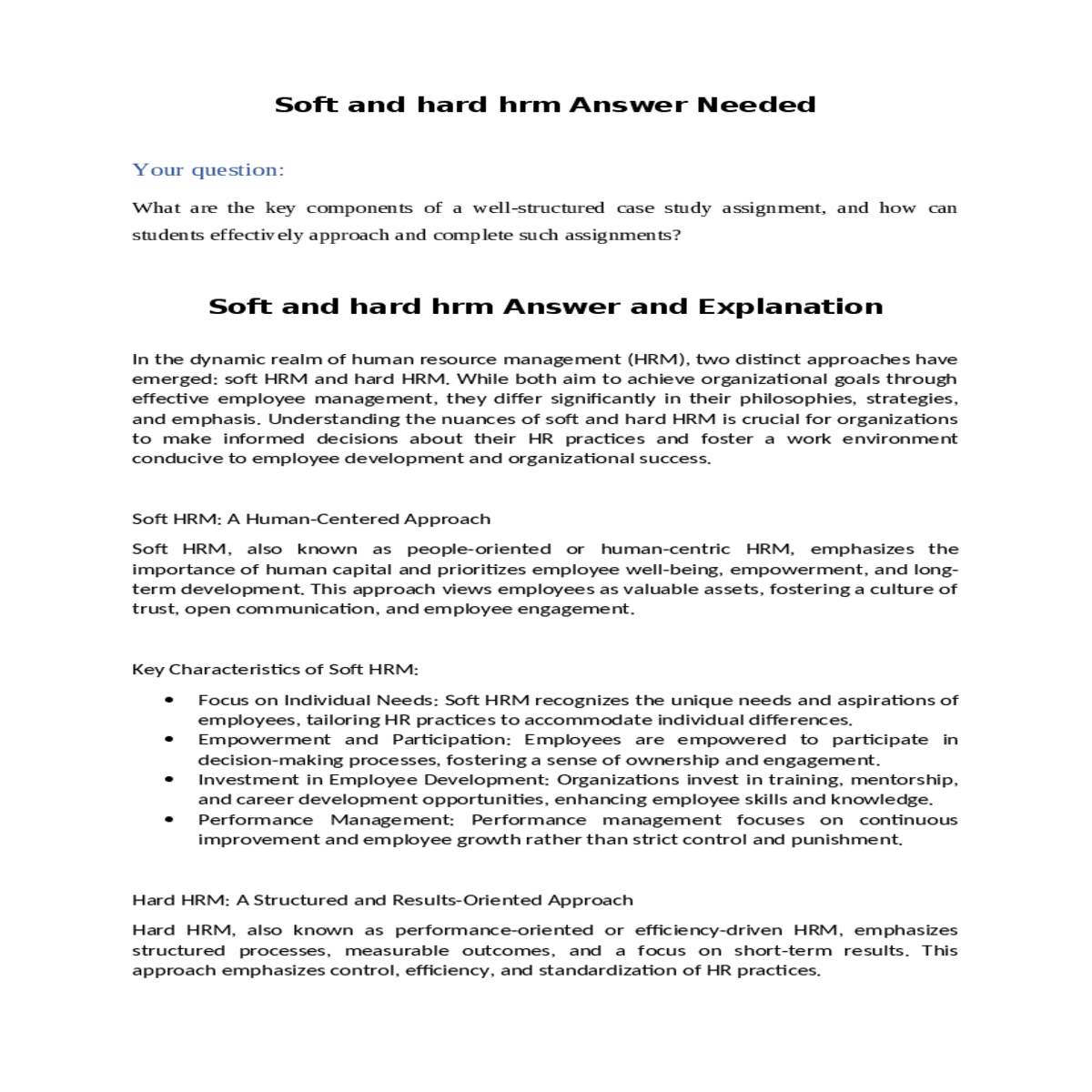
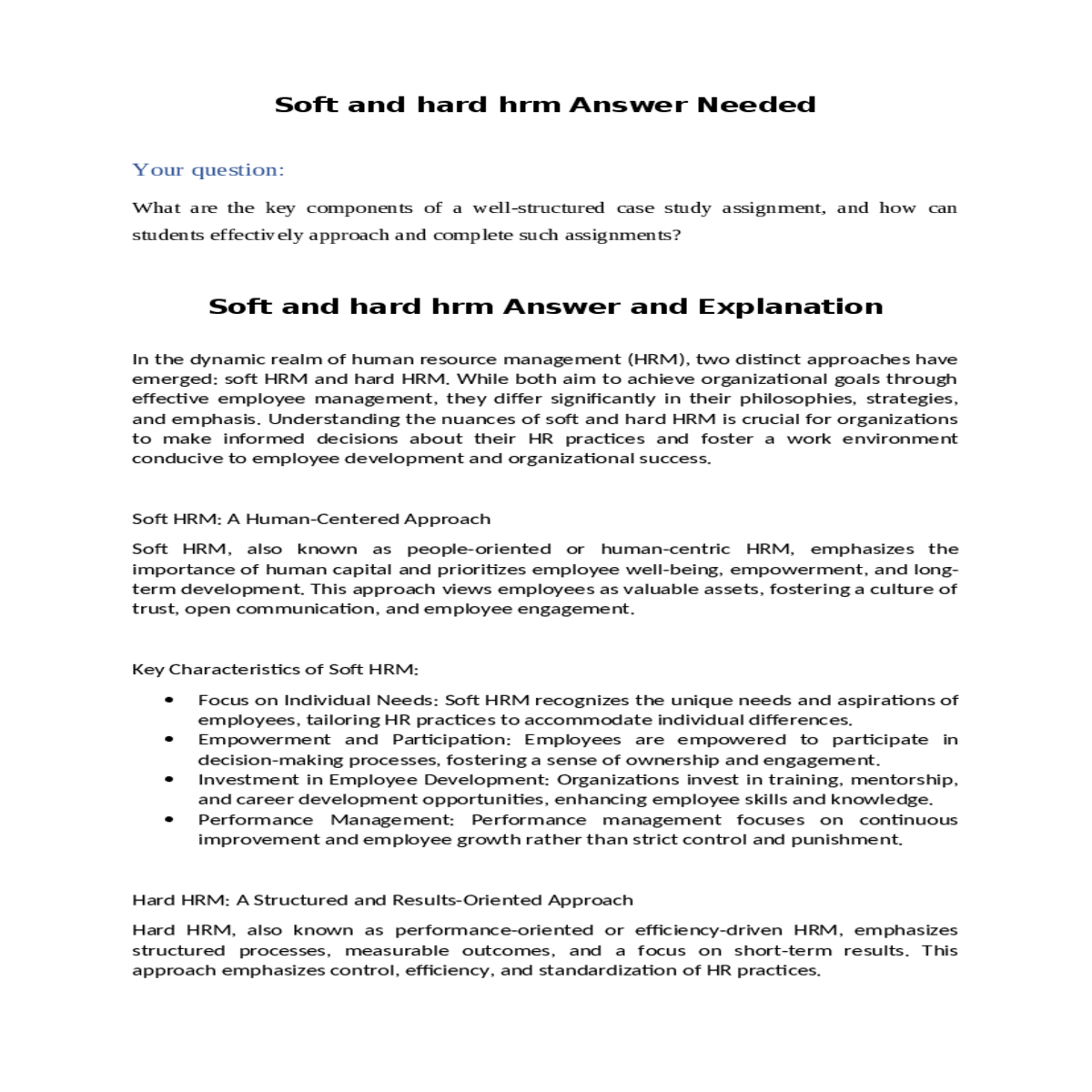
Focus on Individual Needs: Soft HRM recognizes the unique needs and aspirations of employees, tailoring HR practices to accommodate individual differences.
Empowerment and Participation: Employees are empowered to participate in decision-making processes, fostering a sense of ownership and engagement.
Key Characteristics of Hard HRM:
Focus on Job Roles and Tasks: Hard HRM views employees as occupants of specific job roles, emphasizing task performance and adherence to rules.
The table below summarizes the key differences between soft and hard HRM:
Feature Soft HRM Hard HRM
Decision-Making Participatory Centralized
Performance Management Continuous improvement, growth Measurable outcomes, control
Conclusion
Soft HRM and hard HRM represent two distinct perspectives on employee management, each with its own strengths and limitations. Understanding the nuances of these approaches and adopting a balanced strategy can help organizations maximize employee potential, achieve organizational goals, and create a sustainable and thriving work environment.