The exact increase boiling point depends the solute nature
Solved Step by Step With Explanation- Boiling Point of Solution
Questions
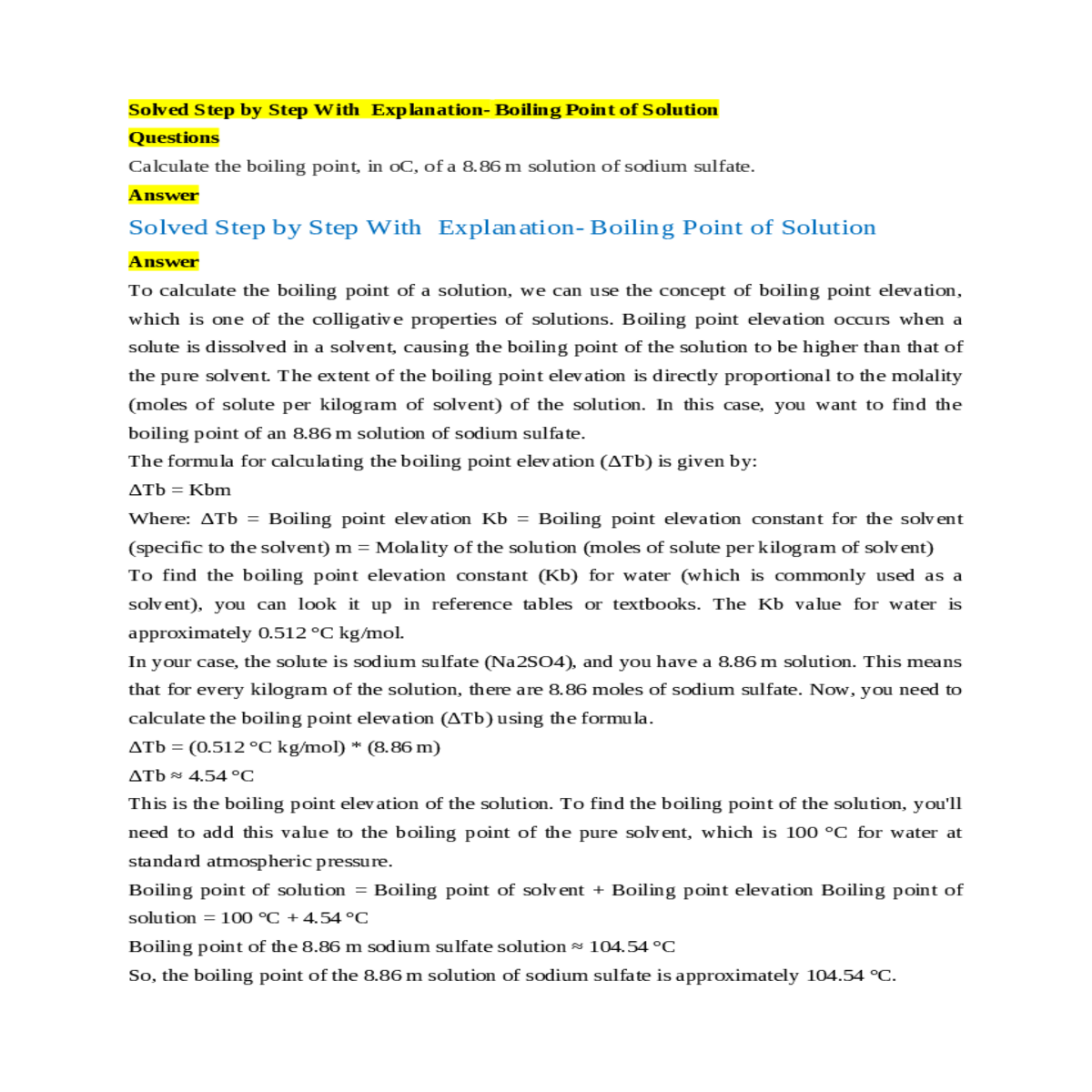
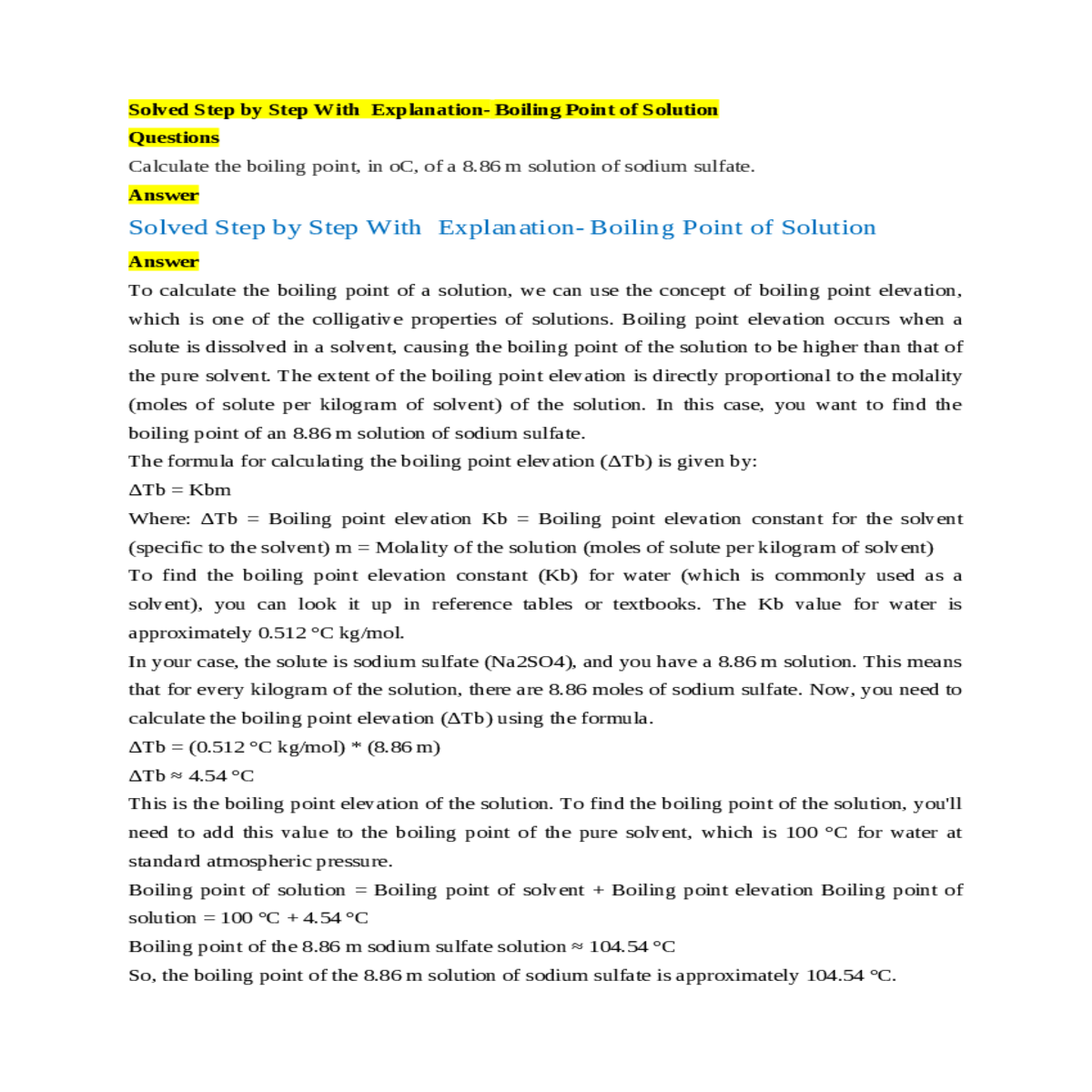
To calculate the boiling point of a solution, we can use the concept of boiling point elevation, which is one of the colligative properties of solutions. Boiling point elevation occurs when a solute is dissolved in a solvent, causing the boiling point of the solution to be higher than that of the pure solvent. The extent of the boiling point elevation is directly proportional to the molality (moles of solute per kilogram of solvent) of the solution. In this case, you want to find the boiling point of an 8.86 m solution of sodium sulfate.
The formula for calculating the boiling point elevation (ΔTb) is given by:
ΔTb = (0.512 °C kg/mol) * (8.86 m)
ΔTb ≈ 4.54 °C
Explanation:
The boiling point of a liquid is the temperature at which its vapor pressure is equal to the atmospheric pressure. When a solute is added to a solvent, it disrupts the vaporization of the solvent molecules, making it harder for them to escape into the vapor phase. As a result, the boiling point of the solution is higher than that of the pure solvent. This phenomenon is known as boiling point elevation, one of the colligative properties of solutions.
The boiling point elevation is a consequence of the solute's presence, which disrupts the vaporization process, leading to a higher boiling point for the solution compared to the pure solvent. The exact increase in boiling point depends on the solute's nature, concentration, and the properties of the solvent. In this case, the boiling point of the solution is approximately 104.54 °C due to the presence of sodium sulfate in the water.