The double-effect absorption unit shown fig
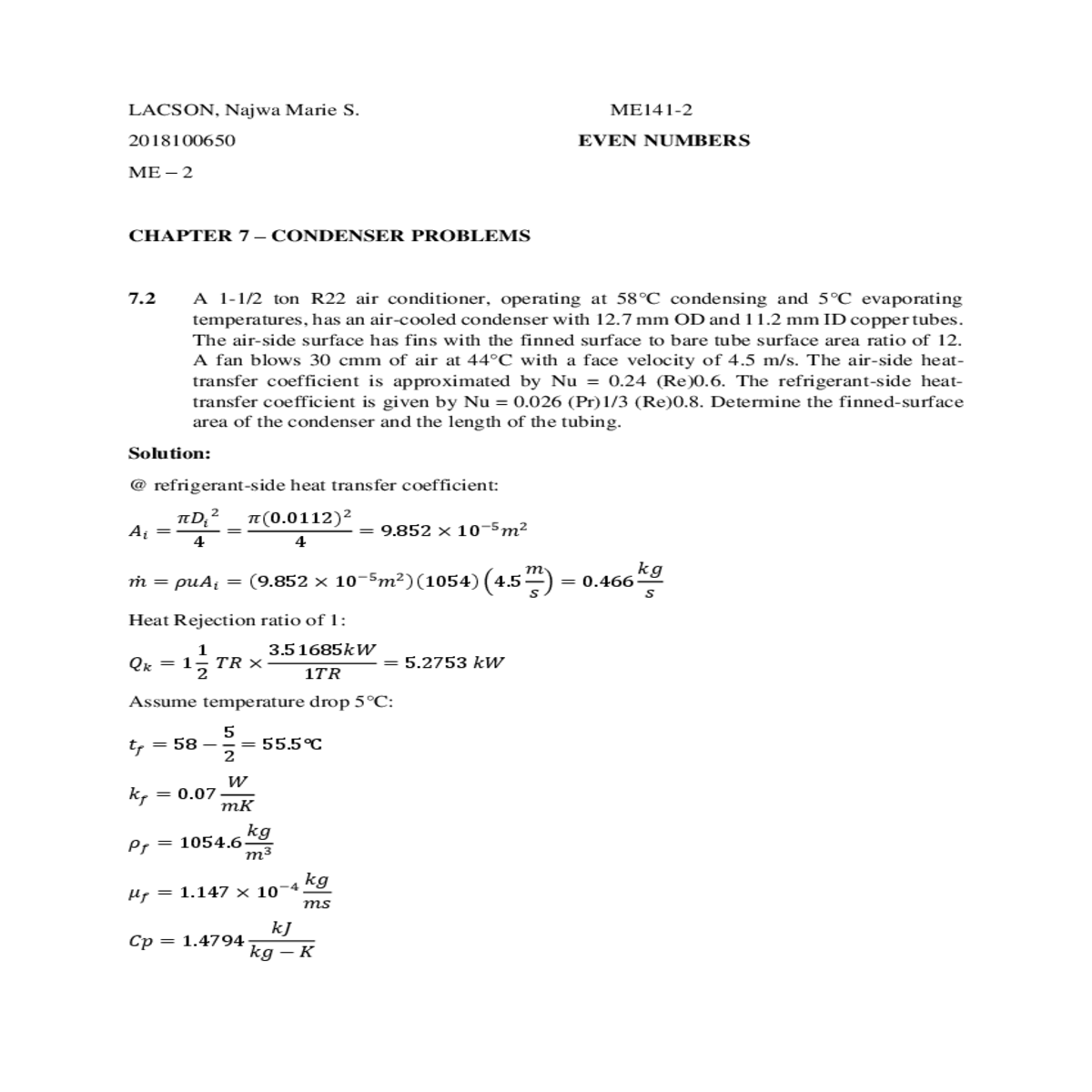
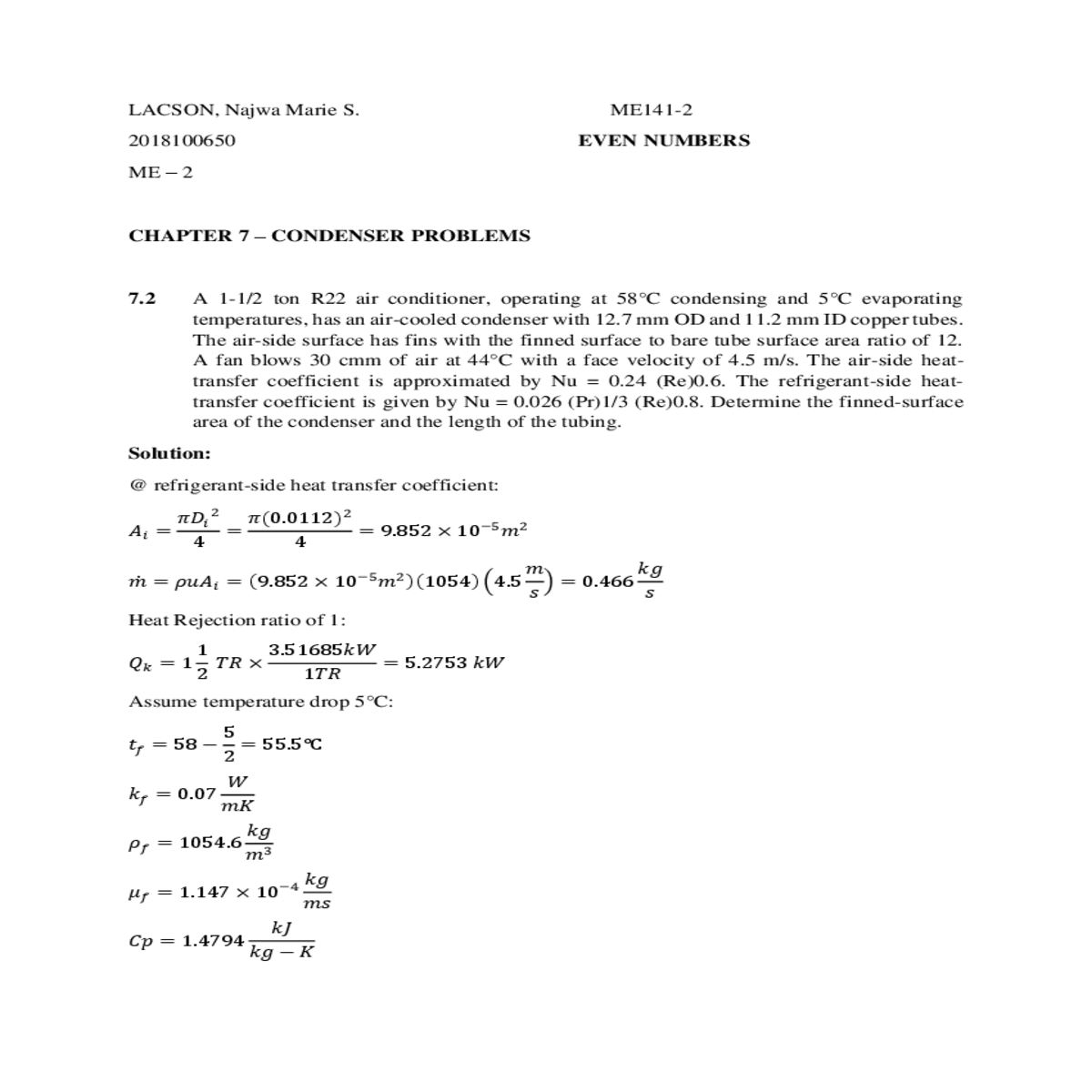
LACSON, Najwa Marie S. ME141-2 2018100650 EVEN NUMBERS ME – 2
CHAPTER 7 – CONDENSER PROBLEMS
| 7.2 |
|---|
| 𝑘 | |||
|---|---|---|---|
Given:
CHAPTER 9 – EVAPORATOR PROBLEMS
| 9.2 |
|---|
| ℎ0 = 215.3882 | |||||
|---|---|---|---|---|---|
The refrigerant is in contact with the whole evaporator surface as it is drained, ensuring that the coefficient of refrigerant side heat transfer would be high, and a pump must be required to raise even further. Another benefit of flooded evaporators is that they minimize the possible issue of inadequate distribution of refrigerant in the evaporator. Forced-flow evaporators use the driving force of a pump or ejector while thermosiphon systems are powered by the difference in density between liquid and gaseous refrigerant. Therefore, the roughening of the tubes affects the heat transfer of the whole system thus affecting the size of the flooded evaporator.
CHAPTER 17 – ABSORPTION REFRIGERATION PROBLEMS
and of the refrigerant? Ans. Refrigerant flow rate= 0.093 kg/s
Solution:
| 17-4 |
|---|
Percent Lithium Bromide = 66.4%
@ x = 66.4%, 95
Solution:
17-8 The operating cost of an absorption system is to be compared with an electric-driven vapor compression unit. The cost of natural gas on a heating value basis is $4.20 per gigajoule; when used as fuel in a boiler it has a combustion efficiency of 75 percent. An absorption unit using steam from this boiler has a COP abs of 0.73. If a vapor-compression unit is selected, the COP would be 3.4, and the electric-motor efficiency is 85 percent. At what cost of electricity are the operating costs equal? Ans. 8.0 cents/kWh