The complete running map can obtained replica-ting the solved pattern
470
Two conflicts(conflict between andfor the section of track
for a section track there exists one conflict (conflict be-
tween and another train for a section track or vice versa;
all conflicts between and any other occur in the same
section of track that all conflicts between and respecti-
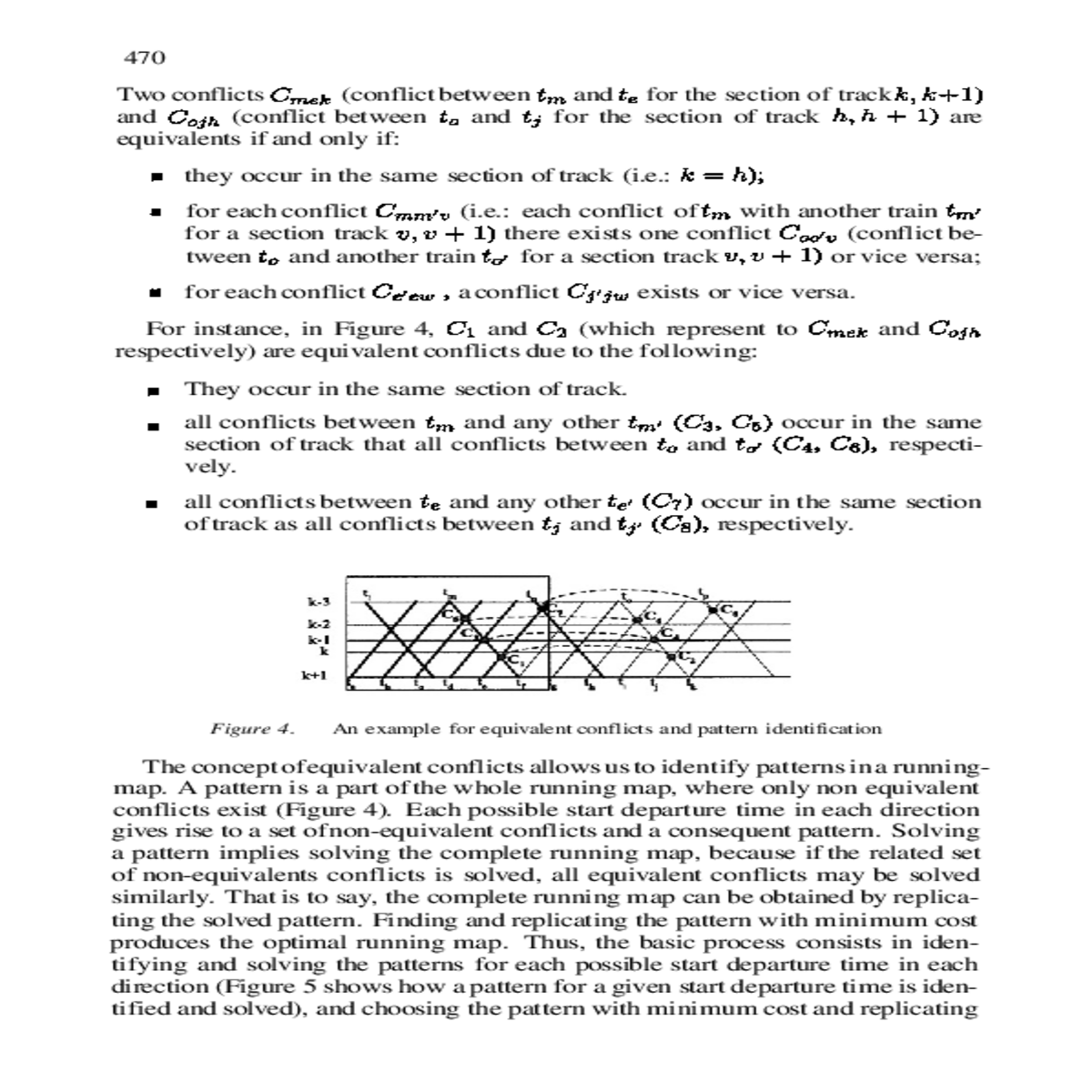
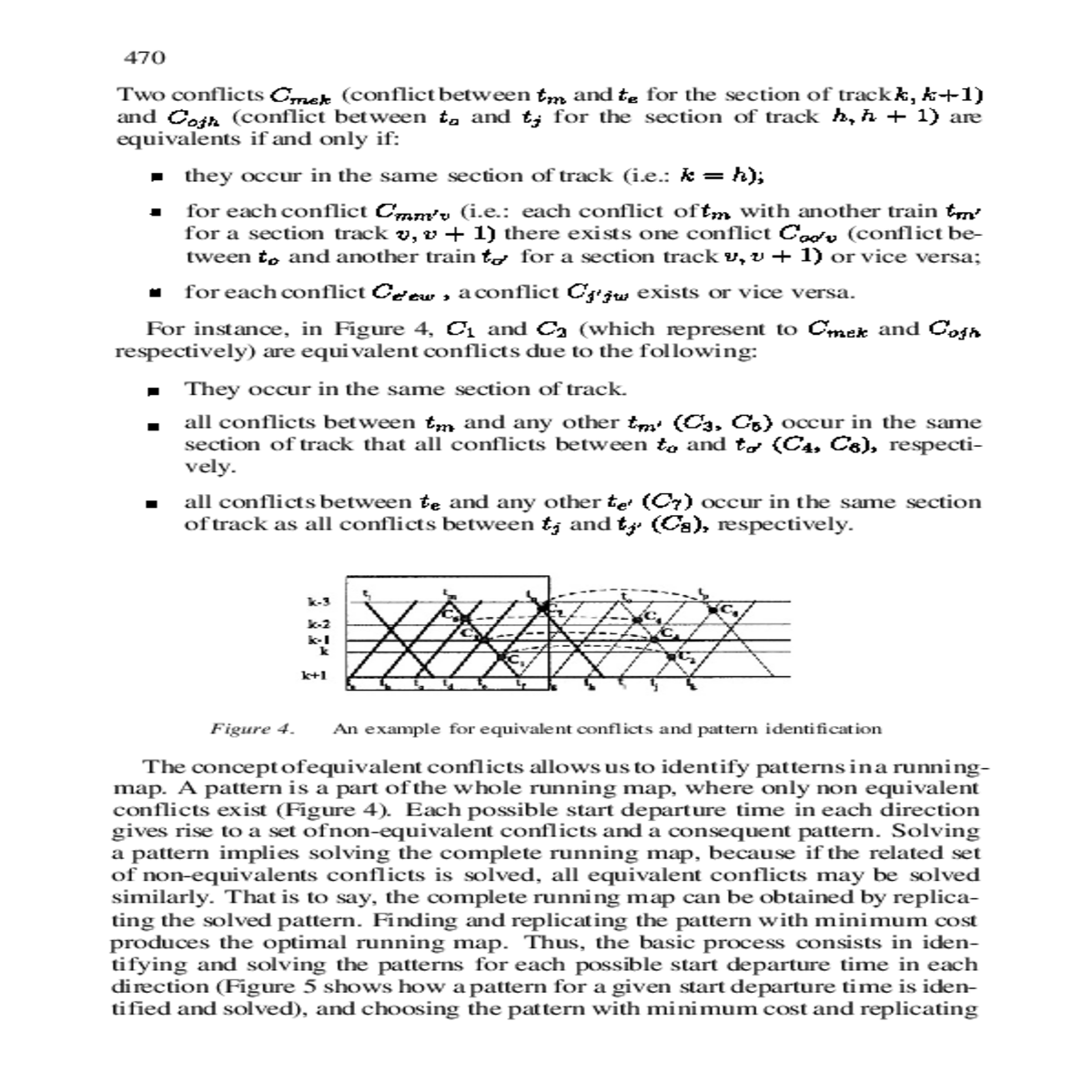
Figure 4. An example for equivalent conflicts and pattern identification
The concept of equivalent conflicts allows us to identify patterns in a running-
of non-equivalents conflicts is solved, all equivalent conflicts may be solved
similarly. That is to say, the complete running map can be obtained by replica-
tified and solved), and choosing the pattern with minimum cost and replicating
A Decision Support System (DSS for the Railway Scheduling Problem) 471
The pattern to be solved and replicated depends on the set of non-equivalent conflicts which in turn depends on the initial departure of the trains. The al-gorithm to identify and to solve patterns has three nested loops (Figure 6): Loop 1 explores departure times for the first trains in each direction, Loop 2 explores assignment of priorities for trains and Loop 3 identifies the set of non-equivalent conflicts. Constraints are generated only for the subset S of trains