
Such emotional and social competence inventory esci
BSB50420 Diploma of Leadership and Management
BSBPEF502 Develop and Use Emotional Intelligence
Description
In this task, you will be analysing a given case study based on application of emotional intelligence in a workplace. This case study, based on an actual supplier of McDonald’s, provides the real-life context and insight into the influence of EI on organisational performance. A brief case excerpt is given below. The full case document is provided as a separate file. Ensure that you receive a copy before undertaking this task.
Refer to the full cast document for more information and organisational data.
Analysis
plans.
To become a stronger learning organization.
Emotional intelligence was significantly correlated to increased organizational engagement,
with 76% of the variation in engagement predicted by the manager’s emotional intelligence.
3) Analyse and describe how emotional intelligence was used for employee engagement and the
results it produced.
It appears that Emotional Intelligence, as measured by the Six Seconds Emotional Intelligence Assessment, is a significant (perhaps even essential) capacity not only for individuals but also for entire organizations.
5) Based on your analysis, would you consider EI to be critical to organisational dynamics (e.g. team
The answers must represent an analysis of the case in your own words – and not just rehashing of the case
components/texts, or company information. The answers must also reflect your understanding of the case,
The three stages of engaging, activating, and reflecting are presented in a cycle. A multi-year project goes through this cycle many times, continually creating awareness and commitment.
Assessment Task 2
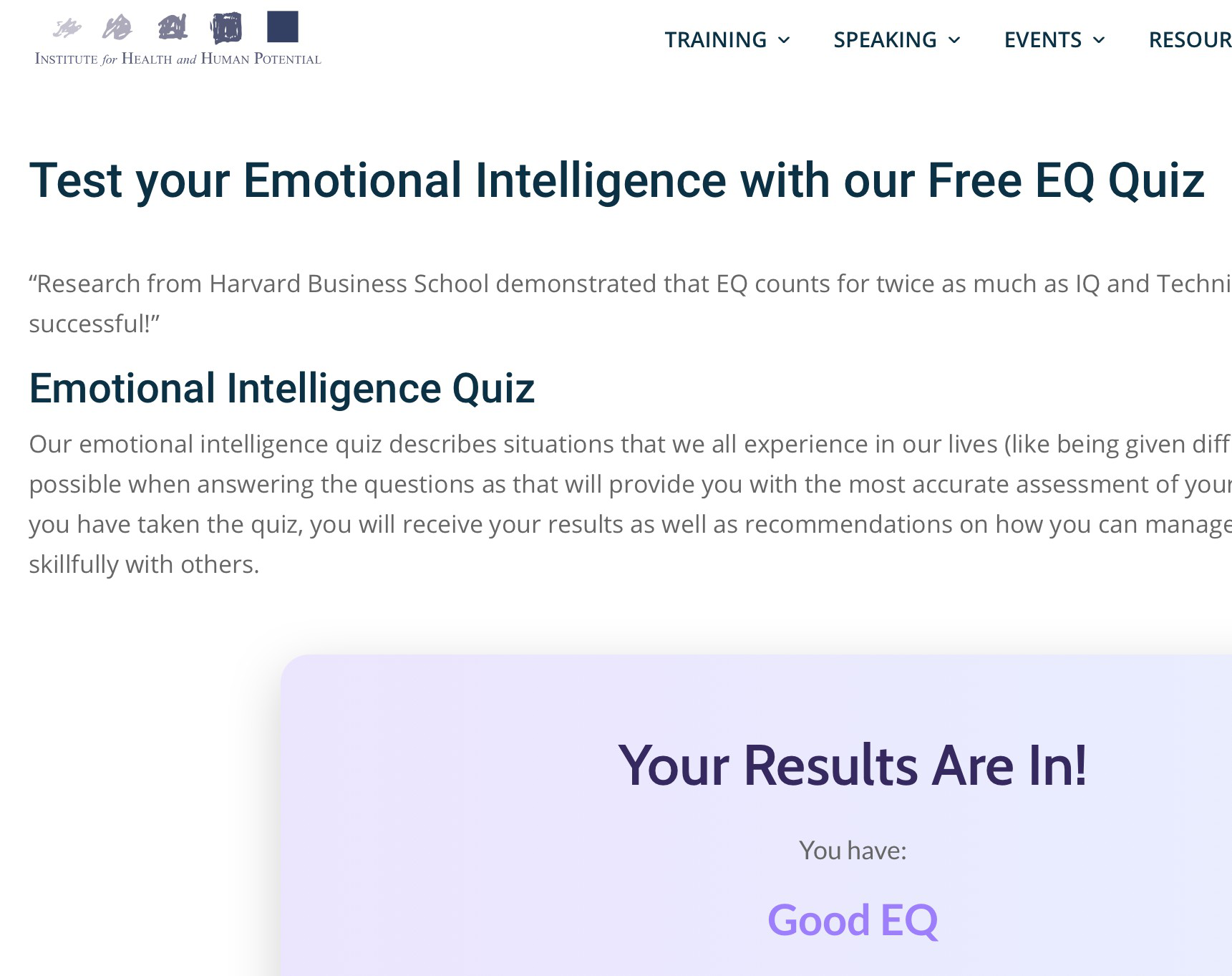
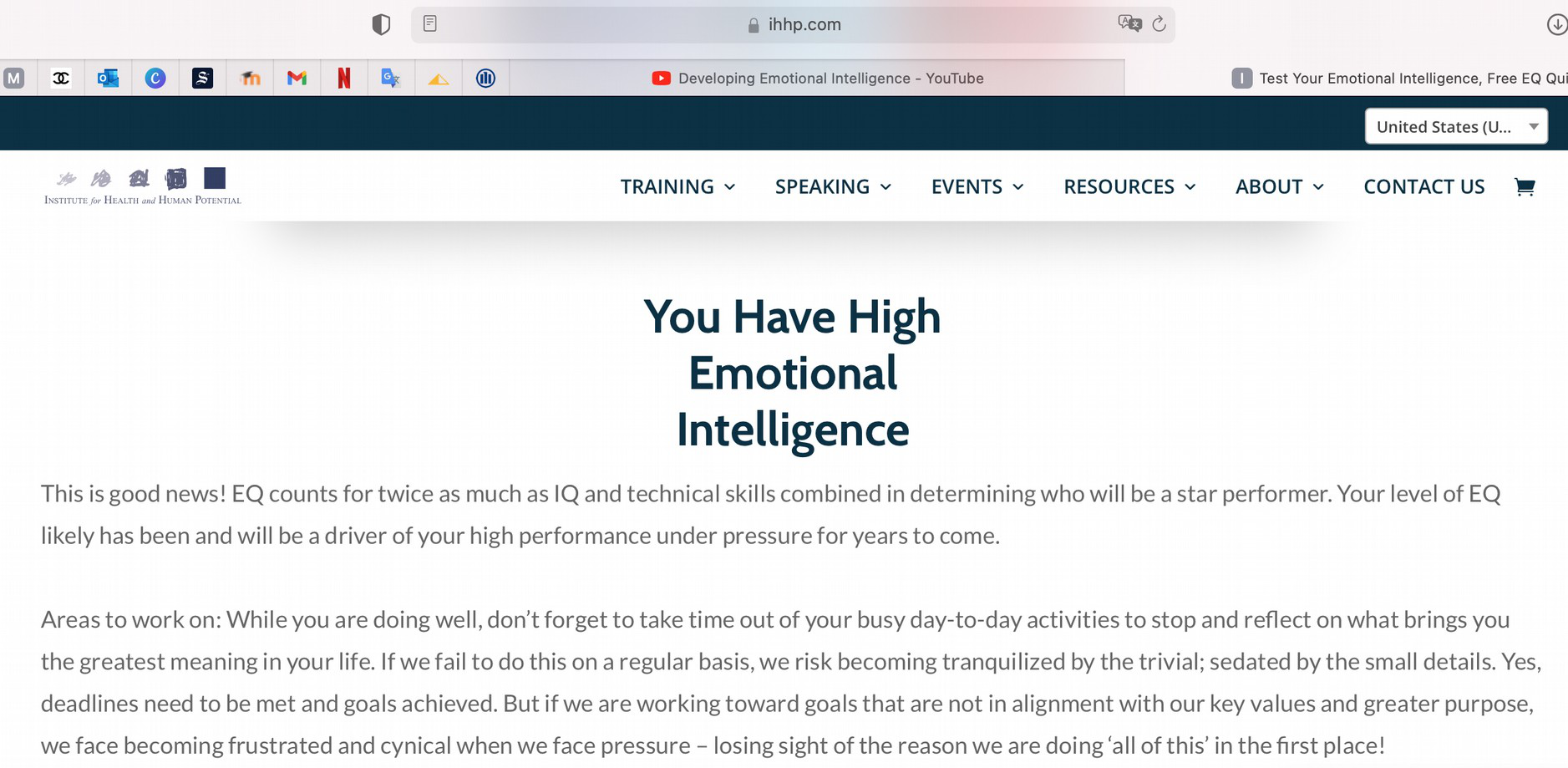
Conduct an EI/EQ Test and Self-Analysis
The questions used in this test are based on Goleman's four quadrant Emotional Intelligence Competency Model. The test is a forced-choice psychological test which requires you to choose one statement in each pair of statements that describes you best. For each pair of statements, select the statement that best applies to you. Do not over-analyse the questions or try to think of "exceptions to the rule." Be spontaneous and choose the statement that comes closest to the way you are.
At the end of the test, click on the Score Test button, and wait for the computer to generate an EI profile of your scores. If you have answered honestly and accurately, your scores will reflect your capability level within each of the EI quadrants. Print the profile for your record and submission. Also, save a PDF copy for your reference. You will need your profile and work completed in this task in Assessment Task 3.
3) Keeping the score/profile in context, provide a detailed example of an emotional/stressful situation in a workplace that highlights your personal stressors and emotional responses based on the above two evaluations;
4) Summarise your emotional strengths and weaknesses in the context of the above analyses
| 1) |
|---|
I am Spanish of Ukrainian origin, I have been living in Australia since January 2020 where I am currently working and studying.
I have a degree in international trade but I have never practiced, currently I am working in the luxury retail fashion sector and it is what I am passionate about, therefore I would like to continue working on it.
Social conscience: I consider myself a very outgoing and very social person, I always like to be surrounded by people, go to work events and participate in different activities, which I think makes me a mentor for my colleagues in my job.
Assessment Task 3
Team EI: Strategy for Team Performance
This is a team-based task to be undertaken by at least four students (or more as needed per the class).
Context and Role Play
Some of the team members will need to assume the roles as required in the scenarios. It is, therefore, important that all the team members are present in each of the team sessions until completion.
Scenarios and Task
Likely Emotional Factors (but not limited to): Imposed decision, sudden change, demonstration of overt political correctness by the management, intrusion, loss of independence, untrustworthiness, insecurity, unnecessary management action, no recognition of team performance, helplessness, bureaucracy, loss of team dynamics, unwanted member, frustration
2. You project team is a multi-cultural team and there has not been any major issue between the team members in the past meetings (in terms of performance). However, just yesterday, the Manager (management representative) informed the team that a complaint was made to the management by one of the members of the team about team behaviour and perceived discrimination based on accent and language. The complaint explained that some of the members were loud and did not respect other member’s opinions, in particular from members of different culture – often joking about accents and mimicking voices. The management has a robust policy on equity, inclusion, and non-discrimination. The management is not happy about the complaint and has asked the team to meet and discuss the problem, with a report to the Manager.
While the team will discuss the given issue/problem, each team member will be conscious of the components and principles of emotional intelligence, on which most of the observations and reports will be made. Individual members must demonstrate the ability to recognise, support, and use emotional intelligence in a team environment. This will be demonstrated through individual notes and post-meeting reports.
Conduct team meetings to discuss the given situation/scenario, and meet the following requirements;
5) Audit of emotional intelligence in the team (review of each other’s strengths and weaknesses based on individual profiles (from Assessment Task 2) – records to be kept for submission
6) Robust discussion and participation by all the members
based on effective EI management (send a copy to all the team members by email)
10) Post-meeting individual analysis and report on team performance and emotional intelligence
Submission Guidelines:
1) Team EI audit/evaluation report/chart/table (x1 - team)2) Copies of meeting agendas (x2)
named) – each member. Student should upload completed task on the MEGA Student Portal as per
trainer instructions.
Kevin: He starts the conversation by asking Era what tools she should bring.
Era: she responds by imitating Michael's heavy English accent and starts to tease. Alejandro: He is in front of them listening but not saying anything.
It was: Ok, let's start doing this job since we can't spend any more time with Spanish accent. Ok Kevin, we are hungry and because your electrical knowledge in English is poor, it may be more useful to prepare our lunch.
Kevin made a list of the items the team wanted for lunch and set about making it. When he returned, he showed them the receipt and asked them to return the money, but they replied, "Gifts are not to be paid at all."
Nobody gives any money back and finished their lunch and they sent him to clean the rubbish around the working site instead letting him to work.
Kevin got tired about that treatment and decided to go to the Human Resources office to talk about the situation.
The next three weeks Phil (Canadian) was the new member of that electrical team and was asked to document every time (names included) he felt intimidated by members of the team or they made fun of his accent or background.
The results were alarming as Normal found that Phil was harassed by the whole team since the first day during the whole shift. Even when he had more years of experience that all the members of the team, he was always sent to buy their lunch and not being paid for fuel and the food. He was not able for perform any electrical job as they said the Canadian electrical system is different than Australian and they do not want stupid foreigners making mistakes and causing delays. It is important to mention that Phil was born in Canada but raised in Australia and worked for more than twenty different electrical projects in aircrafts, ferries,
Andriy: Leader Management
Era Nayeem: Management Representative
Alejandro: Labourer
Kevin: LabourerThe team does not think that the complaint is true and there is a feeling that either the complaint was a misunderstanding of light-hearted team jests or a malicious complaint both of which will likely impact team performance.
Workers are protected by this policy whether they feel bullied by a supervisor, another worker, client, contractor, or member of the public. TagTeam will treat reports of workplace bullying seriously. We will respond promptly, impartially, and confidentially.
This policy will be made available to all workers including contractors. New workers will be given a copy of this policy at their induction. Managers and supervisors will remind workers of the policy from time to time. Expected workplace behaviours under work health and safety laws, workers and other people at our workplace must
What is workplace bullying? Workplace bullying is repeated, and unreasonable behaviour directed towards a worker or a group of workers that creates a risk to health and safety. Repeated behaviour refers to the persistent nature of the
behaviour and can refer to a range of behaviours over time. Unreasonable behaviour means behaviour that a reasonable person, having considered the circumstances, would see as unreasonable, including behaviour that is victimising, humiliating, intimidating, or threatening.What is not workplace bullying? Reasonable management action taken by managers or supervisors to direct and control the way work is carried out is not workplace bullying if the action is carried out in a lawful and reasonable way, taking the particular circumstances into account.
• There will be no victimisation of the person making the report or helping to resolve it. Complaints made maliciously or in bad faith may result in disciplinary action. Consequences of breaching this policy Appropriate disciplinary action may be taken against a person who is found to have breached this policy.
Assessment Task 4 Interaction: Strategies for Workplace EI
Accordingly, undertake the following tasks;
a) Describe the concept of Emotional Intelligence and its key principles:
4. Self-awareness: If you are self-aware, you always know how you feel, and you know how your emotions and your actions can affect the people around you. Being self-aware whosition also means having a clear picture of your , and it means behaving with .
5. Self-regulation: Leaders who regulate themselves effectively rarely verbally attack others, make rushed or emotional decisions, stereotype people, or compromise their values. Self-regulation is all about staying in control.
|
|---|
|
|
|---|
Cici was no ability to recognize the pressure she was putting on Daisy when explaining all the duties she had to reach. When she realized it, she did not try to apologize. Daisy was no ability to interact with Cici and let her know how uncomfortable and incapable she was feeling after listening to all the duties and being aware of the responsibilities.
• Relationship management: It aims to create a partnership between an organization and its patrons, instead of viewing the relationship as merely
Unfortunately, Daisy could not control herself when felt overwhelmed by all the duties and just run away.
d) Strategies and methods to develop and support EI in a multi-cultural workforce (organisation
Formal training in Cultural Intelligence supports on-the-job learning by providing a solid foundation of knowledge, skills, and abilities required to learn from one’s intercultural activities. Without the right foundation, employees thrust into a novel cultural setting with a “sink or swim” approach are likely to suffer culture shock.
Culture shock has negative implications for job performance, attitudes, and physical and mental health.
If an employee contributes to any of the above in a meeting, she is showing low emotional intelligence. If she allows others to express her opinion, she listens carefully and refrains from interrupting others, and keeps everyone on task smoothly but effectively, she probably has a high EI / EQ level.
3. People express themselves openly. A person who is comfortable talking about things that are important, and is just as comfortable listening to others talk about their own opinions, is showing high EI / EQ in the workplace. She is probably also adept at expressing her own emotions in an appropriate way and accepting others who express their own emotions.
Managers and executives who refuse to allow their employees flexibility and stick strictly to the way things have always been done (when there is no need to do so) are showing signs of low emotional intelligence.
6. People have the freedom to be creative. Similarly, workplaces that provide their employees the opportunity to be creative and innovative have a high level of IE / EQ. Giving people the opportunity to practice their creativity and think outside the box is not only a welcome gesture for employees, but is also a smart move for the workplace.
Emotional intelligence helps with stress management. This makes individuals less likely to make rash decisions, snap judgments, and to lash out with throwaway remarks. The ability to work calmly under pressure and to keep disruptive emotions and impulses in check helps avoid potential damage to workplace relationships.
Bellow some aspects of EQ that will help to improve relationships in the workplace:
2. Better conflict management skills: If you can effectively negotiate and resolver
disagreements, your behaviour is less likely to lead to damaging and lasting
first step in developing the ability to send clear, credible, and convincing messages to
other people. In turn, it will help with setting expectations, giving, and receiving