Shock produce cracking sound burst called sonic boom
|
|---|
PERIODIC MOTION
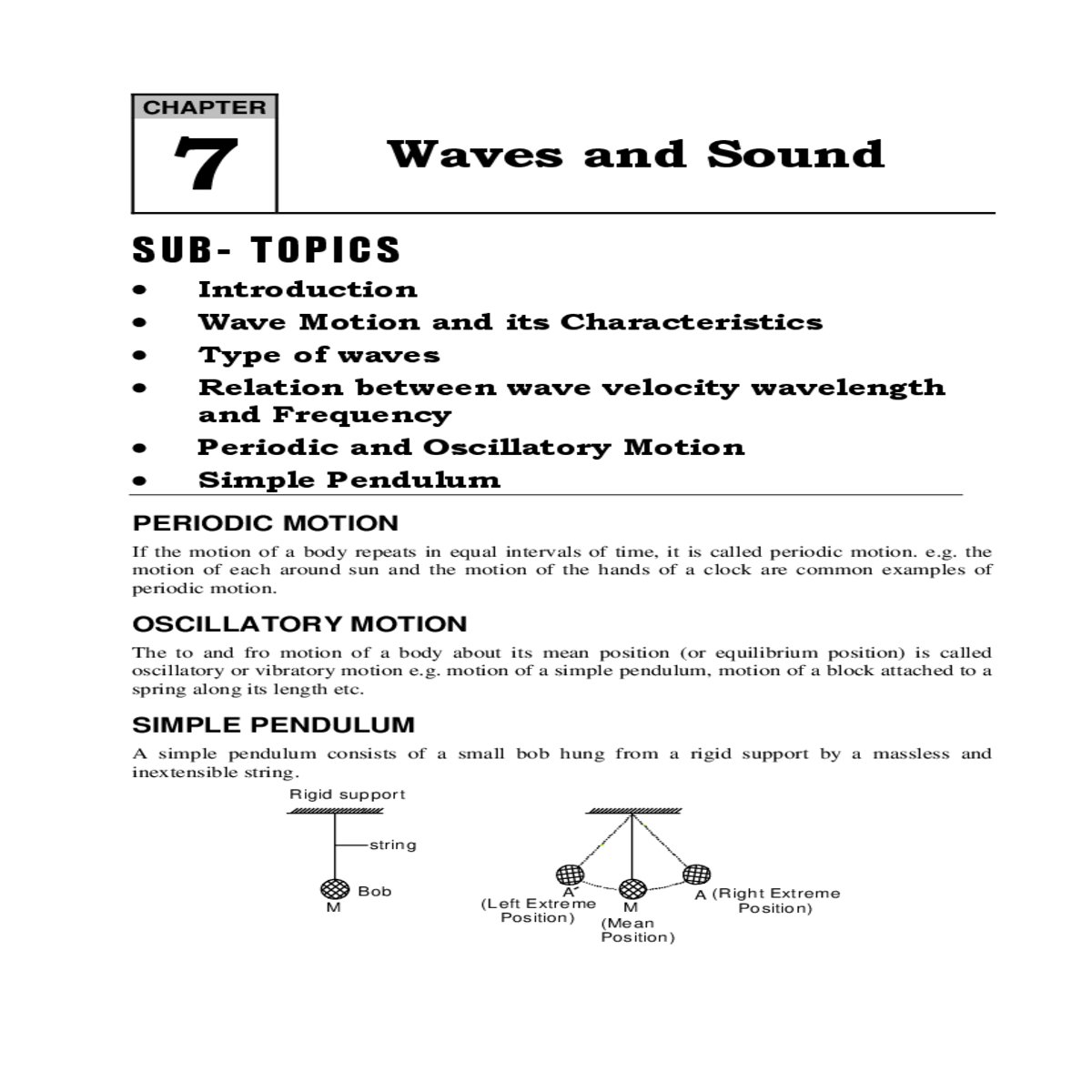
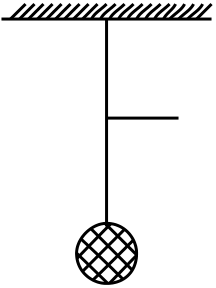
A simple pendulum consists of a small bob hung from a rigid support by a massless and inextensible string.
Rigid support
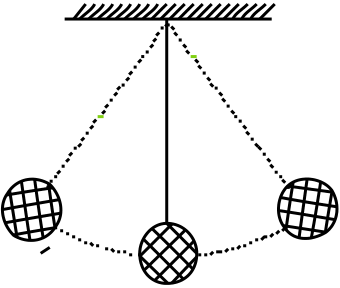
When the bob is in equilibrium position the string is vertical. If the bob is pulled aside and released, it moves to and fro about its original position as shown in fig. Such a type of motion is called oscillatory or vibratory motion.
SI unit of ν is Hertz or sec–1.
➢In this case, when the string is vertical, the position of bob is called mean position or equilibrium position.
Here T = time period of simple pendulum
π = 3.14 (constant)
(ii) |
|
||
|---|---|---|---|
| T | i.e. time period of simple pendulum is inversely proportional to the square | ||
|
|---|
| (i) (ii) |
|---|
Hence SHM is a special type of oscillations.
Displacement time graph of SHM
Here A = amplitude of particle.
WAVE MOTION
• When we speak, our lips and tongue create disturbance in air close to the lips. This
disturbance transferred to another person’s ear by the particles of air, hence he can her what we are speaking.
The waves which require medium for their propagation are called mechanical waves or elastic waves. For example. Sound waves, waves in stretched string or water are called mechanical waves.
|
|---|
Electromagnetic Waves / Radio Waves / Light Waves
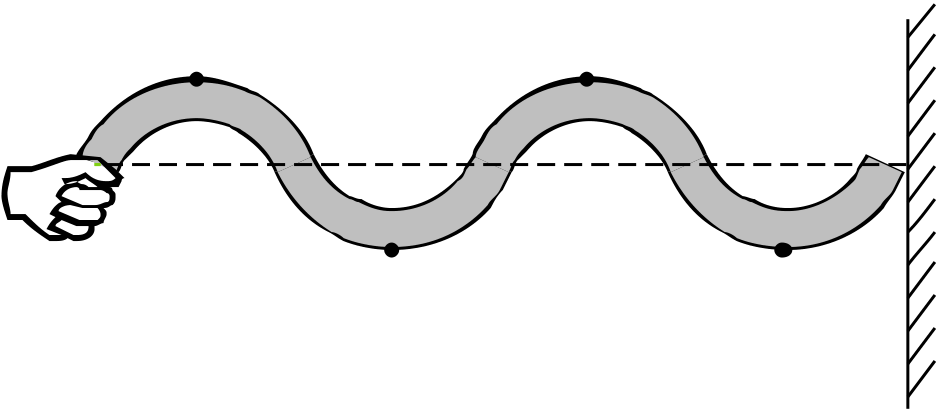
If the particles of medium vibrate about their mean position in a direction perpendicular to the direction of wave propagation, wave is called transverse wave. For example : wave produced in string in transverse in nature. It propagates in the form of crests and troughs the particle having maximum upward displacement are called crests and particle having maximum downwards displacement are called trough All electromagnetic waves e.g light and radio waves are transverse in nature.
|
|---|

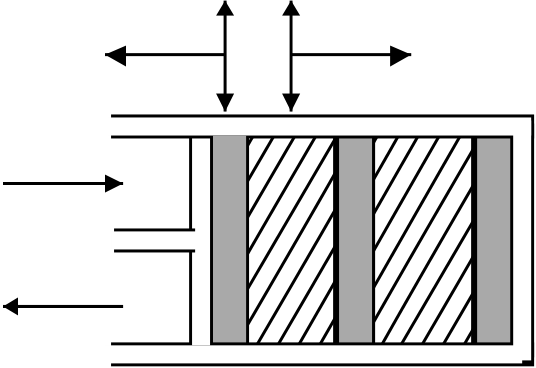

Push
Pull
Pull
| C | R | C | R |
|
|---|
Pulse
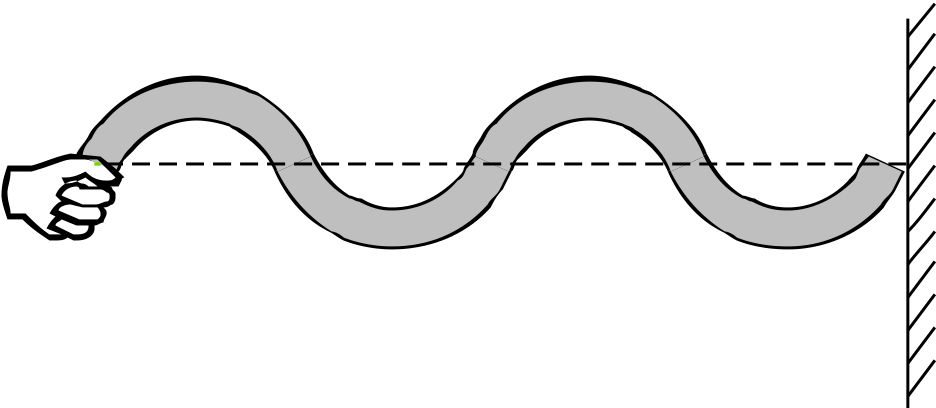
“The wave set up by a single disturbance in the medium are called Pulses.” A wave pulse produced in a rope by giving a single jerk to one end of a roe whose other end is fixed to rigid wall as shown in the fig.
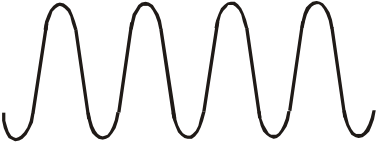
“A continuous train of wave pulses generated at regular interval of time in a medium is called a periodic waves”. For example
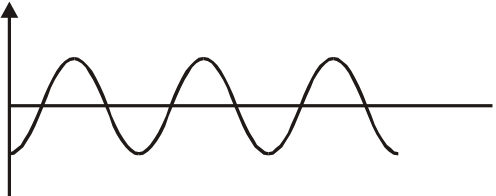
Graphical Representation of Simple Harmonic Waves
We studied that both transverse and longitudinal waves are simple harmonic in nature, in wave motion, larger number of particles move at any instant, and their motion can also be represented by graphs.
Compression
|
A | B | D | E | H |
|---|
Distance of the element of medium from source
So, a longitudinal wave in medium is represented graphically by plotting the density of medium against distance form source.
|
|---|
The frequency ν of the wave is reciprocal of its time period.
1
ν =T
Relation between Wave Velocity, Frequency and
wavelength
| Hence, | v | |||
|---|---|---|---|---|
| But we know | ||||
|
|
|||
Objects of different sizes and conditions vibrate at different frequencies to produce sounds of different pitch.
Wave
disturbance
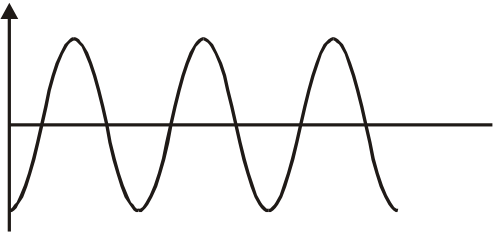
Soft sound
Wave
disturbance
Uses of Ultrasound Waves
1. Glaton whistle : It is used by hunters. When hunter and hound (hunting dogs) get separated and hunter wants to call back dog to help him catch the prey, he blows the Glaton whistle which can be heard by dog but not by other animals and birds of the forest.2. Bats judge the distance of prey or the coming obstacle by sending these waves. By observing the time taken by waves to travel back, they can find the distance of the obstacle/prey.
A progressive wave is one which travels in a given direction with constant amplitude.
i.e. without attnuation”
| O | x |
|---|
| y | = | asin | 2 | π | ( | vt | + | x | |||||||||||||
|---|---|---|---|---|---|---|---|---|---|---|---|---|---|---|---|---|---|---|---|---|---|
| λ | |||||||||||||||||||||
| In general | y | = | asin | 2 | π | ( | vt | ± | x | ||||||||||||
| λ | |||||||||||||||||||||
| y | = | asin | π λ | ( | ν − | x | ) | + ϕ | 0 |
|
|||||||||||
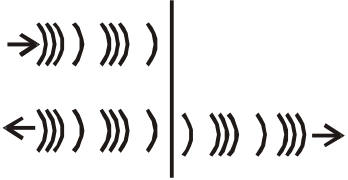
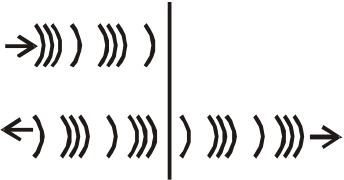
Boundary effects : When a wave travelling in one medium meets the boundary of another medium. It is partly reflected and partly transmitted. These effects are called boundary effects.
Note :
Lower is the velocity in a medium, rarer is the medium. For light waves, in order of rarer to denser vaccum, air, water, steelFor sound waves, in order of rarer to denser steel, water, air, vaccum rarer to denser denser to rarer
i i
C R C R C R C R
r t r t C R C R RC R C RC R C RC R C (3) Longitudinal wave (4) Longitudinal waveNote : If transverse wave reflects from denser medium phase changes by , else not.
| iy | = | Asin | ( | ω − | kx | ) | ry | = | A sin | ( | ω + |
|
||||||
|---|---|---|---|---|---|---|---|---|---|---|---|---|---|---|---|---|---|---|
| ty | = | A sin | ( | ω − | k x | |||||||||||||
|
iy | = | Asin | ( | ω − | kx | ) | ry | = − ′A sin | ( | ω + | |||||||
| ty | = | A sin | ( | ω − | k x | |||||||||||||
Reflection of Sound Waves
| A | i r | B | ||
|---|---|---|---|---|
| Watch |
Echo
It is usually observed that if we shout a few words in hilly regions, the sound is reflected back to our ears a number of times. This reflection of sound from hills or big buildings is called echo. Due to persistence of hearing, the sound persists (remains) on our ear for 1/10th of second after the original sound has ceased (stopped). In order to hear distinctly the echo of a sharp sound (such a pistol shot), the sound should reach the ear atleast 1/10th of a second after the original sound. We know the velocity of sound at room temperature (say at 30°C) is 350 ms–1, hence the sound travels (1/10) (350) = 35 min 1/10 second. Therefore, in order to hear an echo of sharp sound, the distance between observer and reflecting surface should be (1/2) (35) = 17.5 m.
It has been observed that the maximum number of words that can be spoken per second ( or can be heard clearly) is five. Therefore, it takes 1/5th of a second to speak a word. In order to hear the echo of a single words, the reflected sound should fall upon the ear atleast 1/5th of a second after the original sound. Since sound travels (1/5) (350) = 70 m in 1/5 second, the least distance of the reflecting surface should be(1/2) 70 = 35 m. In order to hear two words the least distance should be 2 × 35 = 70 m and to hear n words, the maximum distance should be n (35) m.
ct
S =2; where c is the velocity of sound.
1. Hearing aid or Ear Trumpet : It is used by persons hard of hearing. Waves received by wider end of the trumpet are reflected and focused into much narrower area towards ear. It increases the amplitude and hence intensity of air reaching the ear and hence helps in improving hearing.
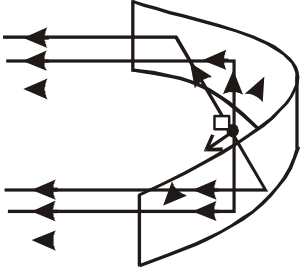
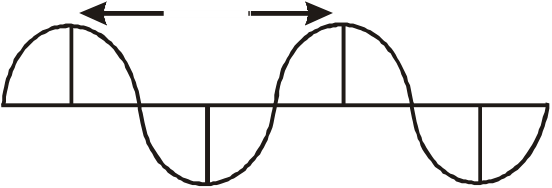
Concave reflecting sound boards are placed behind the speaker as shown in figure. The sound is thus concentrated into the desired direction and wastage is avoided. Thus speech is readily audible even at a distance.
Sonic Boom : When a body moves with speed greater than that of sound, it is said to be moving with supersonic speed. Supersonic planes product a shock wave in air. These waves carry large amount of energy. They are also associated with large variation of pressure also. Shock produce cracking sound or burst called Sonic Boom. It sometimes damages window pans when flying at low altitude. Their burst produces unpleasant sound.
|
|---|
WAVE PULSES AND PERIODIC WAVES
Crest
| B | D |
|---|
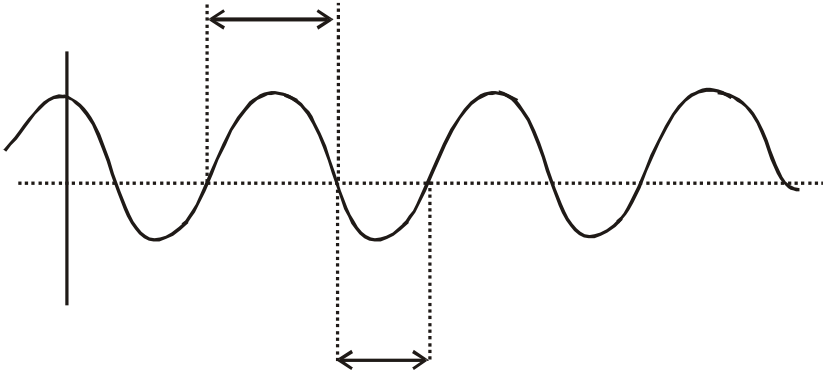
At any given time, the string has a shape as shown in figure. If you plot the function sin x versus x, the shape looks similar. When the disturbance is produced in such a way that the shape of a string at any given instant is represented by a sine function, we say that the wave is simple harmonic.
The portions of the string where the displacement is positive are called crests and the portions where it is negative are called troughs. In the above figure A, C, E, G represent crests and B, D, F represent troughs.
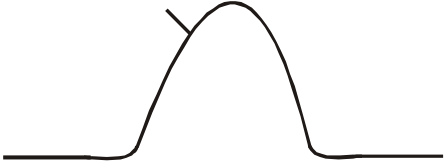
(a) Pulse throw a string (b) Periodic wave on a string
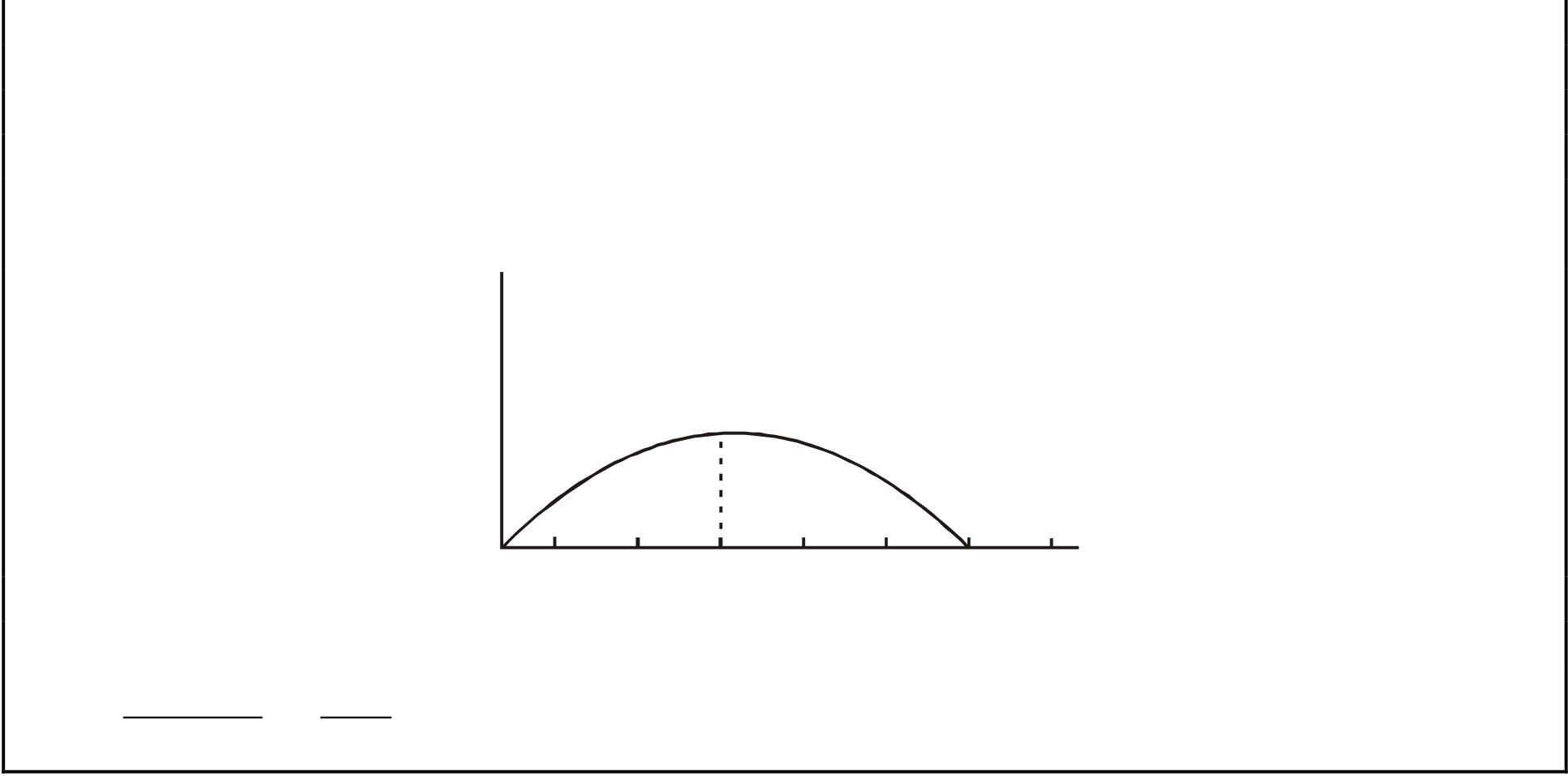
The following graph shows the displacement versus distance of a pulse on a rope at two
0 5 10 15 20 25 30 35
Distance travelled by crest in (10 – 5) = 5 s= 37.5 – 15 = 22.5 cm
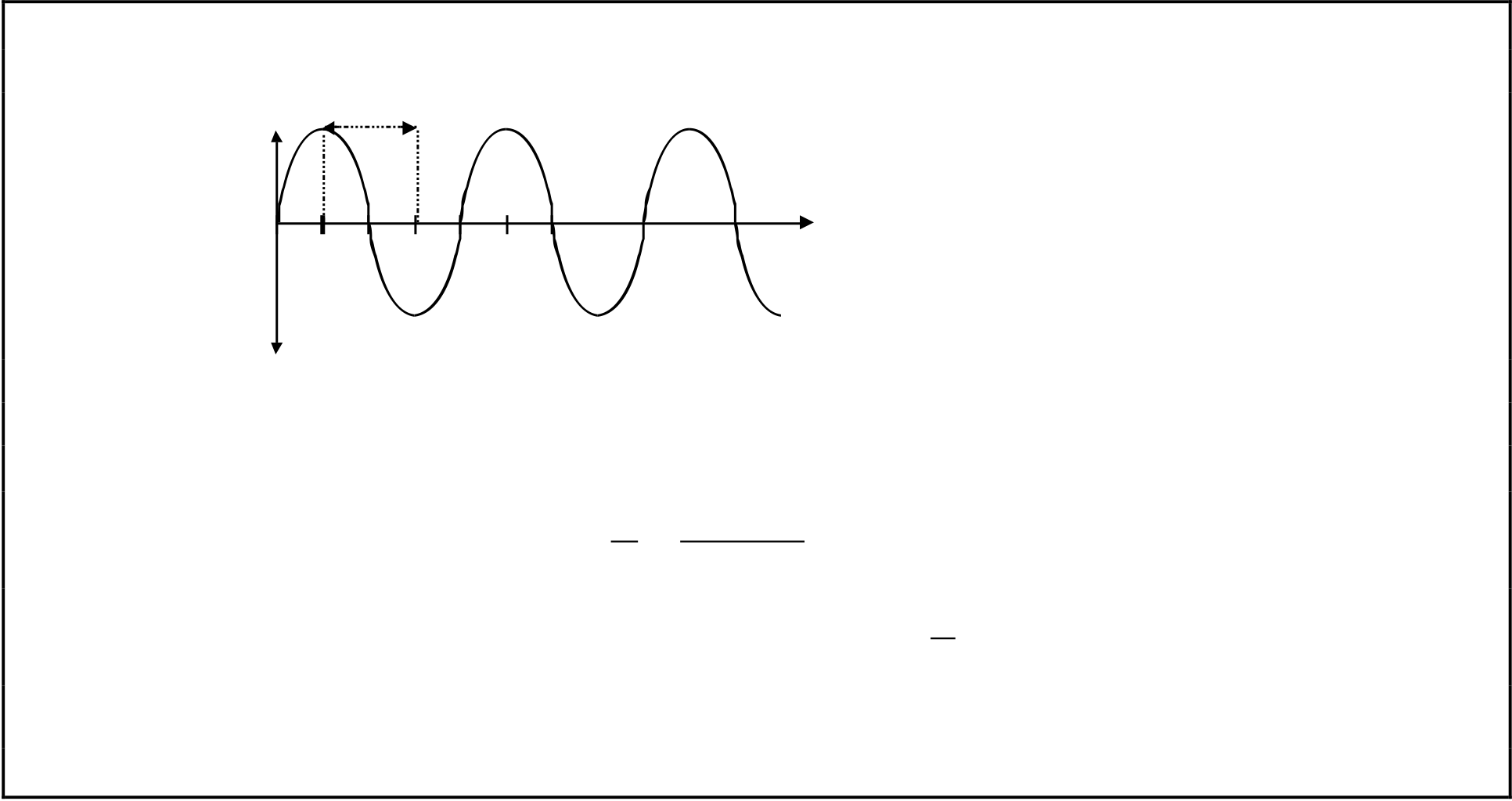
Find the wave velocity, wavelength and frequency of wave shown in the figure.
2m
Time period of wave T = 4 milli second = 4 × 10⁻³ sec
∴ Frequency of wave ν =
2
Wavelength ( )λ = 4m
|
|---|
STRUCTURE OF HUMAN EAR