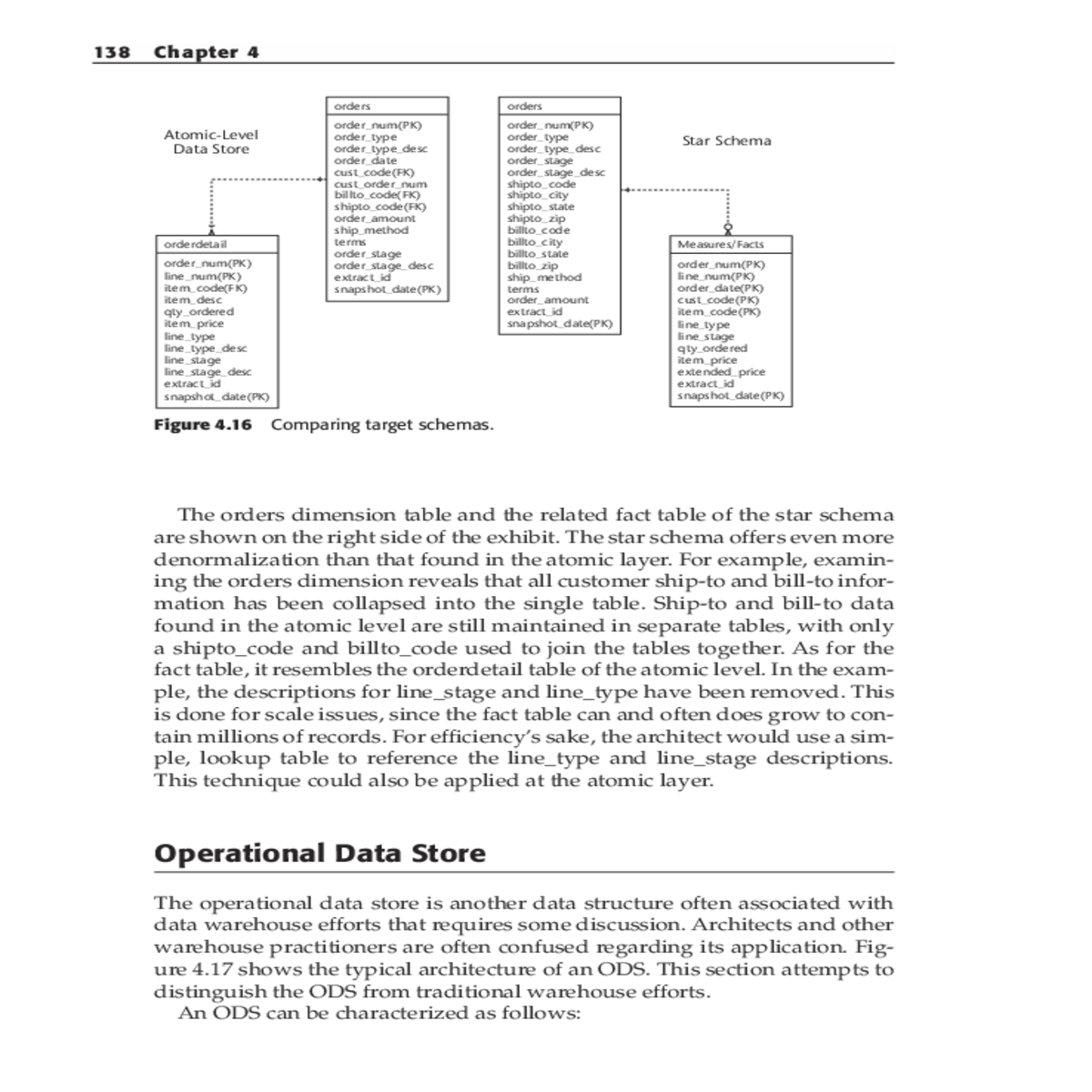
Resembles the orderdetail table the atomic level
|
Chapter 4 | |||
|---|---|---|---|---|
| orders | ||||
| order_num(PK) | ||||
| order_type |
|
|||
|
order_type_desc | |||
| order_date | ||||
| cust_code(FK) |
|
|||
| cust_order_num |
|
|||
| billto_code(FK) | ||||
| shipto_code(FK) | ||||
| order_amount | ||||
| ship_method | ||||
| terms |
|
|||
| order_stage |
|
|||
| order_num(PK) | order_stage_desc | |||
| line_num(PK) | extract_id | |||
| item_code(FK) | snapshot_date(PK) |
|
|
|
| Comparing target schemas. | ||||
|
|
|||
|
||||
| line_type_desc |
|
|||
| line_stage_desc | ||||
|
||||
|
||||
| Figure 4.16 |
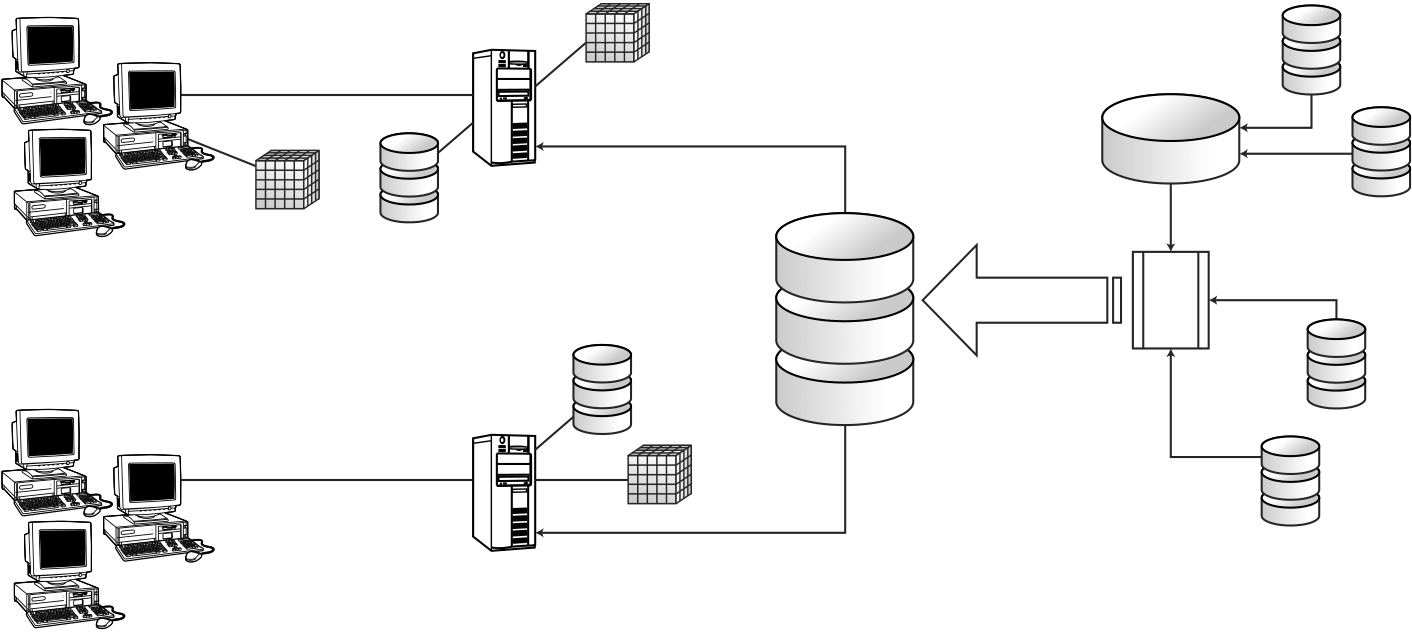
An ODS can be characterized as follows:
| Designing the Data Architecture | 139 | |
|---|---|---|
It is current. There is essentially no history maintained in an ODS.
It is dynamic. ODS data is dynamic.
|
Atomic Level | Transformation | Source |
|---|---|---|---|
| Data | |||
|