Provided mapping services and cloud computing applications
The impact of organisational culture on strategic management
How does organizational culture affect strategy implementation?
● Hierarchy culture – the process-oriented, structured Control Culture.
● Market culture – the results-oriented, competitive Compete Culture.
Employee engagement is defined as an employee's level of interest in, motivation for, and connection to their work and company. And so,it's no surprise that high levels of employee engagement are associated with winning business cultures.
Strong corporate cultures provide employees with a reason to stick around and to do so with zeal.Employees with a winning culture establish strong bonds with their peers, company, and position, improving their work experience and
increasing their engagement.Your organization’s culture has a bigger impact than you know, on employee satisfaction and engagement. If your corporate culture values teamwork but a person prefers to work alone, they are unlikely to be satisfied at your
organisation.While you won't be able to please everyone, you may attempt to create a company culture that balances your employees' individual requirements while also aligning with your organization's objectives. Thus, your staff will show their appreciation by increasing their productivity and performance.
Understanding and developing organizational culture
In most cases, leaders do have a strong awareness of their organization's culture. However, they simply haven't made that sense conscious enough to be able to learn from and lead within the culture effectively.
If you want to create a certain type of culture,it's not enough to just say so. To build a roadmap to achieve those changes, you must first figure out what present habits need to change. It is thus critical to first establish your current corporate culture before attempting to change it.
● Evaluate the Priorities of Your Business
organization. Consider ways in which you can gather input on which behaviours
are now beneficial to the company and which should be avoided or altered in
The Clan Culture
A clan culture is people-focused in the sense that the company feels like one big happy family. This culture follows the motto of being together throughout everything. Clan culture comprises a highly collaborative work environment
Hierarchy Culture
Companies with hierarchical cultures stick to the traditional business structure and value quality over quantity
Google is known for being an excellent employer that has pioneered many of the
●
AbstractThis paper provides a viewpoint of the culture and subcultures at Google Inc., which is a famous global company, and has a huge engineering staff and many talented leaders. Through its history of development, it has had positive impacts on society; however; there have been management challenges. The Board of Directors (BoDs) developed and implemented a way to measure the abilities of their managers, which helped to identify problems. This paper will analyze the case study of Harvard Business Review, Oxygen Project, and clarify the management problem in Google’s organization. It will also compare Google with Zappos, a much smaller organization, and present how the BoDs of Zappos assesses its culture and subcultures. In this paper, we will recommend eight important points to building an organizational culture that is positive for stable growth of a company. We believe that much of what be learned could be useful to other business leaders, regardless of company scale.
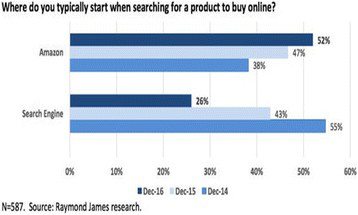
Trends of using product by information searching
| Full size image |
|---|
Researching Google’s culture, we would know Laszlo Bock, Head of People Operations at Google, the equivalence of Human Resources (HR) Director at other companies. “People operation” is a combination of science and human resources where Google looks at everything from a perspective of data (McAfee and Brynjolfsson ; Cukier and Mayer-
Schoenberger ). As a result, Google is always in the top companies throughout the last time.Operating HR is obviously a field of science at Google. They are constantly experimenting and innovating to find the best way to satisfy employees and to help them work effectively. They do everything based on collecting and processing of collected data, using data to evaluate staff and to help them improve their work efficiency (Davenport et al. ). If an organization wants to hire talented people who cannot be recruited in cash, they must focus on building a great working culture. This includes working environment, meaningful work, and employees’ freedom (Meek ).
management style. Therefore, there are many organizational cultures (Schein 2017). The Exhibit 3.1 at page 39 in (Schein ) provides what culture is about. For example, employee follows a standard procedure with a strict adherence to hierarchy and well-defined individual roles and responsibilities. Those in competitive environments, such as sales may forget strict hierarchies and follow a competitive culture where the focus is on maintaining strong
relationships with external parties. In this instance, the strategy is to attain competitive advantages over the competition. The collaborative culture is yet another organizational way of life. This culture presents a decentralized workforce with integrated units working together to find solutions to problems or failure.Why do many large companies buy its innovation? Because its dominant culture of 99% defect-free operational excellence squashes any attempts at innovation, just like a Sumo wrestler sitting on a small gymnast (Grossman-Kahn and Rosensweig ). They cannot accept failures. In fact, failure is a necessary part of innovation and Google took this change by Oxygen Project to measure the abilities of their multicultural managers. This means that Google itself possesses multiple different cultures (see Google’s clips). Like Zappos, Google had established a common, organizational culture for the whole offices that are distinctive from the others. The predominant culture aimed at Google is an open culture, where everybody and customer can freely contribute their ideas and opinions to create more comfortable and friendly working environment
(Hsieh ).
The biggest benefit for the staff is to be picked up on the day of work. As assessed by many traffic experts, the system set up by Google is considered to be a great transport network. Tad Widby, a project manager and a traffic system researcher throughout the United States, said: “I have not seen any larger projects in the Bay Area as well as in urban areas across the country” (Helft 2007). Of course, it is impossible for Google to “cover up the sky”, so Yahoo also started implementing the bus project for employees in 2005. On peak days, Yahoo’s bus also took off. Pick up about 350 employees in San Francisco, as well as Berkeley, Oakland, etc. These buses run on biofuels and have Wi-Fi coverage. Yet, Danielle Bricker, the Yahoo bus coordinator of Yahoo, has also admitted that the program is “indirectly” inspired by Google’s initiative (Helft ). Along with that, eBay recently also piloted shuttle bus transfers at five points in San Francisco. Some other corporations are also emerging ideas for treatment of staff is equally unique. Facebook is an example, instead of facilitating employees far from the workplace; it helps people in the immediate neighborhood by offering an additional $10,000 for an employee to live close to the pillar within 10 miles, nearby the Palo Alto Department (Hall ).
When it comes to Google, people often ask what the formula for success is. The answer here is the employees of Google. They create their own unique workplace culture rules to create an effective work environment for their employees. And here are the most valuable things to learn from Google’s corporate culture (Scott ) that we should know:
Google developed in the direction of a holding company - a company that does not directly produce products or provide services but simply invest in capital by buying back capital. In the company, the criteria for setting the ten exponential function in lieu of focusing only on the change in the general increase. This approach helps Google improve its technology and deliver great products to consumers continuously.
The talent
multiple occupations, functions, geographies, echelons in the hierarchy and product lines. For example, six years ago, when it bought 100 Huffys for employees to use around the sprawling campus, has since exploded into its own subculture. Google now has a seven-person staff of bicycle mechanics that maintains a fleet of about 1300 brightly-colored Google bikes. The company also encourages employees to cycle to work by providing locker rooms, showers and places to securely park bikes during working hours. And, for those who want to combine meetings with bike-riding, Googlers can use one of several seven-person (Crowley ).
Leadership influences on the culture at Google
“Rearrange information around the world, make them accessible everywhere and be useful.” This was one of the main purposes set by Larry Page and Sergey Brin when they first launched Google on September 4th, 1998, as a private company (Schmidt and Rosenberg ). Since then, Google has expanded its reach, stepped into the mobile operating system, provided mapping services and cloud computing applications, launched its own hardware, and prepared it to enter the wearable device market. However, no matter how varied and rich these products are, they are all about the one thing, the root of Google: online searching.
1998–2001: Focus on search
2007–2012: Navigation bar, Google menu, Google now
Google began to deploy a new navigation bar located at the edge of the screen. It includes links to a place where to look for photos, videos, news, maps, as well as buttons to switch to Gmail, Calendar, and other services developed by the company. In the upper left corner, Google added a box displaying Google + notifications and user accounts’ image. Google Now not only appeared on Android and it’s also brought to Chrome on a computer as well as iOS. All have the same operating principle, and the interface card still appears as Android it is.
Most of Google’s revenue comes from advertising (Rosenberg ). However, this “golden” business is entering a difficult period with many warning signs of its future. Google Search is the dominant strength of Google and bringing great revenue for the company. Nonetheless, when Amazon surpassed Google to become the world’s leading product in the search engine in last December, this advantage began to wobble. This is considered a fatal blow to Google when iOS devices account for 75% of their mobile advertising revenue (Rosenberg ).
By 2016, the number of people installing software to block ads on phones has increased 102% from 2015. Figure illustrates that by the year’s end, about 16% of smart phone users around the world blocked their ads whilst surfing the web. These were also two groups having the most time on the Internet, high-earners and young people; however, these people have disliked ads (see Fig. 1).
Research data and collect information were mostly from the Harvard Study (Project Oxygen), which has been selected because it is related to the purpose of our study.
Data collection and analysis has been taken from Google Scholar and various websites related researches. We look at the history of appearance, development, and recognize the impacts of this company, as well as the challenges and the way the Board of Directors measures the abilities of their manager when the problem is found.
What is the most instrumental element found from the Harvard study?
2. 2.
How organizational culture impacts on business achievements? The Harvard study
Project oxygen summary
Formal organizational training system to create a different culture: Ethical culture
If the organizational culture represents “how we do things around here,” the ethical culture represents “how we do things around here in relation to ethics and ethical behavior in the organization” (Key ). Alison Taylor (The Five Levels of an Ethical Culture, 2017) reported five levels of an ethical culture, from an individual, interpersonal, group, intergroup to inter-organizational (Taylor 2017). In (Nelson and Treviño ), ethical culture should be thought of in terms of a multi-system framework included formal and informal systems, which must be aligned to support ethical judgment and action. Leadership is essential to driving the ethical culture from a formal and informal perspective (Schwartz ; Trevino and Nelson ).
Whenever we approach a new organization, there is no doubt that we will try to get more about the culture of that place, the way of thinking, working, as well as behavior. And it is likely that the more diverse culture of a place is, the more difficult for outsiders to assess its culture becomes (Mosakowski ).
Realizing culture in (Schein ) including artifacts, espoused valued and shared underlying assumptions. It is easier for outsiders to see the artifacts (visual objects) that a group uses as the symbol for a group; however, it does not express more about the espoused values, as well as tacit assumptions. In (Schein et al. ), the author stated: “For a culture assessment to be valuable, it must get to the assumptions level. If the client system does not get to assumptions, it cannot explain the discrepancies almost always surface between the espoused values and the observed behavioral artifacts” (Schein et al. ). Hence, in order to be able to assess other cultures well, it is necessary for us to learn each other’s languages, as well as adapt to a common language.
As we all acknowledge, to build an organizational culture, both leader and subordinate spend most of their time on learning, relearning, experiencing, as well as considering the most appropriate features. Sometimes, some changes are inevitable in terms of economic, political, technological, legal and moral threats, as well as internal discomfort (Kavanagh and
Ashkanasy ; Schein ). As the case in (Schein ), when a CEO would like to make an innovation which is proved no effective response, given that he did not get to know well about the tacit implications at the place he has just come. It is illustrated that whatsoever change should need time and a process to happen (Blog ; Makhlouk and Shevchuk ). In conclusion, a new culture can be learned (Schein ), but with an appropriate route and the profits for all stakeholders should be concerned by the change manager (Sathe ).It is true that people’s behavior managed by their types of culture (Kollmuss and
Agyeman 2002). All tacit assumptions of insiders are not easy for outsiders to grasp the meaning completely (Schein ). It is not also an exception at any organization. Google is an example of the multicultural organization coming from various regions of the world, and the national or regional cultures making this multicultural organization with an official culture for the whole company.
Role of a leader and its difference from a manager
In every social interaction, whether we are aware of it or not, we function as a leader. We not only reinforce and act as part of the present cultural dynamics but also influence it when introducing new cultural elements based on our values, beliefs and associated actions and behaviors (Gifford and Peter ). Over time, these new elements have the ability to strengthen and enhance culture or eroding and weaken it. A “leader” and a “manager” is separated (Ibrahim and Cordes ). A leader is a person gives a clear strategic vision to get a manager does (Bertocci ), and a manager is a person supports a leader to plan-do/develop-control-evaluate-improve/adjust tasks given to employee (Jones and Hill ) and has formal influence (Les Dlabay ). In deeper perspective, there is a difference between these two terms.
It cannot be denied the interplay of culture creation, reenactment, and reinforcement creates interdependency between culture and leadership. Schein (Schein ) conveyed that culture exists in a group of a community; it reflects people’s belief, lifestyle, as well as norms of that group. It is not easy for outsiders to grasp all assumptions of the culture of a group. It seems that culture is with us in all facets of our life, it controls and determines people’s behaviors and it is likely that culture in each individual is accumulated gradually during the course of their lifetime.
Cultures, as well as subcultures among different groups, are not identical. Cultures and
subcultures are considered as the norms for all members’ behavior in that group. Culture resides within each individual, on the other hand, in each organization or community, there seems to be a hidden force to lead and instruct the ways that organization performs, which is called culture.In comparing leaders of Google Inc. with other leaders, we look at Tony Hsieh, an , , and founder and CEO of Zappos’ Inc., an online shoe, and clothing store (Staley ; Zhang ; McNeill ). Hsieh regularly displayed happiness to create his own company’s culture in a different way of “happiness to culture”. Hsieh explains living by these core values to create an authentic culture within . These values took over a year to be developed and were revisited annually through the utilization of employee insight and reflection. To build his company’s culture he listened to feedback from customers, staff, and even competitors.
takes the importance of culture fit in their hiring. The candidate is never asked about their knowledge of Zappos’ when applying or interviewing for a job. Zappos wants them to apply to become “Zappos Insider” (Hsieh ). This recruiting strategy gets people to be closer to Zappos than others. Therefore, they can study more and talk with the employer about their abilities and interests. It seems that Zappos cares about and want to know the candidate, who may become a part of the team in the future. In stark contrast, Google is different in its hiring and workplace culture by building a network of “culture clubs” and locals. It has allowed them to