Process has life cycle follows cpu burst time units
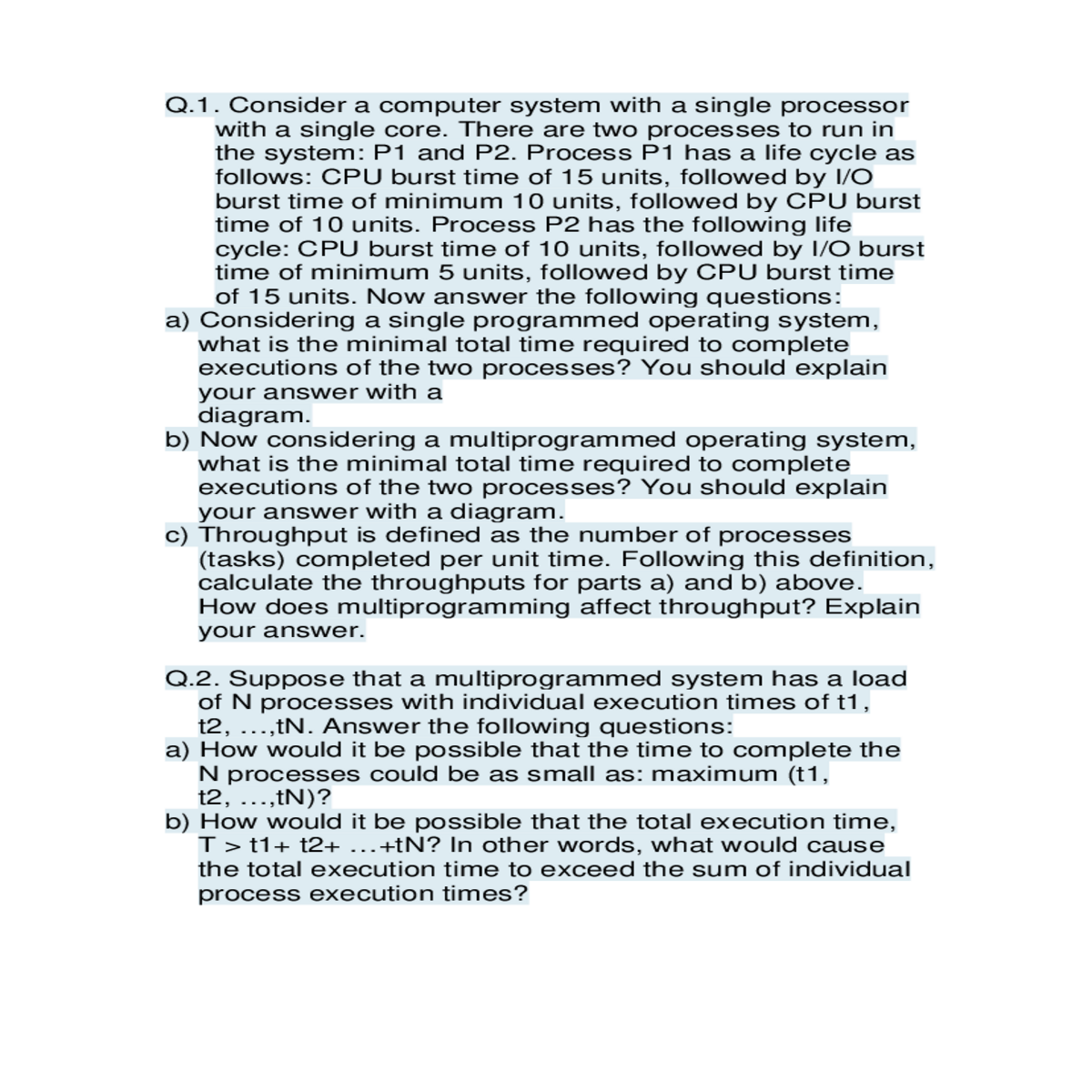
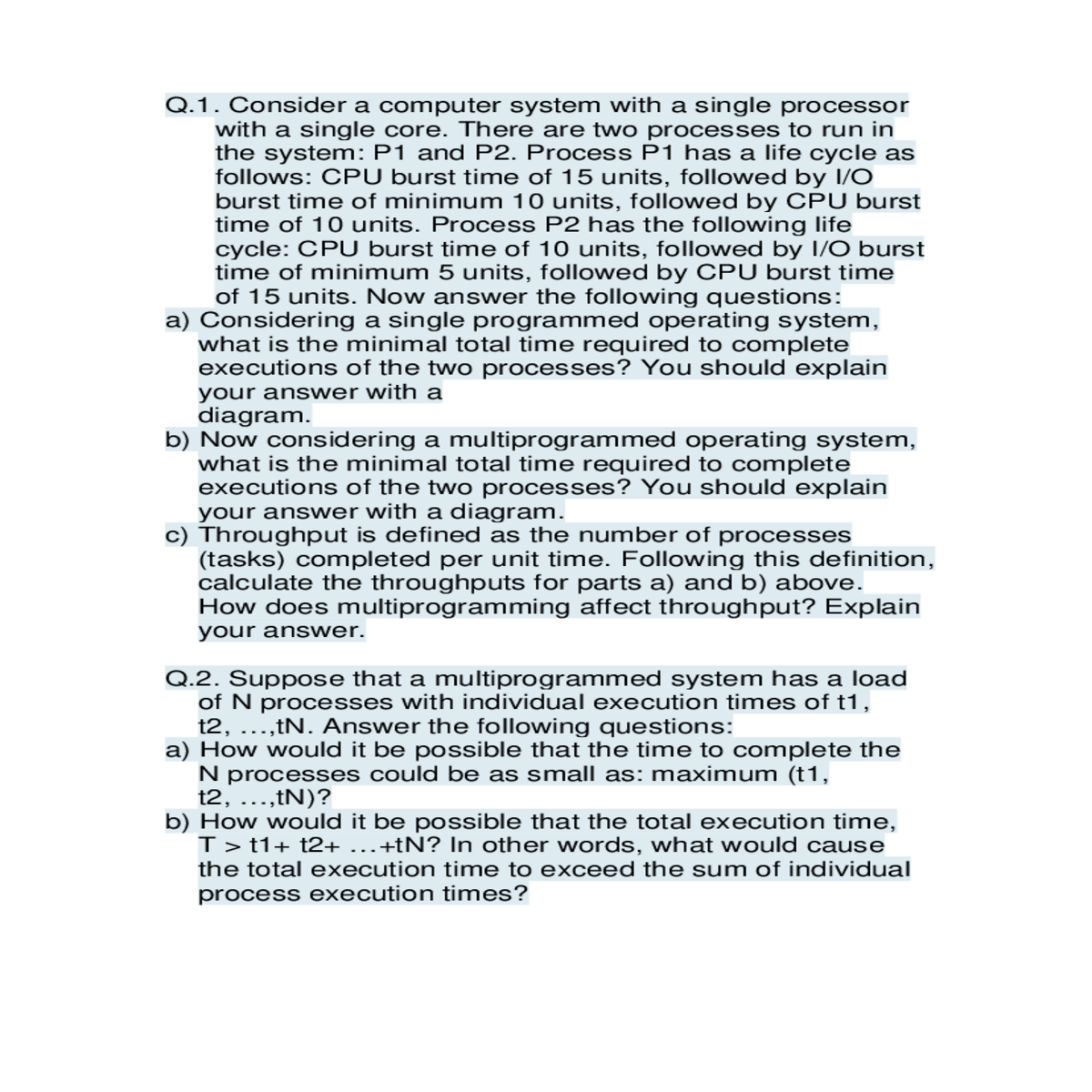
Q.1. Consider a computer system with a single processor with a single core. There are two processes to run in the system: P1 and P2. Process P1 has a life cycle as follows: CPU burst time of 15 units, followed by I/O burst time of minimum 10 units, followed by CPU burst time of 10 units. Process P2 has the following life cycle: CPU burst time of 10 units, followed by I/O burst time of minimum 5 units, followed by CPU burst time of 15 units. Now answer the following questions:
a) Considering a single programmed operating system, what is the minimal total time required to complete executions of the two processes? You should explain your answer with a
diagram.b) Now considering a multiprogrammed operating system, what is the minimal total time required to complete executions of the two processes? You should explain your answer with a diagram.
Q.3. Consider a computer running in the user mode. It switches to the monitor mode (also known as kernel mode) whenever an interrupt or trap occurs, jumping to the address determined from the interrupt vector. A
malicious user took advantage of a certain serious
loophole in the computer's protection mechanism, by which the user could run his/her own program in the monitor mode! This can have disastrous consequences. a) What could have the user possibly done to achieve this? b) What disastrous consequences could it cause?c) Suggest a remedy for the loophole.
complete life-cycle of a process with the help of a process state transition diagram.
Q.5. When there is a context switch from one process to another, the OS kernel invokes the function
ContextSwitch which saves the context of the currently executing process into its PCB and then inserts the process to an appropriate queue (i.e., ready queue or a blocked queue). It is necessary that ContextSwitch is atomic (i.e., unbreakable: either done or not-done; nothing in between). Explain the
following:
a) Why must ContextSwitch be atomic?