Principles of it grc and their importance
IT GRC and IT governance policy:
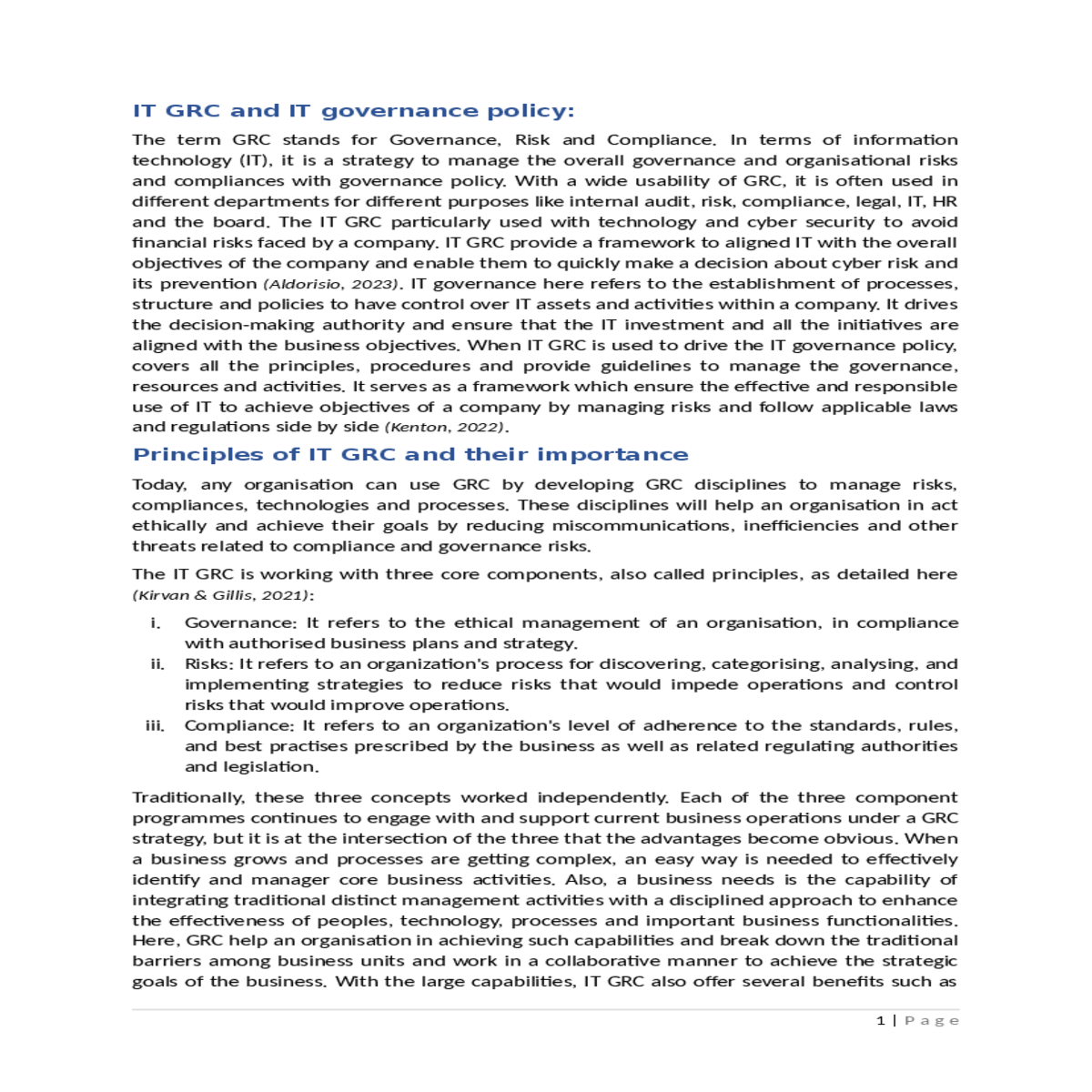
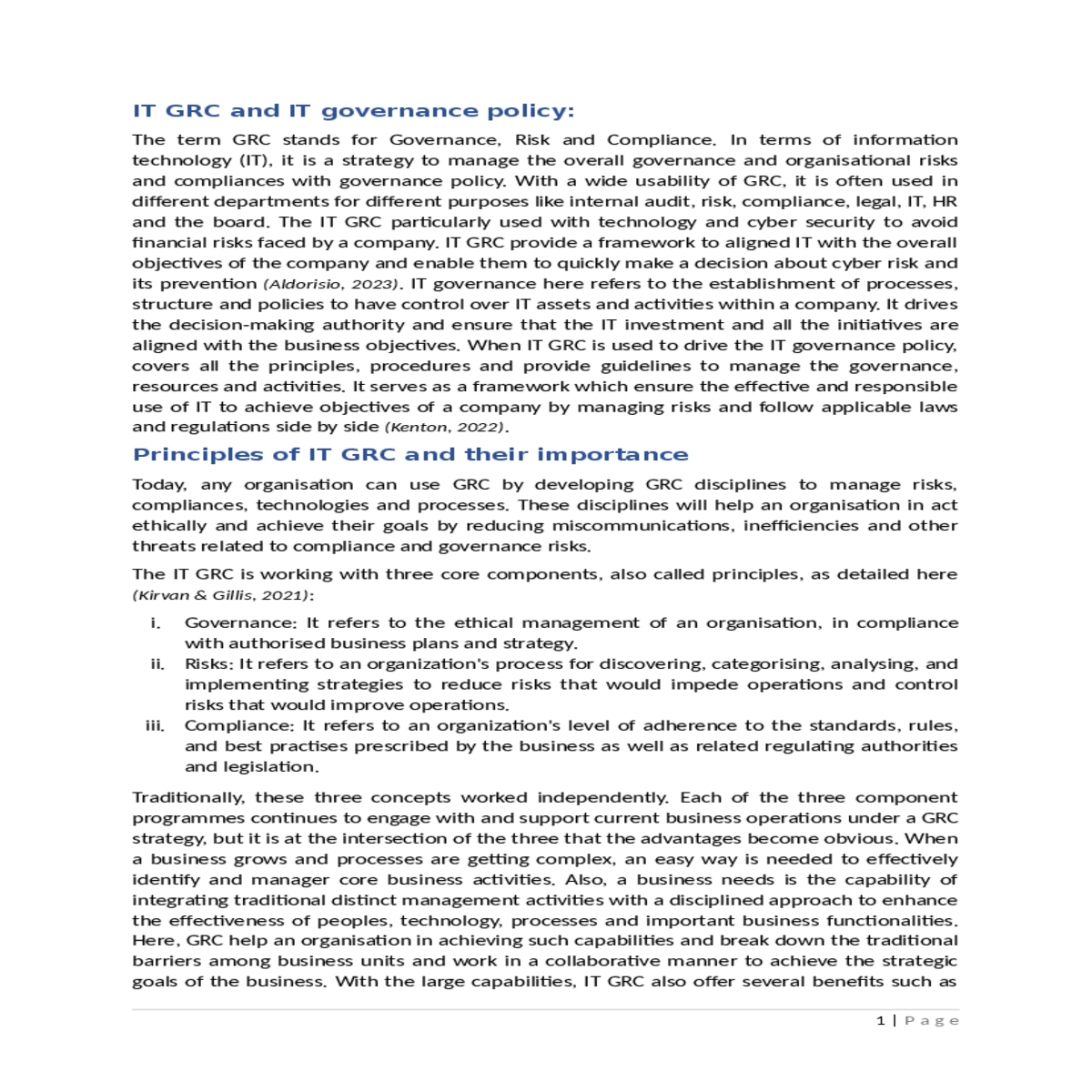
The term GRC stands for Governance, Risk and Compliance. In terms of information technology (IT), it is a strategy to manage the overall governance and organisational risks and compliances with governance policy. With a wide usability of GRC, it is often used in different departments for different purposes like internal audit, risk, compliance, legal, IT, HR and the board. The IT GRC particularly used with technology and cyber security to avoid financial risks faced by a company. IT GRC provide a framework to aligned IT with the overall objectives of the company and enable them to quickly make a decision about cyber risk and its prevention (Aldorisio, 2023). IT governance here refers to the establishment of processes, structure and policies to have control over IT assets and activities within a company. It drives the decision-making authority and ensure that the IT investment and all the initiatives are aligned with the business objectives. When IT GRC is used to drive the IT governance policy, covers all the principles, procedures and provide guidelines to manage the governance, resources and activities. It serves as a framework which ensure the effective and responsible use of IT to achieve objectives of a company by managing risks and follow applicable laws and regulations side by side (Kenton, 2022).
Principles of IT GRC and their importance
Today, any organisation can use GRC by developing GRC disciplines to manage risks, compliances, technologies and processes. These disciplines will help an organisation in act ethically and achieve their goals by reducing miscommunications, inefficiencies and other threats related to compliance and governance risks.
Traditionally, these three concepts worked independently. Each of the three component programmes continues to engage with and support current business operations under a GRC strategy, but it is at the intersection of the three that the advantages become obvious. When a business grows and processes are getting complex, an easy way is needed to effectively identify and manager core business activities. Also, a business needs is the capability of integrating traditional distinct management activities with a disciplined approach to enhance the effectiveness of peoples, technology, processes and important business functionalities. Here, GRC help an organisation in achieving such capabilities and break down the traditional barriers among business units and work in a collaborative manner to achieve the strategic goals of the business. With the large capabilities, IT GRC also offer several benefits such as help in reducing cost, increased visibility over risks, effective leadership with governance, following regulations, standards with compliances, and protect the organisation from unfavourable internal audits, litigations and financial penalties.
Scope of IT GRC in implementation of IT governance policy in companies like IBM:
It is very critical to implement an IT governance policy in a multi-national company because it requires intense considerations of different stakeholders, its business objectives, risks while the implementation of the policy at that company. This is why, IT governance is a critical component of an organisation’s overall governance strategy. So, it is important to ensure by an organisation that their IT governance policy should be up to date and effective to achieve their business objectives.
Benefits of IT GRC in IBM
Some challenges and best practices:
References:
Aldorisio, J. (2023, April 10). What is it governance, risk, and compliance (GRC)?. SecurityScorecard. https://securityscorecard.com/blog/what-is-it-governance-risk-and-compliance/#:~:text=IT%20GRC%20extends%20that%20governance,risks%20faced%20by%20a%20company.
Bulusu, A. (2023, February 10). Common GRC challenges and how to solve them. INRY. https://www.inry.com/insights/top-5-common-grc-challenges-and-how-to-solve-them