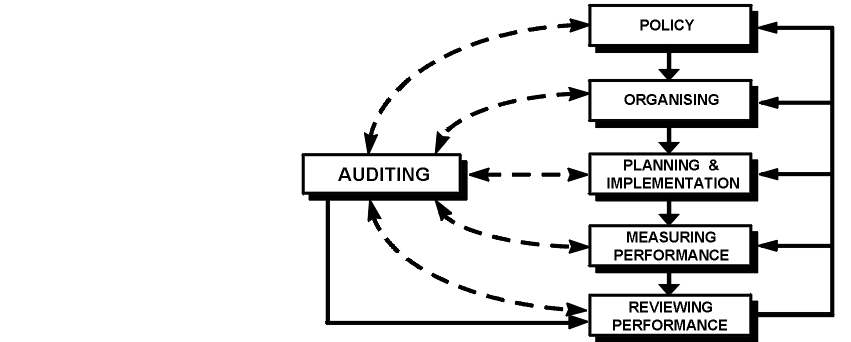
Planning for health and safety involves setting objectives

| ©HSC DIPLOMA HELP |
|
|---|
or children and young people’s settings
1.1Explain the legislative framework for health, safety and risk management in the work
The Management of Health and Safety at Work Regulations 1999 (the Management Regulations) generally make more explicit what employers are required to do to manage
| ©HSC DIPLOMA HELP |
|---|
2 Workplace (Health, Safety and Welfare) Regulations 1992: cover a wide range of basic health, safety and welfare issues such as ventilation, heating, lighting, workstations, seating and welfare facilities.
3 Health and Safety (Display Screen Equipment) Regulations 1992: set out requirements for work with Visual Display Units (VDUs).
| HSC DIPLOMA HELP | This document is protected by copyright and belongs to hsc diploma |
|---|
4 Personal Protective Equipment at Work Regulations 1992: require employers to provide appropriate protective clothing and equipment for their employees.
5 Provision and Use of Work Equipment Regulations 1998: require that equipment provided for use at work, including machinery, is safe.
11 Noise at Work Regulations 1989: require employers to take action to protect employees from hearing damage.
12 Electricity at Work Regulations 1989: require people in control of electrical systems to ensure they are safe to use and maintained in a safe condition.
Here you will need to show your assessor that you have a good knowledge of your workplace policies and procedures. Workplace policies are statements of principles and practices dealing with the ongoing management and administration of the organisation. Policies act as a guiding frame of reference for how the organisation deals with
| HSC DIPLOMA HELP | This document is protected by copyright and belongs to hsc diploma |
|
|---|
2. Be able to implement and monitor compliance with health, safety and risk management requirements in health and social
care or children and young people’s settings
| HSC DIPLOMA HELP | This document is protected by copyright and belongs to hsc diploma |
|---|
2.1. Demonstrate compliance with health, safety and risk management procedures
Step 2: Organise your staff
To make your health and safety policy effective you need to get your staff involved and committed. This is often referred to as a 'positive health and safety culture'.
| HSC DIPLOMA HELP | This document is protected by copyright and belongs to hsc diploma |
|---|
help. NOT for resale purposes

Just like finance, production or sales, you need to measure your health and safety performance to find out if you are being successful. You need to know:
where you are;
where you want to be;
what is the difference - and why.Active monitoring, before things go wrong, involves regular inspection and checking to ensure that your standards are being implemented and management controls are working. Reactive monitoring, after things go wrong, involves learning from your mistakes, whether they have resulted in injuries and illness, property damage or near misses.
practices relevant to their work.
All new employees should complete a health and safety induction which could include the following:
| HSC DIPLOMA HELP | This document is protected by copyright and belongs to hsc diploma |
|---|
|
|
|---|
As Manager you can support your colleagues to comply with your workplace health and safety policies and procedures by ensuring they attend the relevant training before participating in some areas of work. For example manual handling should not be attempted before the appropriate training has been completed. Regular supervision with staff members will enable discussion of any training needs and also any health and safety ‘worries’ a staff member may have. Staff should also be encouraged to voice their opinions re health and safety during staff meetings and they should be made aware that their ideas are respected and valued. As manager you should encourage staff to immediately report any health and safety issues they are aware of.
Staff can be supported through supervision, appraisals and training to ensure that they understand the legal and organisational health, safety and security requirements policies, procedures and practices. For example, this could include:
• Supervision session covering knowledge of fire procedures
• Supervision covering emergency fire procedure
• Induction training unit on health, safety and security
| ©HSC DIPLOMA HELP |
|---|
• Appraisal – assessing and discussing contributions to health, safety and security and identifying areas for improvements
• Training to include: Health and Safety, First Aid, Food Hygiene, Infection Control, Moving and Handling, Fire Prevention
• Staff mentoring/shadowing to demonstrate good working practicesVisitors to your workplace should also be made aware of health and safety. They should be requested to sign in the visitors book and be aware of the emergency fire exit procedure. Signage regarding fire exits should be visible to all. Various leaflets related to health and safety issues can be obtained from HSE. These can provide both staff and visitors to the home with the information in an informative and easy to understand format.
You can give your assessor of examples of times you have disciplined staff in your workplace with regards unsafe practice. For example:
| ©HSC DIPLOMA HELP |
|---|
2.4 Complete records and reports on health, safety and risk management issues according to legislative and organisational requirements
|
|
|---|
help. NOT for resale purposes
| ©HSC DIPLOMA HELP |
|---|
|
|
|---|

| ©HSC DIPLOMA HELP |
|
|---|
and social care or children and young people’s settings
3.1 Contribute to development of policies, procedures and practices to identify, assess and manage risk to individuals and others
control measures. Where control is not reasonably practicable, systems of work and
personal protective equipment should be used as measures of control. The Management
It must be remembered that individuals have a right to take risks and that this is balanced against the likelihood of harm. Individuals should be supported to assess, balance and make decisions about the risks associated with activities they wish to pursue. The situation and circumstances associated with the risk(s) are assessed, analysed and managed. An example could be when an individual wishes to travel to the shops alone when the workplace procedure is for each individual to be accompanied by a support worker. This could result in the workplace procedure being changed.
Your assessor may require to see evidence of where you have contributed to the development of policies or procedures in your workplace.
| ©HSC DIPLOMA HELP |
|
|---|
It is important to work with all those involved when assessing and managing potential risks and hazards. This will involve working with a range of people and organisations to assess potential risks, identify hazards and develop policies to manage risk in your area of responsibility. Risk assessments need to be carried out forindividual’s accessing care or support, workers/practitioners, carers, significant others and visitors to the work setting. You will need to carry out your risk assessments by following these five steps:
or children and young people’s settings
| ©HSC DIPLOMA HELP |
|---|
It is important that you implement, monitor and review systems and procedures to ensure that people are supported to assess, balance and make decisions about the risks associated with activities they wish to pursue. Any concerns raised by people, workers and relevant others are balanced with each person’s wishes. It must be understood by all involved that the person has a right to take risk and that this should be balanced against the likelihood of harm. Your role is to assess analyse and manage the situation and circumstances associated with the risk(s). Every individual has rights and the right to choose to take risks is included. An example could be an individual who wishes to go to the shops on their own, instead of being accompanied. A risk assessment would need to be carried out to establish the risks and minimise them where possible. By going to the shops alone it increases the individuals independence and sense of well-being.
Individuals in your workplace should be supported to manage and assess risks to their health and well-being by using person centred planning. Individuals should be encouraged to discuss and address issues which may be detrimental to their health and well-being. An individual with dementia or learning disabilities will choose to make unwise decisions, but do have the mental capacity to do so. In such cases the issues would be fully discussed with the individual, their families and the multi-disciplinary care team to enable the individual to discuss their choices and wishes and explore safer alternatives
help. NOT for resale purposes

| ©HSC DIPLOMA HELP |
|---|
By reflecting on and evaluating your own practice it enables you to support colleagues and others to assess and manage risk in a more constructive way. You can promote good practice by leading by example and by ensuring staff are fully trained in risk assessment and promoting the individuals rights and person centred care planning. By ensuring staff are well trained and fully aware of risk management it ensures individuals are being actively supported and enpowered to reach their full potential
4.4 Analyse how helping others to understand the balance between risk and rights improves practice

| ©HSC DIPLOMA HELP |
|
|---|
Feedback can be obtained from various sources to improve health and safety and risk management policies procedures and practices. By encouraging staff to give feedback at meeting, supervision and when attending training and asking if they have any problems with their work practice and encouraging them to contribute and have an input regarding how they feel practices could be improved.
The service users and visitors to your workplace could be asked to complete a questionnaire which could be part of your regular quality assurance. They could be asked about various issues such as how clean they feel the workplace is kept, do they feel they have all the equipment to meet their needs, are staff always on hand when needed etc.
help. NOT for resale purposes

| ©HSC DIPLOMA HELP |
|---|
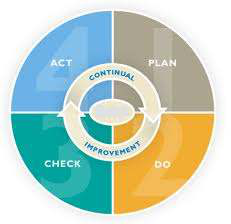
THE EVALUATION CYCLE
• Reading reviews and revisions to legislations
• Regular visits to websites eg HSE website for updates
• Reflective practice – Supervision, de-briefing to gain insight and feedback after
an incident/accident/near miss
help. NOT for resale purposes

| ©HSC DIPLOMA HELP |
|---|
Reporting of Injuries, Diseases and Dangerous Occurrences Regulations 1995 (RIDDOR) Change – 6 April 2012
From 6 April 2012, subject to Parliamentary approval, RIDDOR’s over three day injury reporting requirement will
Employers and others with responsibilities under RIDDOR must still keep a record of all over three day injuries –
if the employer has to keep an accident book, then this record will be enough.
As well as changes to legislations there will also be changes to individuals living in the workplace environment and changes to staff. In order to ensure everyone’s health and safety changes may need to be made to the workplace policies and procedures to encompass these changes. For example:
A support worker may become pregnant and their job role involves working with individuals with learning disabilities and behaviour that challenges. This will involve an additional risk assessment. The outcome of that risk assessment may be that the support worker can no longer be active in lone working, for her personal health and safety. If this is the first time a support worker has been pregnant it will involve recommending updates and changes to the current workplace policies and procedures to accommodate this.
| ©HSC DIPLOMA HELP |
|---|
The need for changes and improvements to policies and procedures may be recognised through staff meetings and suggestions, compliments and complaints from individuals and their families, from changes to staff or their circumstances, changes regards residents in the home and also from incidents which have taken place. As Manager it is your role to make those recommendations for changes to ensure that the health and safety of all those within the workplace is upheld.