Neurological symptoms due nerve demyelination and neuron death
1N5315 Advanced Pathophysiology
Hematologic System
Core Concepts and Objectives with Advanced OrganizersHemostasis
1. Analyze the process of hemostasis:
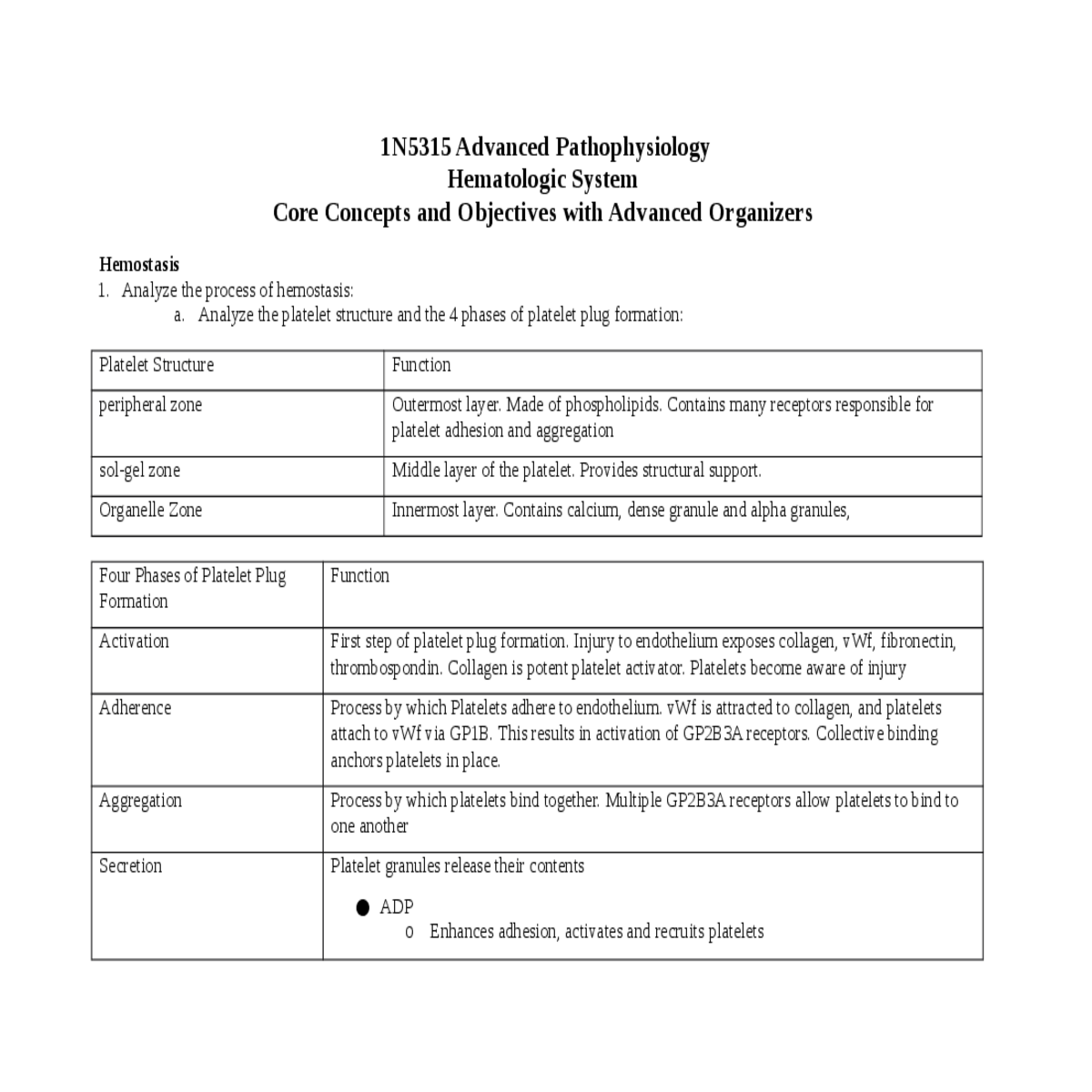
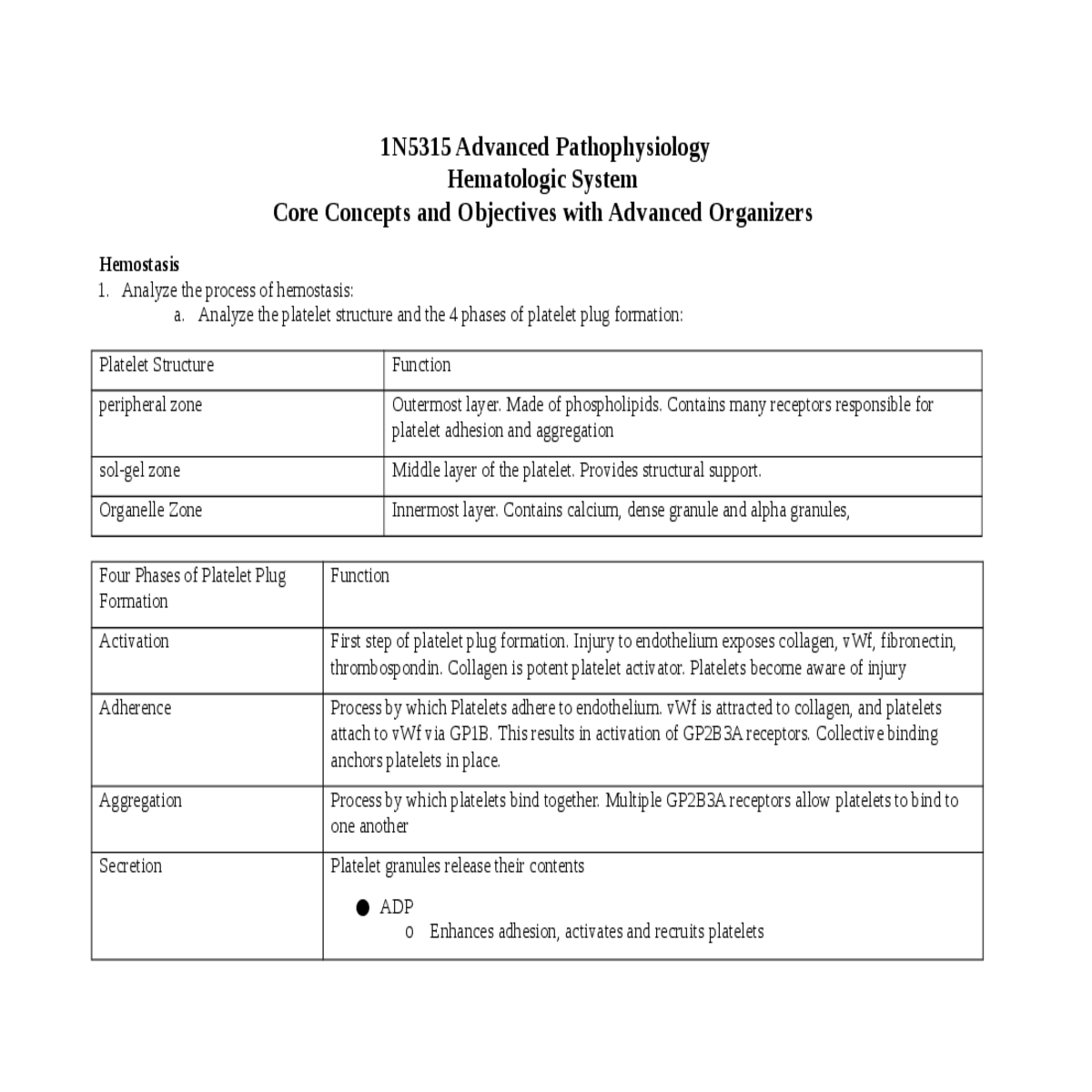
a. Analyze the platelet structure and the 4 phases of platelet plug formation:
|
|
|
|---|
·Extrinsic Pathway – It’s considered the primary pathway of coagulation, the extrinsic pathway needs tissue factor (therefore needs tissue damage) in order to occur and to produce clotting; the extrinsic pathway has to have tissue factor in order to activate the other clotting factors;
·Intrinsic Pathway – the intrinsic pathway can occur without damage. It will occur when you take blood and put it in a glass vial (anionic surface). This will immediately cause the blood to clot (It is a parallel pathway for thrombin activation by factor XII) the intrinsic pathway just always has the factors it needs present in the blood·Contributions from both the extrinsic and intrinsic pathways are necessary for maximal induction of factor Xa and effective clotting
|
|
|---|---|
|
|
|
|
|
|
|
|
|
|
|
|
|
|
|
|
|
|
|
||
|---|---|---|
|
||
|
|
|
|
|
|
|
|
|---|---|---|
|
|
||
|---|---|---|
|
||
|
| c. |
|---|
Hageman Deficiency.
|
|
|
|
|
|
| f. |
|---|
|
|
|||
|---|---|---|---|---|
|
|
immunologic activity of protein C
|
||
|
|
|
|
| Factor V Leiden | ||||
|
- accumulation of clotting factors & platelets → thrombus formation in vein (often near venous valve - inflammation around thrombus promotes further platelet aggregation → thrombus propagates or grows |
6. Evaluate the etiology, clinical manifestations and pathophysiology
of select red blood cell disorders.
g. Differentiate between macrocytic, microcytic and normocytic anemias
and give an example of each anemia.
i. Macrocytic Anemia (Megalobastic: MCV = greater than 100)
1. Most common forms:
a. Pernicious Anemia (Pernicious = highly destructive)
i. Reduction in the amount of RBC caused by Vitamin B12 deficiency caused by a lack of intrinsic factor which results in malabsorption of Vitamin B12.
|
|
GI tract |
|
|
|||
|
|
incompatibilities exist if |
|
|
|
|
|---|---|---|
|
||
|
||
When there is a lack of oxygen, the HbS |
● *leukocytes—white blood cells or leukocytes, are the cells of the immune system that are involved in protecting the body against both infectious disease and foreign invaders.
● *neutrophils—are the most abundant type of granulocytes and the most abundant (40-75%) type of white blood cells. They are a type of phagocyte and are the first responders of inflammatory cells to migrate towards the type of inflammation. They are predominant in the pus, thus the whitish/yellowish appearance.
TERMS THAT WE WERE ASKED TO KNOW IN THE LECTURE AND CAUSES
1. Leukocytosis—refers to an increase in the number of total WBC. This occurs as a normal protective response to physiologic stressors, such as infection, strenuous exercise, emotional changes, temperature changes, anesthesia, surgery, pregnancy, and some drugs, hormones and toxins. Can be caused by pathologic conditions, such as malignancies and hematologic disorders.
**increased number of circulating granulocytes (neutrophils, eosinophils, basophils) and monocytes are primarily a response to infection. Decreased numbers occur when infectious processes exhaust the supply of circulating granulocytes and monocytes by drawing them out of the circulation and into infected tissues faster than they can be replaced. Decreases also can be caused by disorders that suppress marrow function.
**KNOW TABLE 29-1 ON PAGE 1010**