Mosby elsevier describe the incubation periods
Week 1-1
Analyze how calcium and phosphate are hormonally regulated
Hypocalcemia
Pathophysiology- Hypocalcemia occurs when blood levels of calcium in the serum are less than 8.5 mg/dl and ionized levels are less that 4.0 mg/dl (McCance & Huether, 2014). Decreased calcium is usually related to inadequate intestinal absorption, decreased in PTH levels and vitamin D, or deposition of ionized calcium in bone or soft tissue (McCance & Huether, 2014).
Treatments- Hypocalcemia is treated with IV 10% calcium gluconate for severe symptoms (McCance & Huether, 2014). Oral calcium should be given and having labs monitored (McCance & Huether, 2014).
Hypercalcemia
Reference:
McCance, Kathryn L., & Huether E. Sue (2014). Pathophysiology: The Biologic Basis for Disease in Adults and Children. (7th ed.). Elsevier.
Alzheimer’s disease affects approximately 5% - 10% of the population over 65 and 40% of the population over 85. The risk of developing AD is double when there is a first-degree relative that is diagnosed (McCance & Huether, 2014). This disease is strongly contributed by genetics. Half of early onset cases can be attributed to mutations in in three genes, Presenilin1, presenilin2, and amyloid-b precursor protein (APP).
Alcoholism affects approximately 10% of adult males and 3%-5% of adult females in the United Sates. It is largely influenced by environmental factors. There has been over 100 studies that shows alcoholism clusters in families. There are genes that increase ones susceptibility to alcoholism, however, environmental factors play a larger role (McCance & Huether, 2014).
Describe and discuss transmission, pathogenesis, clinical manifestations, treatment and prevention of HIV/AIDS.
HIV/AIDS is the most notable form of secondary or acquired immune deficiency caused by an infectious agent. AIDS is a viral disease cause by Human immunodeficiency virus, HIV. HIV attacks the immune system making individuals susceptible to life-threatening infections and malignancies (McCance & Huether, 2014).
enzyme, then inserts the new DNA into the infected cells genetic material in which it may remain dormant. The primary receptor on HIV is envelope glycoprotein, gp120, which binds to molecule CD4, which is found on surface of helper T cells.
The primary cellular targets for HIV include the following:
Infection through sexual transmission can take up to a year. Early symptoms of relatively nonspecific to HIV are fatigue, fever, muscle aches, and headaches. AIDS relies on laboratory test and clinical symptoms for diagnosis (McCance & Huether, 2014).
Treatment & Prevention
Stress and Disease: Describe the physiologic effects on body systems of increased cortisol levels released during the stress response.
There are many physiologic effects on the body when there is an increased cortisol levels during a stress response. Cortisol is a glucocorticoid hormone released by the adrenal cortex during a stress response. “These steroid molecules reach all tissues, including the brain, easily penetrate cell membranes, and react with numerous intracellular glucocorticoid receptors (Huether &
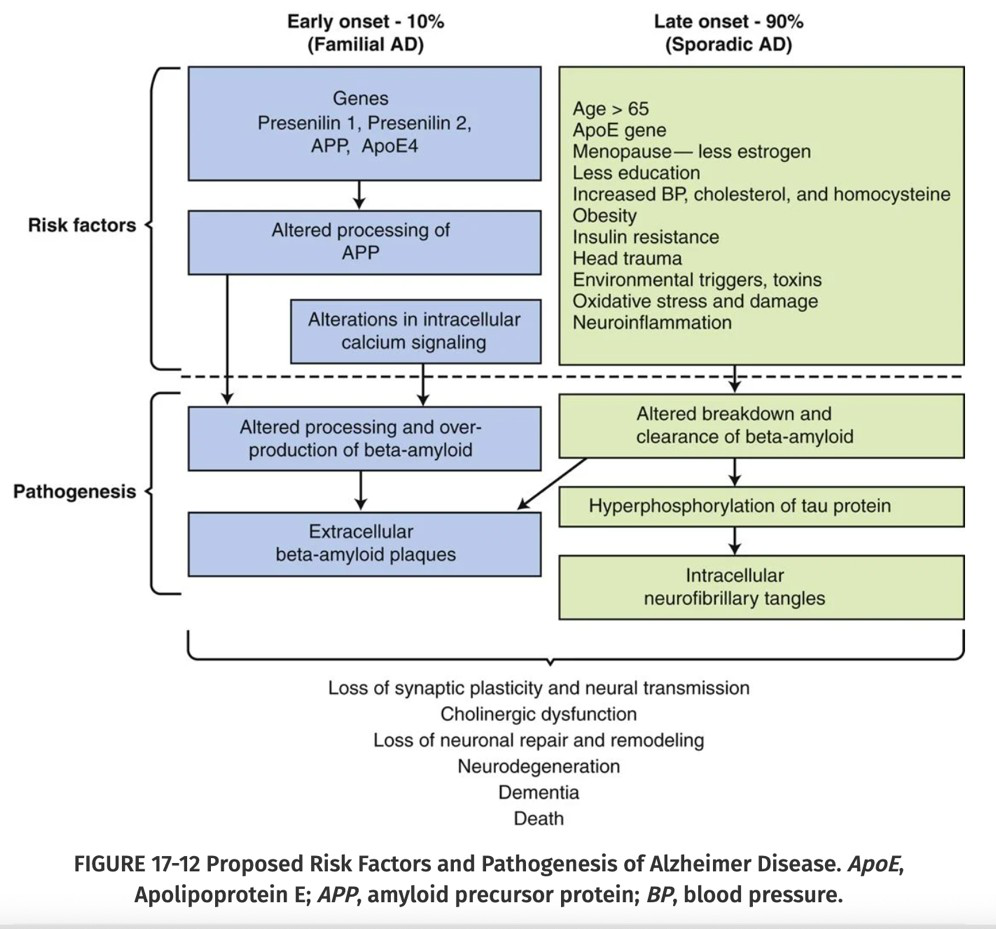
Define dementia of Alzheimer type (DAT) and describe the pathophysiology, clinical manifestations, evaluation and treatment.
Alzheimer disease, dementia of Alzheimer type DAT, is the leading cause of dementia and one of the most common causes of severe cognitive dysfunctions in older adults (Huether
&McCance, 2014). In America, it is estimated that 5.4 million have AD with an expectation of an increase to 11-16 million by 2050. The greatest risk factor is family history. Other risk factors are diabetes, hypertension, hyperlipidemia, obesity, smoking, depression, cognitive inactivity or low educational attainment, female gender, estrogen deficit at the time of menopause, physical inactivity, head trauma, elevated serum homocysteine and cholesterol levels, oxidative stress, and neuroinflammation (Huether &McCance, 2014).Initial clinical manifestations – subtle and nonspecific often associated with forgetfulness, emotional causes, and illness.
Huether S. E, & McCance, K. L. (2014). Pathophysiology: The Biologic Basis for Disease in Adults and Children. (7th ed.). Mosby Elsevier.
Week 3-2
Discuss the pathophysiology of cerebrovascular accidents (CVAs)—thrombotic, embolic, hemorrhagic, and lacunar—their incidence and prevalence, clinical manifestations, evaluation, and treatment.Systemic Manifestations
The two major clinical manifestations are ophthalmopathy and pretibial myxedema. However, hyperthyroidism effects all body systems (Huether &McCance, 2014).
Pathophysiology
Primary hypothyroidism is when there is a loss of functional thyroid tissue and leads to decreased production of TH. The causes include autoimmune thyroiditis, loss of thyroid tissue after surgical or radioactive treatment of hyperthyroidism, head and neck radiation, medications, and endemic iodine deficiency. May also be present in newborn with congenital defects (Huether &McCance, 2014).
Diagnosis is done by physical assessment and documentation of clinical symptoms of
hypothyroidism. They will also be an assessment of TSH and TH levels. Hormone replacement therapy is a treatment of hypothyroidism (Huether &McCance, 2014).Reference:
PCOS is one of the most common endocrine disturbances that effects women, and the leading cause of infertility in the United States (Huether &McCance, 2014).
Pathophysiology
Evaluation
Evaluation first started with a physical assessment. Tests such as impaired glucose tolerance are considered. Ultrasound can also be used however; polycystic ovaries don’t have to be present and because they are present does establish diagnosis. Diagnosis is based on evidence of androgen excess, chronic anovulation, and inappropriate gonadotropin secretin (Huether &McCance, 2014).
Week 5-1
Describe childhood acute lymphocytic leukemia (ALL) and G6PD deficiency and the incidence, pathophysiology, clinical manifestations, evaluation, and treatment of each.
The causes of ALL is unknown. Risk included prenatal exposure to x-rays and postnatal exposure to high-dose radiation. Viral infections such as TTLV-1 and Esptein-Barr are also linked to ALL. (Huether &McCance, 2014).
Clinical Manifestations
Chemotherapy, bone marrow transplant, stem cell transplant is a treatment choice for leukemia. Supported measures include blood transfusions, antibiotics, antifungals, and antivirals. (Huether &McCance, 2014).
G6PD Deficiency
The most common clinical manifestation is acute hemolytic anemia, usually after infections or ingestion of certain oxidative drugs. Hemolytic episodes are characterized by pallor, icterus, dark urine, shock, cardiovascular collapse, and death. (Huether &McCance, 2014).
Evaluation & Treatment
Discuss the development of coronary artery disease (CAD) and the links to dyslipidemia, hypertension, cigarette smoking, diabetes mellitus, obesity, and sedentary lifestyle. Review the current scholarly literature and describe the markers and testing of cardiovascular risk and prevention and treatment recommendations.
Coronary Artery Disease (CAD)
Preventative care and education can encourage individuals to modify these factors which can reduce their risk of CAD. (Huether &McCance, 2014).
Treatment
Describe the pathophysiology, clinical manifestations, evaluation, and treatment of tuberculosis
Tuberculosis
Cancer, immunosuppressive medications, poor nutritional status, renal failure, and other debilitating diseases can reactivate disease. (Huether &McCance, 2014).
Clinical Manifestations
Evaluation & Treatment
TB is diagnosed with a positive TB skin test, sputum culture, immunoassays, and chest x-rays.
Discuss common causes of acute pyelonephritis, and describe the pathophysiology, clinical manifestations, evaluation, and treatment.
Acute Pyelonephritis
Onset symptoms are usually acute with fever, chills, and flank or groin pain. Symptoms of UTI including frequency, dysuria, and costovertebral tenderness may precede systemic signs and symptoms. Older adults may have symptoms that are nonspecific such as low-grade fever and malaise (Huether &McCance, 2014).
Evaluation & Treatment
Week 7-1
Describe the pathophysiology of celiac disease, clinical manifestations, evaluation, and treatment. What are the differences between non-celiac gluten sensitivity and celiac disease?
Increased cell production is not sufficient to keep up with the cell loss, and those cells are not mature enough for absorption. This casues the microcvilli and brush border disappear, leaving patches of bald mucosa. This leads to malabsorption. (Huether &McCance, 2014).
Clinical Manifestations
(Huether &McCance, 2014).
Evaluation & Treatment
The diagnosis is confirmed with serologic antiendomysial and antitransglutaminase IgA antibiodies and HLA-type DQ2 or DQ8. Biopsy will confirm the diagnosis.Osteoporosis
Osteoporosis is a disease that causes bone mass to decrease while bone tissue remains normal.There are two types of osteoporosis to consider. Common osteoporosis is postmenopausal or primary. Secondary osteoporosis is cause by other conditions. It is the most common disease that affects the bone. The World Health Organization (WHO) has defined osteoporosis based on bone density :
1.Normal bone mass is greater than 833 mg/cm2.
|
||
|---|---|---|
| o | ||
| o | ||
| o | ||
| o |
|
|
|
||
| o | ||
| o | ||
| o | ||
| o |
|
|
| o |
|
|
| o | ||
| o | ||
| o | ||
| o | ||
| o |
|
|
| o |
|
|
| o | ||
| o | ||
| o | ||
| o |
|
|
| o |
|
|
| o | ||
| o | ||
| o | ||
| o |
|
|
| o |
|
|
| o | ||
| o | ||
| o |
|
|
| o |
|
|
| o | ||
| o | ||
| o | ||
|
||
| o |
|
|
Bone deformity
Fractures
Kyphosis
(Huether &McCance, 2014).Prevention
Healthy diet & lifestyle and regular exercise.Rubella (German Measles)
Incubation Period: 14-21 days
Onset of prodromal symptoms: 1-2 days with mild fever, malaise,
Duration: 1-3 days
Characteristics of rashes: pink-red maculopapular rash in face and trunk Clinical symptoms: Enlarged and tender occipital and periauricular nodes (Huether &McCance, 2014).Vaccination: MMR 1st dose 12-15 months. 2nd dose 4-6 years.
Roseola (Exanthema Subitum)
Incubation Period: 5-15 days
Onset of prodromal symptoms: 2-5 days with high fever Duration: 1-3 daysCharacteristics of rashes: Red macular papules in neck and trunk (Huether &McCance, 2014).
Reference:
Centers for Disease Control and Prevention. (2021). Birth-18 years immunization schedule. Centers for Disease Control and Prevention.https://www.cdc.gov/vaccines/schedules/hcp/imz/child-adolescent.html.