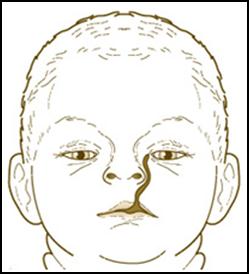
Incomplete merging the maxillary and mandibular processes
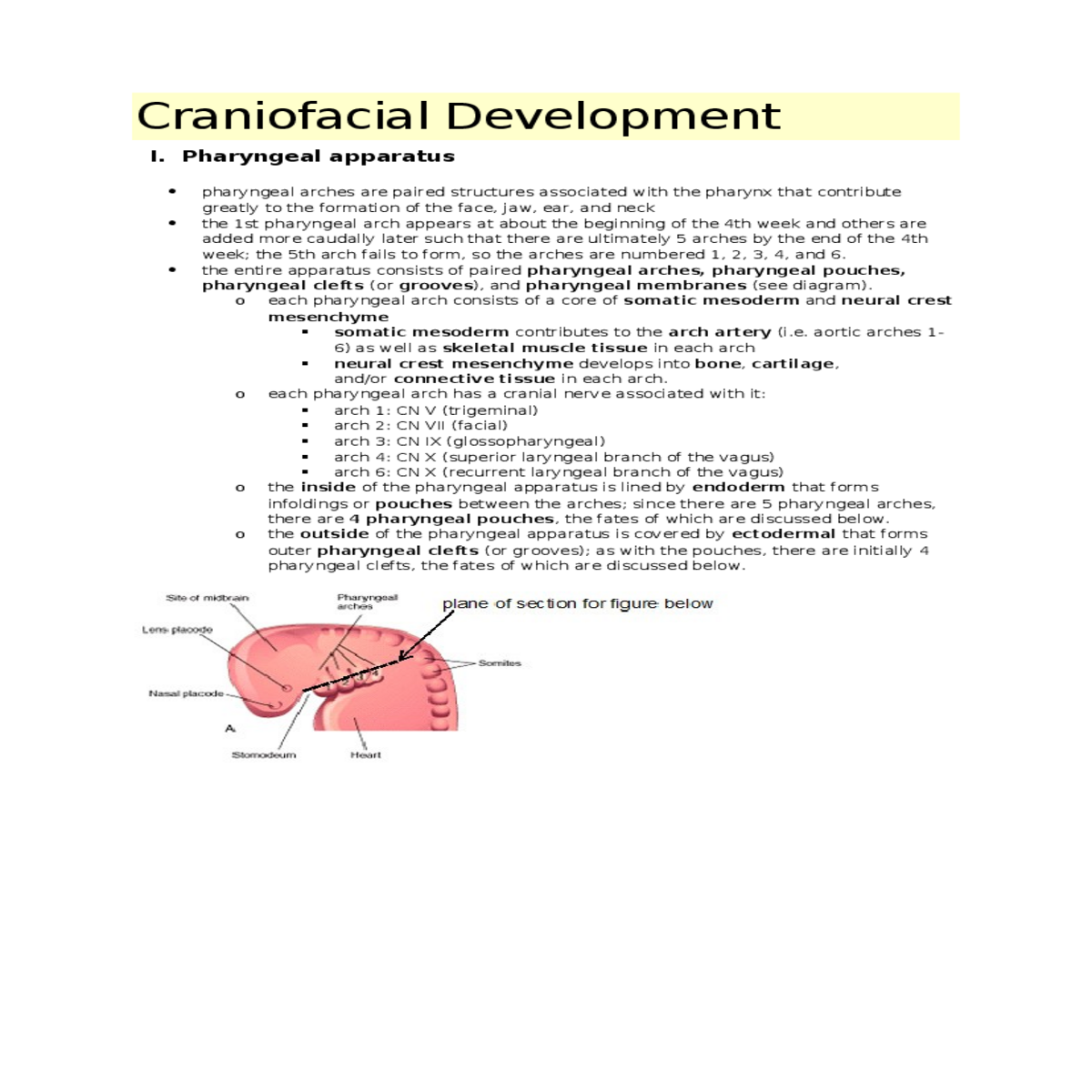
| Craniofacial Development |
|---|
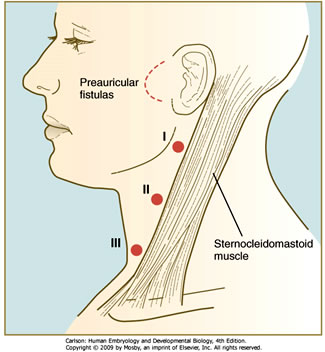
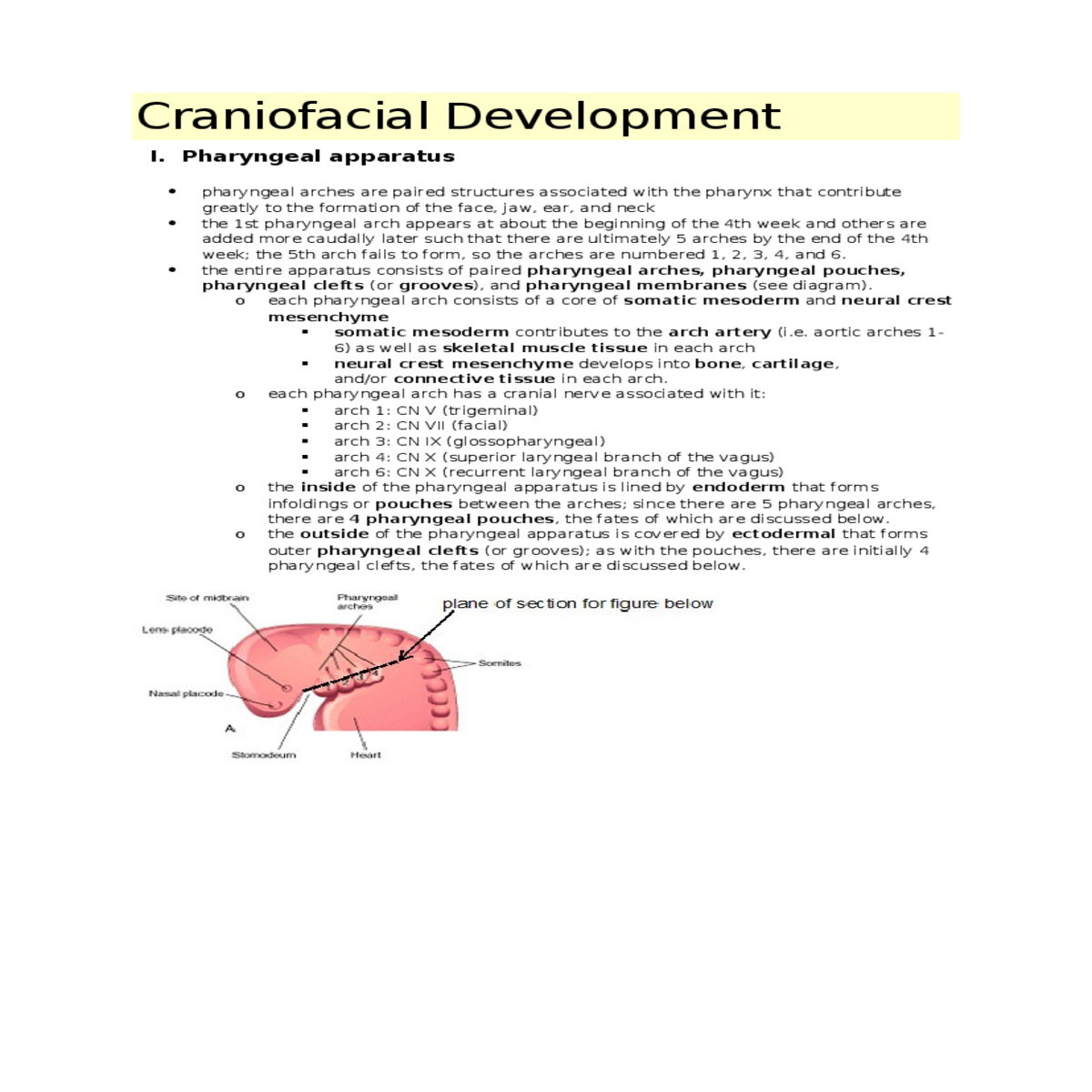
A. Fates of pharyngeal clefts The pharyngeal clefts are ectodermal-lined recesses that appear on the OUTSIDE of the pharnyx between the arches; cleft 1 is between arch 1 and 2, cleft 2 is between arches 2 and 3, etc.
2. Pharyngeal Pouch 2 –forms numerous infoldings that become the crypts of the palatine tonsil; later, lymphocytes (from the thymus and bone marrow) infiltrate the underlying lamina propria to establish the definitive palatine tonsil. 3. Pharyngeal Pouch 3 –divides into a superior (or dorsal) and inferior (or ventral) portion: Anomalous development of the derivatives of pouches 3 and/or 4 can result in ectopic or absent parathyroid, thymic, or parafollicular thyroid tissue. The most common disorder in which this occurs is DiGeorge syndrome, caused by a deletion in the long (or "q") arm of chromosome 22, leading to a hypoplasia of 3rd and 4th pharyngeal arches and their associated phayngeal pouches. Symptoms and signs of DiGeorge often include:
A. Anterior 2/3 of the tongue:
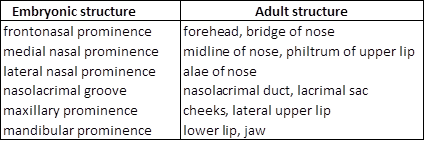
Below is a summary of the contributions of the prominences to the adult face:
Complete fusion of the primary and secondary palate is a complex process involving growth of the component tissues, epithelial to mesenchymal transformation, cell migration, and programmed cell death at fusion sites –disruption of any part of this process can result in cleft palate. Given the involvement of the maxillary and nasal prominences, cleft palate is often (but NOT always) accompanied by cleft lip. ANSWER
3. The condition shown in the figure below was most likely caused by:
A. 1st pharyngeal pouch. ANSWER ANSWER
Questions 7-10 refer to the list below. Select the most appropriate structure in the list for each of the following statements or descriptions (each labeled structure may be used once, more than once, in combination with other structures, or not at all). If a statement or description refers to a structure NOT in the list then the correct answer would be "NONE of the above." 8. gives rise to the mandible ANSWER 10. its derivatives are innervated by the hypoglossal nerve ANSWER
11. innervated by the facial nerve
13. innervated by cranial nerve VIII
ANSWER
17. Which of the following could you expect to find upon further examination? |