Impulse response describes how system reacts instantaneous input signal
Solved Step by Step With Explanation- Parallel Sum of Impulse Responses
Questions
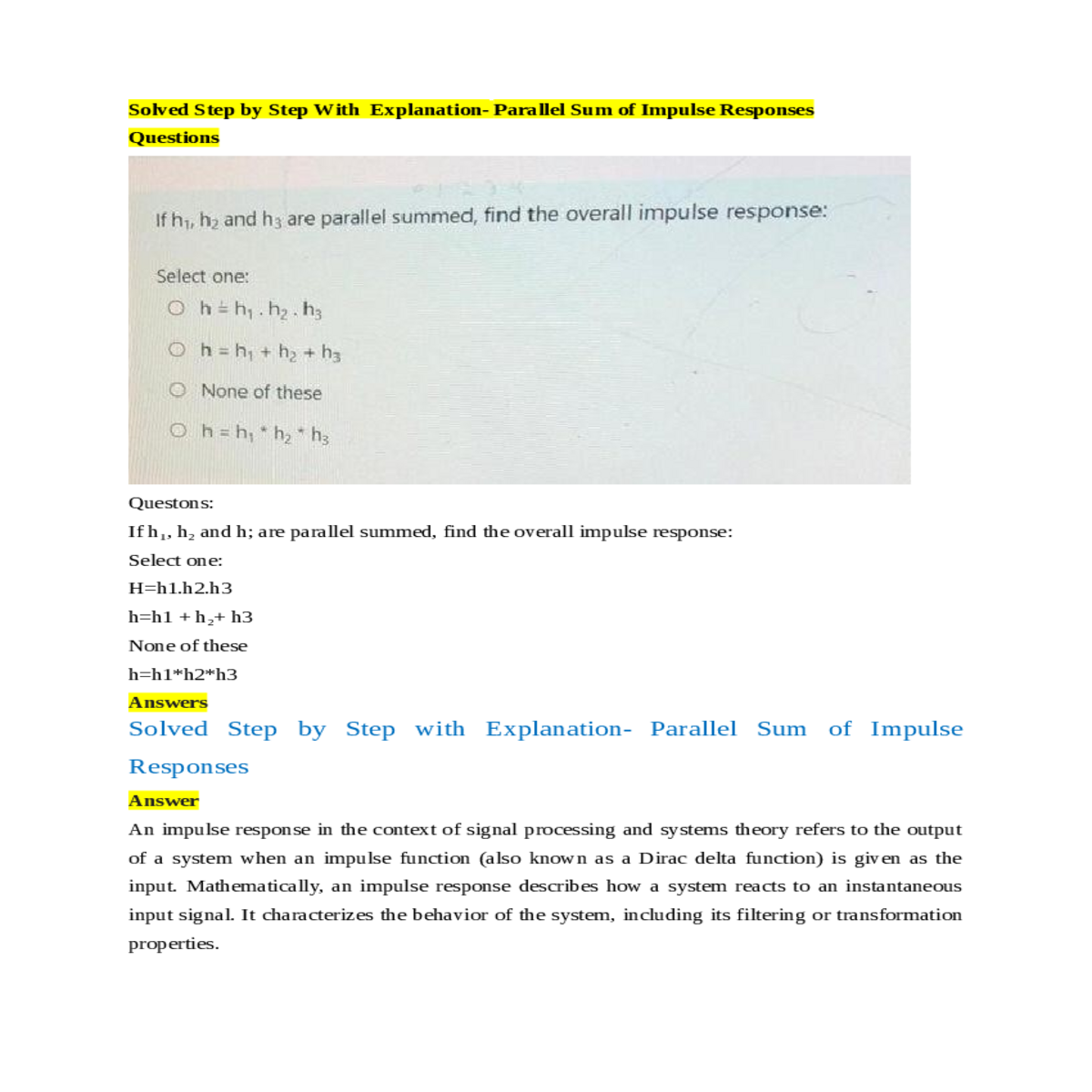
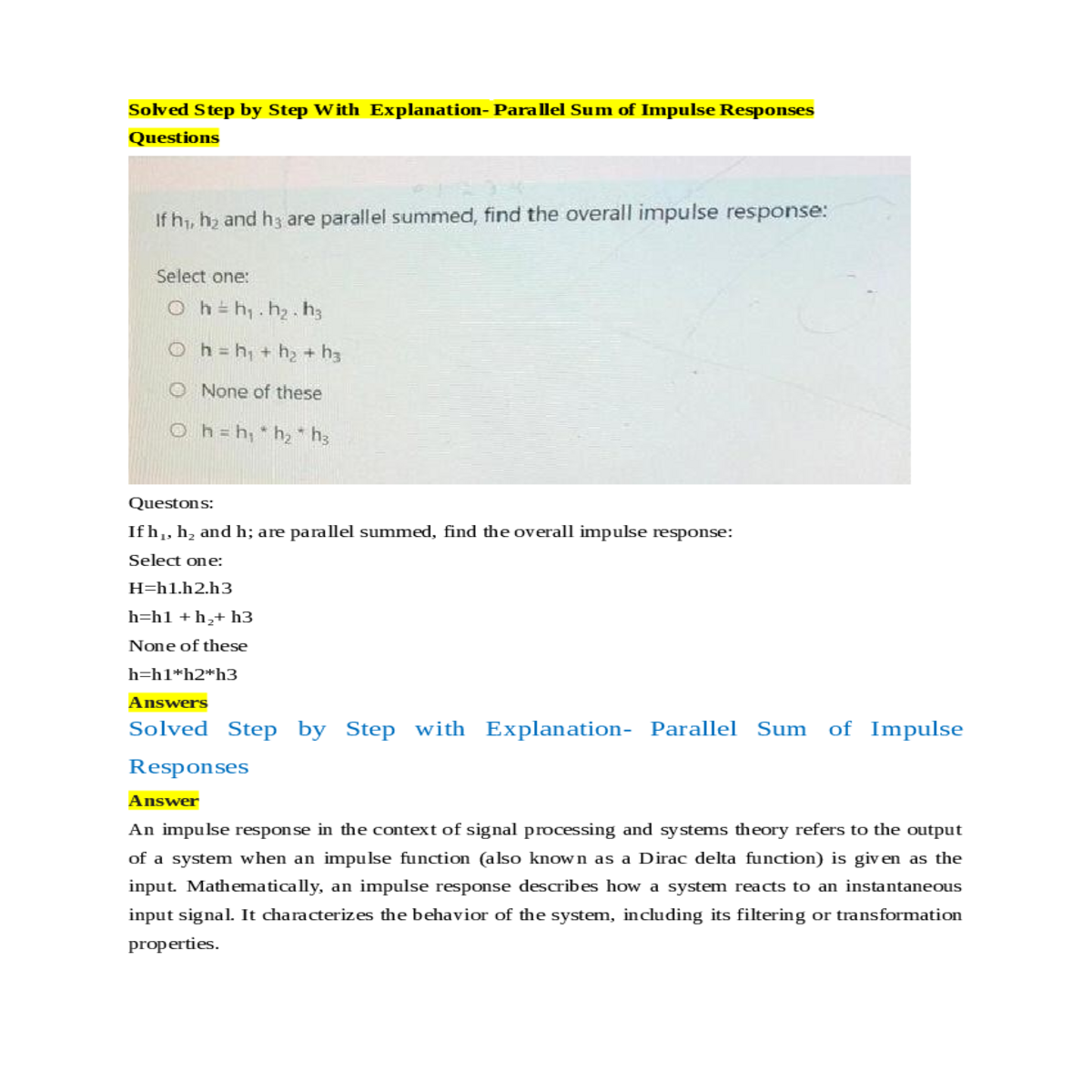
H=h1.h2.h3
h=h1 + h₂+ h3
Answer
An impulse response in the context of signal processing and systems theory refers to the output of a system when an impulse function (also known as a Dirac delta function) is given as the input. Mathematically, an impulse response describes how a system reacts to an instantaneous input signal. It characterizes the behavior of the system, including its filtering or transformation properties.
h = h₁ * h₂ * h₃: Similar to the first option, this suggests multiplication of the impulse responses. However, as mentioned earlier, when impulse responses are parallel summed, they are added together, not multiplied.
The correct answer is h = h₁ + h₂ + h₃ because when impulse responses are parallel summed, their effects are added together to determine the overall response of the system. This option accurately represents the behavior of the system in response to multiple inputs applied in parallel.