Guide clinical decisions and nursing care
Melissa Yard-Smith
NRSG367 – Module 2
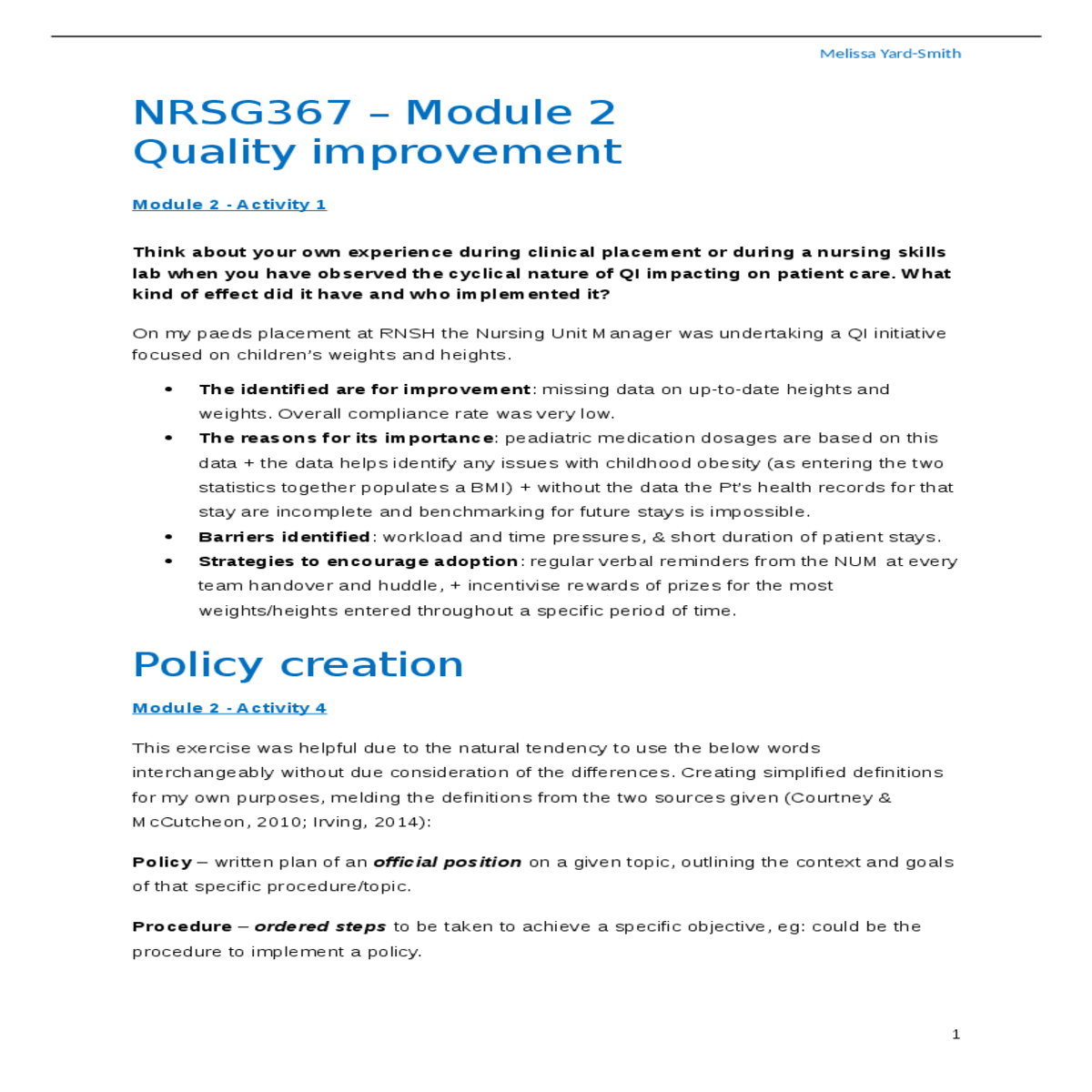
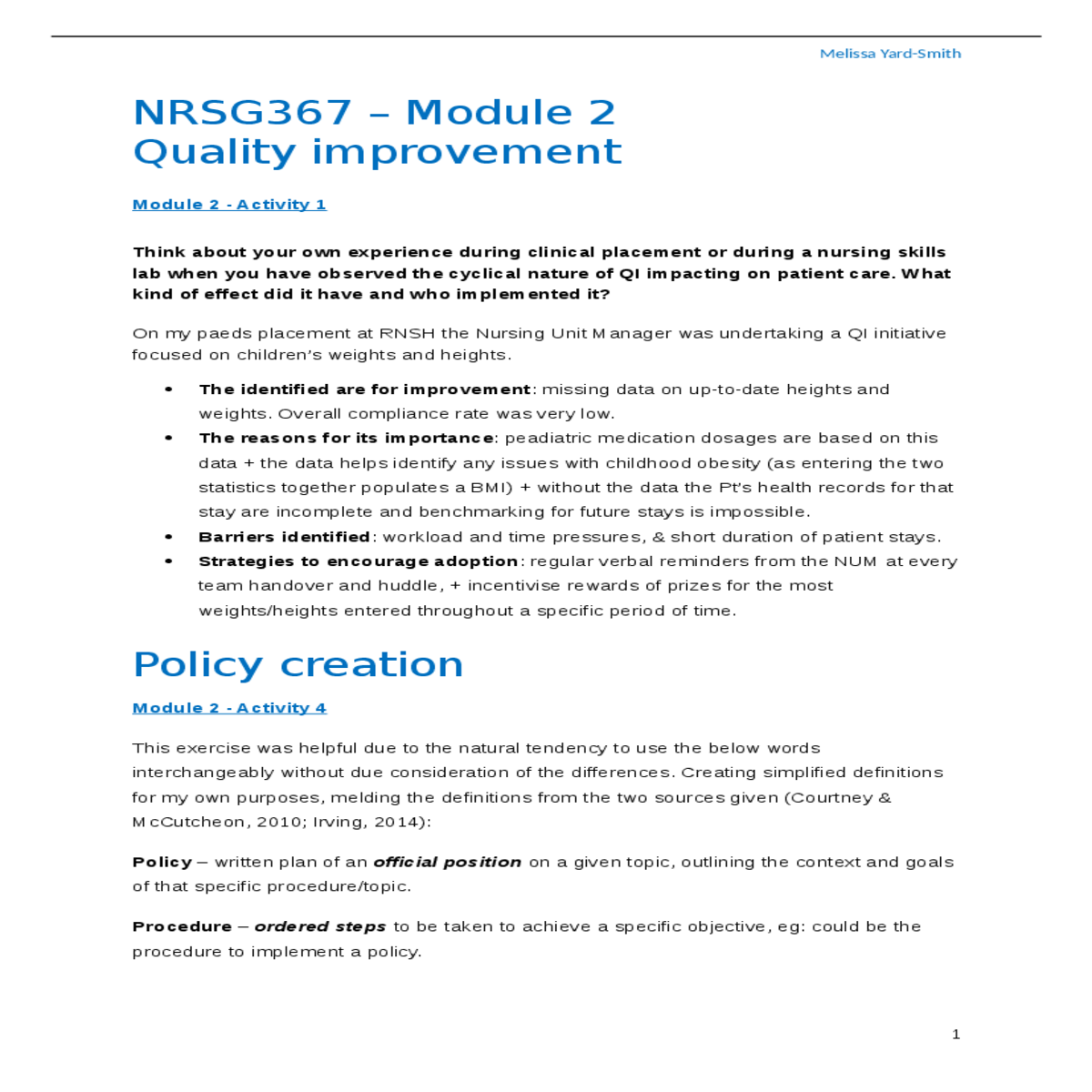
Quality improvement The reasons for its importance: peadiatric medication dosages are based on this data + the data helps identify any issues with childhood obesity (as entering the two statistics together populates a BMI) + without the data the Pt’s health records for that stay are incomplete and benchmarking for future stays is impossible.
Barriers identified: workload and time pressures, & short duration of patient stays.
Policy – written plan of an official position on a given topic, outlining the context and goals of that specific procedure/topic.
Procedure – ordered steps to be taken to achieve a specific objective, eg: could be the procedure to implement a policy.
|
|
|---|---|
|
|
Specifically, in relation to my last paeds placement, the following safety interventions (which were all in accordance with NSW Health and facility policies) come to mind:
2
Medication administration – vigilance is required during the medication administration process, to ensure children’s safety, as several more steps are required for paediatric meds compared to adults. This is a crucial area of safety in which RNs are key players, within peadiatrics. One example, was a doctor prescribing a paracetamol dose based on a child’s (correct) weight of 40kg. The RN identified that despite the dose being correct for a 40kg child, it was an inappropriate dose for this particular child as he was only 5yrs old (the average weight of a 5yr old being 19kg). The 40kg dose would have been way too potent for the child’s liver maturity.
IIMs reporting – I have witnessed nurses enter IIMs on safety issues, to help the facility log and track issues, with the ultimate aim being continual improvement. One young neonate received a minor skin burn/irritation from the sats probe – facility protocol is to change location of the sats probes every 3hrs.