During the winter and early Disease can be minimized, or spring,
V. inaequalis produces even prevented, by good horti-small,
black erumpent pustules cultural practices. These prac-on the fallen
leaves that were tices include selecting sites that
Photo by Janna Beckerman Photo by Janna Beckerman
another flush of spores that infect Figure 3.
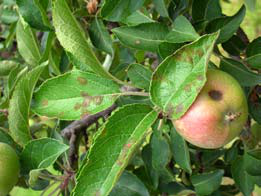
Yellow leaves characteristic of advanced Preventing fruiting body
other leaves, fruit, and surround- apple scab. formation in
fallen apple leaves ing trees. These secondary infec- is a key step in
disease control.
fungus (see Purdue Extension publication BP-13 Unfortunately, this
level of control is rare. Instead, ar fungicide application
must begin in early spring from apple green tip, and continue on a 7- to
10-day schedule However,
s, including (7 days during wet weather, 10 days if dry) until petal
Akane, Freedom, Goldrush, Jonafree, Liberty, Prima, and fall. If dry
weather persists after petal fall, a 10- to 14-day Redfree.
Scab-resistant cultivars vary in susceptibility spray schedule is
adequate for scab control. Most of the fungicides labeled for home use
are strictly protectants to other early-season diseases, and all are
susceptible to
summer diseases. Using scab-resistant cultivars is essential which
provide a protective covering on the leaf surface, if growers wish to
produce organically grown fruit, as but are not absorbed by leaves,
meaning reapplications most organic fungicides will not provide adequate
control are required after heavy rains to maintain their efficacy.
against this disease in most years.