Called the somatic efferent motor column
298Part IISystems-Based Embryology
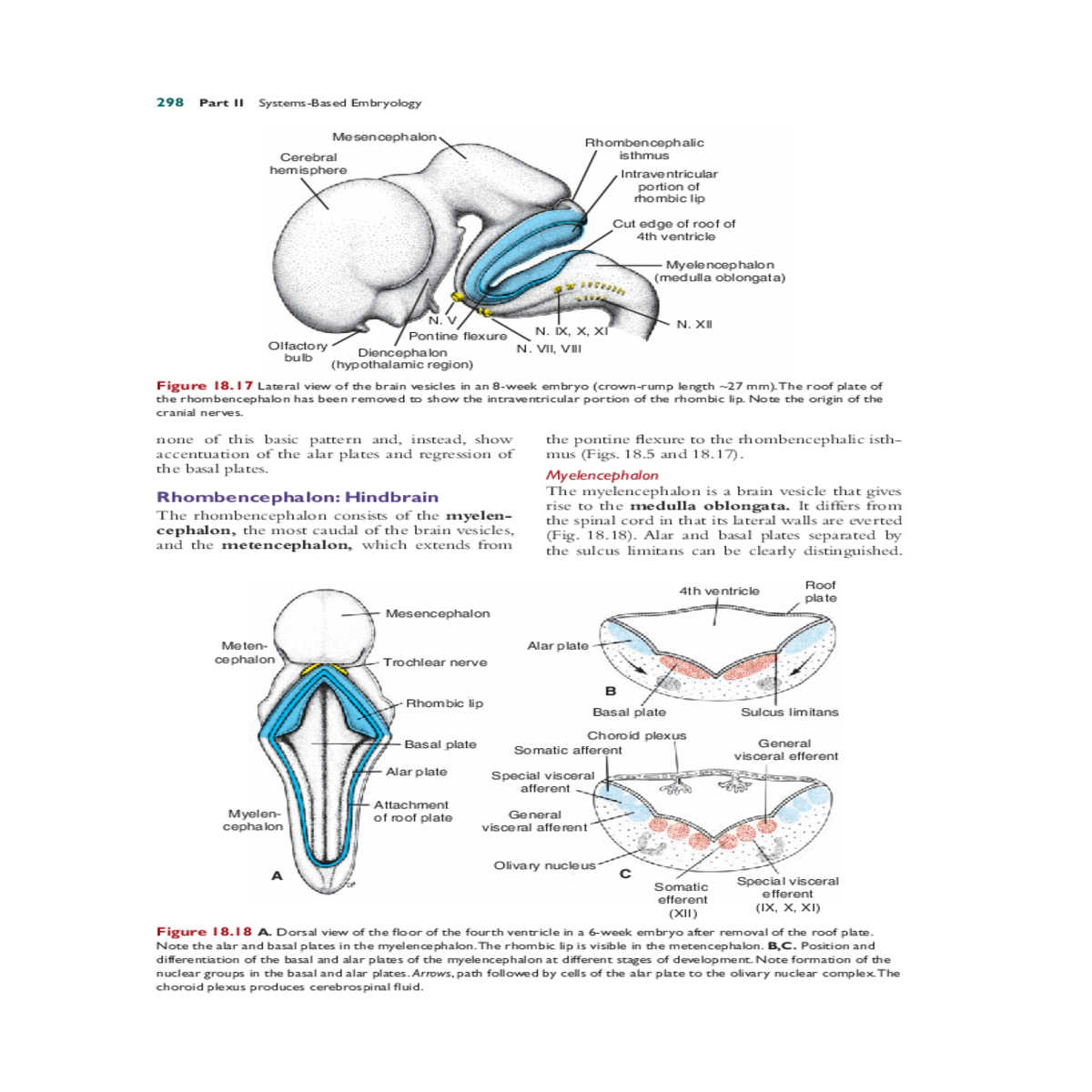
Myelencephalon
(medulla oblongata)
| Olfactory | N. V |
|
|
|---|---|---|---|
| Pontine flexure | |||
| bulb | |||
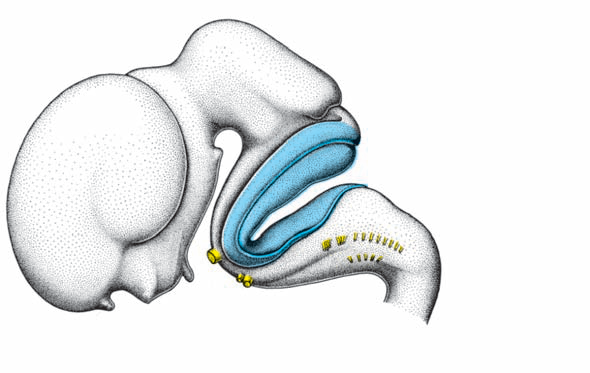
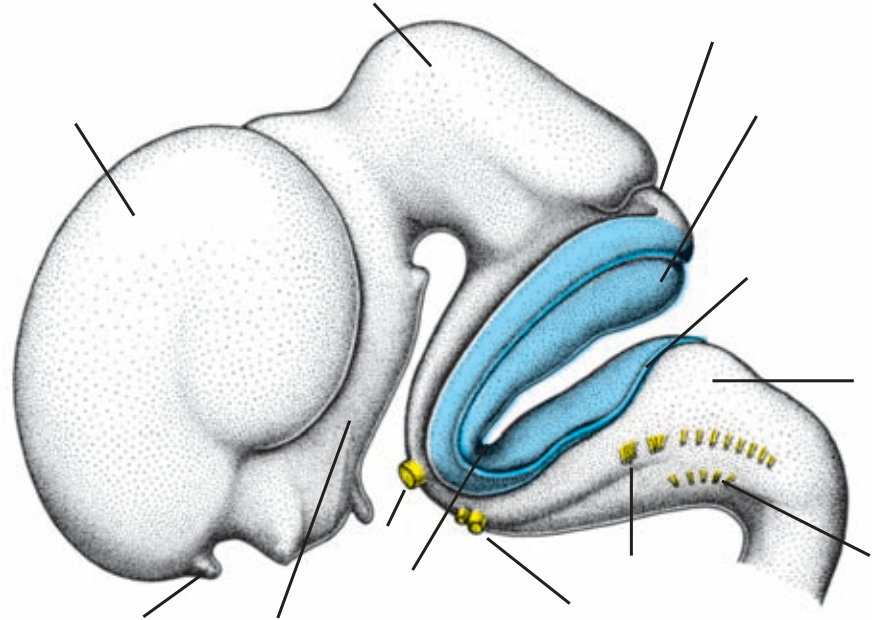
Figure 18.17 Lateral view of the brain vesicles in an 8-week embryo (crown-rump length ~27 mm). The roof plate of the rhombencephalon has been removed to show the intraventricular portion of the rhombic lip. Note the origin of the cranial nerves.
none of this basic pattern and, instead, show accentuation of the alar plates and regression of the basal plates.
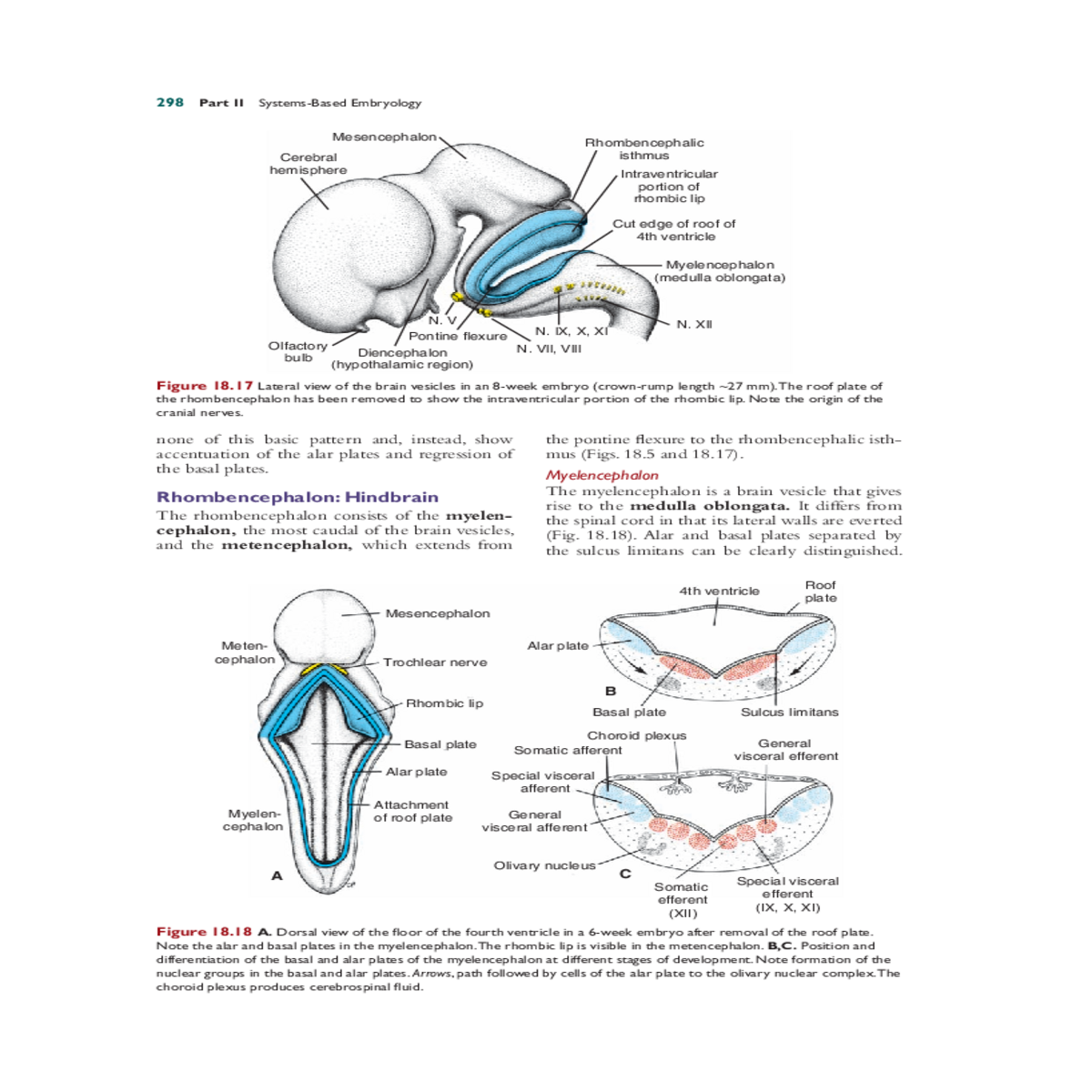
Myelencephalon
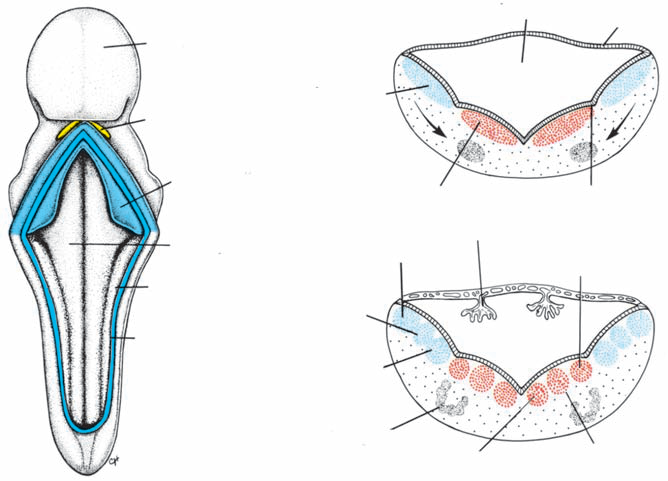
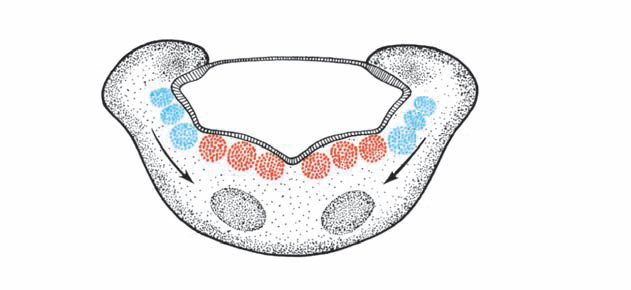
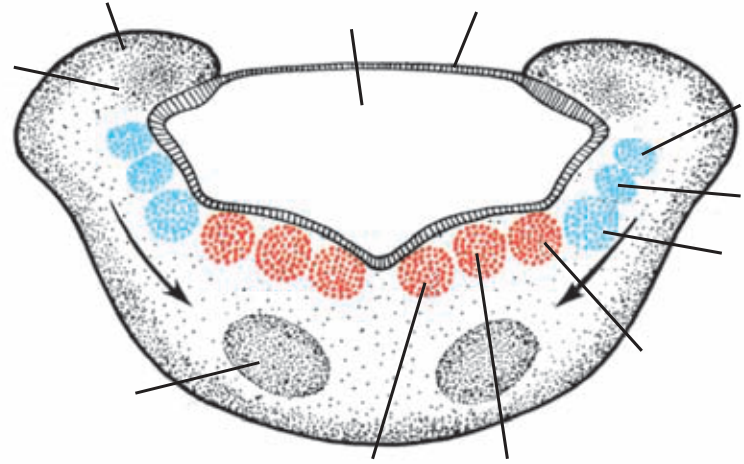
The myelencephalon is a brain vesicle that gives rise to the medulla oblongata. It differs from the spinal cord in that its lateral walls are everted (Fig. 18.18). Alar and basal plates separated by the sulcus limitans can be clearly distinguished.
| Meten- | Trochlear nerve | Sulcus limitans | |
|---|---|---|---|
| B | |||
| Rhombic lip | |||
| Basal plate | |||
| Basal plate | Choroid plexus | General | |
| Alar plate | |||
|
afferent
Note the alar and basal plates in the myelencephalon. The rhombic lip is visible in the metencephalon. B,C. Position and differentiation of the basal and alar plates of the myelencephalon at different stages of development. Note formation of the nuclear groups in the basal and alar plates. Arrows, path followed by cells of the alar plate to the olivary nuclear complex. The choroid plexus produces cerebrospinal fl uid.
| TABLE 18.1 Organization of Alar and Basal Plate Neurons in the Brainstem | ||||||||
|---|---|---|---|---|---|---|---|---|
| Type | Type of Innervation | |||||||
| General somatic |
|
|
Metencephalon Myelencephalon | |||||
|
||||||||
| Special visceral |
|
Metencephalon Myelencephalon | ||||||
| of the pharynx (see |
|
|||||||
|
||||||||
| Parasympathetic | Myelencephalon |
|||||||
|
||||||||
|
|
|||||||
| heart, salivary glands | ||||||||
| General visceral | Myelencephalon | |||||||
|
||||||||
| Taste |
|
|||||||
|
|
|||||||
| Hearing and balance | ||||||||
| General somatic |
|
|
Metencephalon Myelencephalon | |||||
| nasal cavities, and the pharynx | ||||||||
bBranchia is an old term that means gills. Although the pharyngeal arches resemble gills in some ways, they are not true gills. Therefore,
The special visceral efferent group extends into the metencephalon, forming the special visceral efferent motor column. Its motor neurons supply striated muscles of the pharyn-geal arches. In the myelencephalon, the column is represented by neurons of the accessory (XI), vagus (X), and glossopharyngeal (IX) nerves.
| External granular layer | 4th ventricle |
|
|
|---|---|---|---|
| Rhombic lip |
Somatic efferent (Vl) Special visceral efferent (V and Vll)
Figure 18.19 Transverse section through the caudal part of the metencephalon. Note the differentiation of the various motor and sensory nuclear areas in the basal and alar plates, respectively, and the position of the rhombic lips, which project partly into the lumen of the fourth ventricle and partly above the attachment of the roof plate. Arrows, direction of migra-tion of the pontine nuclei.