And issues with food labelling and food tampering issues
ASSESSMENT INSTRUCTIONS FOR STUDENTS
Overview
Student must not use non-discriminatory language. The language used should not devalue, demean, or exclude individuals or groups on the basis of attributes such as gender, disability, culture, race, religion, sexual preference or age. Gender inclusive language should be used.
Assessor should not accept answers copied directly from texts without acknowledgement of the text.
Presenting any work by another individual as one's own unintentionally
Handing in assessments markedly similar to or copied from another student
Copyright is a right belonging to the owner or licensee of a literary, artistic or dramatic work, film or sound recording. You must be abide by the Copyright Act 1968 and not reproduce, perform or otherwise deal with the work. The owner of the material may take legal action against you if the owner's copyright has been infringed.
Competency Outcomes
If you are dissatisfied with the outcome of one of the assessment tasks or the final outcome of the assessment task because you feel that the result is unfair or incorrect, you may request to have the task/s or overall assessment task reviewed. If you are still dissatisfied with the outcome, you may lodge a formal assessment appeal. Refer to SBTA’s Complaints/Appeals Policy and Procedure.
Reasonable adjustment
Please ensure that you also acknowledge the Student Declaration section on your student portal prior to submitting. The student declaration section acknowledges that you declare that:
I am submitting work in this assignment that is my own, except where acknowledgement/s of sources are made.
I was advised and I am aware of The Academy’s Policies including the Assessment Policy and the Assessment Appeals Process.
I was given assistance from the trainer and/or other Academy staff during the study of this course when it was requested.
This unit incorporates the requirement, under state and territory work health and safety (WHS) legislation, for businesses to take a systematic approach to managing the safety of their workers and anyone else in the workplace
BSBSUS401 Implement and monitor environmentally sustainable work practices
Knowledge questions
Assessment task description:
All knowledge tests are untimed and are conducted as open book assessment (this means you can refer to your textbooks or the internet to conduct research during the assessment). However, the answers must be in your own words to demonstrate your own understanding of each individual question.
You must read and respond to all questions ad must type the answer to the questions and must complete your work independently to demonstrate individual competency.
Where your answers are deemed not satisfactory after the first attempt a resubmission attempt will be allowed.
You may speak to your Trainer/Assessor if you have any difficulty in completing this task and require reasonable adjustments.
The purpose of this assessment task is as follows:
Knowledge to implement and monitor work health and safety workplace practices in order to maintain safe and secure environment for employees in workplace.
Reading skills to interpret unfamiliar and complex materials describing regulatory requirements for WHS management and organisational policies and procedures.
Written skills to write high level reports about the effectiveness of WHS management practices, making recommendations for change and complete accurate records for regulatory compliance.
identify relevant internal and external sources of information and explain how they can be used to identify sustainability improvements
explain the compliance requirements for the work area with reference to legislation, regulations, codes of practice and workplace procedures that relate to environmental and resource issues
quality assurance
making recommendations and seeking approvals
Self-paced learning
In class activities
Benchmark for Assessment
You are expected to respond to all aspects of each question and case study. In some cases, direction is provided on the expected length of your response. These assessments will require a Short, Medium or Long response.
| Short | 30+ words |
|---|---|
| Medium | 100+ words |
| Long | 200+ words |
For this task your assessor will break you into smaller work groups, so you can research and discuss the questions. You can use the internet to research as well as your learner guides but remember your answers must be in your own words. Any information taken directly must be referenced.
NOTE: for the purposes of this assessment you may access and refer to the harmonised WHS laws developed by Safe Work Australia known as the model laws.
| Under health and safety law, the primary responsibility for this is down to employers. Workers have a duty to take care of their own health and safety and that of others who may be affected by your actions at work. Workers must co-operate with employers and co-workers to help everyone meet their legal requirement. |
|---|
Explain what are the employee’s responsibilities to ensure safety of self, other workers and other people in the workplace environment. (Short)
Why should employees participate in WHS practices.
| The main benefits of worker participation in safety and health include: lower accident and sickness rates. Reduced costs and reduced risks because employee absence and turnover rates are lower, accidents are fewer, the threat of legal action is lessened. |
|---|
Consultation in the hazard identification and risk assessment process
The role of WHS committees or WHS representatives in WHS consultation
|
|---|
Refer to a commercial kitchen environment and explain what should be included in the contents of the following WHS documents: (Short)
| A written general health and safety policy demonstrates to management, supervisors and workers that there is a commitment to ensuring high standards of health and safety. The policy should cover some, or all, of the following items: accidents, first aid and physical and mental ill health. Monitoring hazards and risks. |
|---|
|
|---|
|
|---|
Explain the role of WHS representative and committee.
|
|---|
CASE STUDIES
 |
|---|
The kitchen is very busy, and the machine is used throughout the day to prepare dough and several people within the kitchen use the machine. Below is a picture of this type of machine and the hook attachment |
|
|
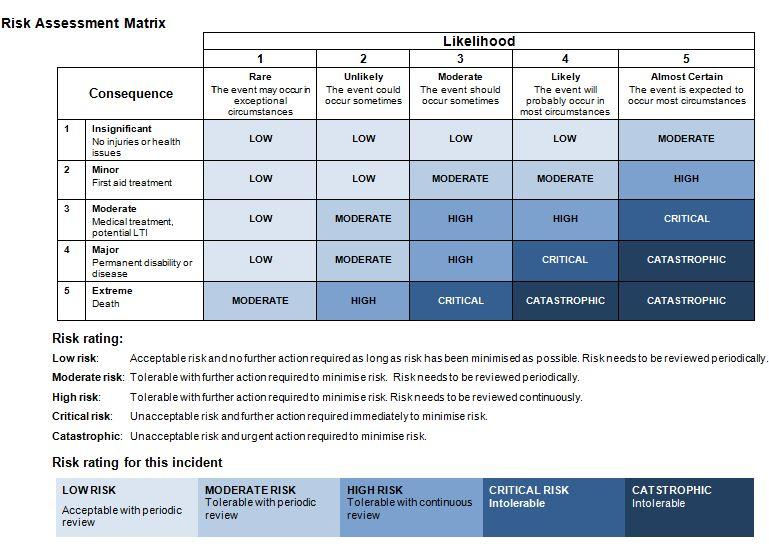
| The exposure to the hazard is medium to high. It is no guarding on machines at all letting operators reach into dangerous parts of the machine. |
|
| The probability of an incident or injury is moderate. |
| The overall risk level for identified the hazard is moderate. Exposure to likelihood than consequences. |
|
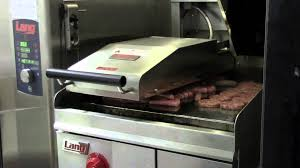
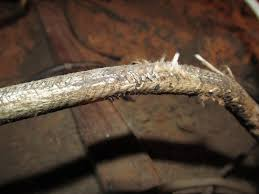
Below is a picture of a clamshell grill and cords that are fraying
|
|
Injury- burns to skin with electric shock, tearing, |
| The exposure to the hazard is high. |
| The probability of an incident or injury nearly occur high |
|
| The overall risk level is moderate because sometimes ask to employee some fault in this machine so be carefully. |
Below is a case study of an actual incident that occurred using similar equipment: |
|
The consultative process that should take place.
| Coaching or mentoring in safe work practices - |
|
|---|---|
| Formal training programs in safe work practices - |
|
What are the time requirements for organisations to identify hazards in the workplace?
It is important that organisations maintain their safety and keep their staff well informed of any hazards, incidents and ongoing legislative changes. Explain what documents would a safety officer require to implement work health and safety procedures in the workplace.
|
|---|
making recommendations and seeking approvals
(Guide: Medium)
List three environmental barriers that may exist within your workplace and outline how these may be overcome by the implementation of consultative processes and how can suggested improvements to sustainability practices be raised within your workplace?
|
|---|
Explain the importance of setting effective environmental targets and list what tools can you implement to assist with the lealisation of efficiency targets?
Energy
Land
|
|---|
Pollution
Garbage/waste
|
|---|
| Assessor’s feedback: |
|---|
| Task outcome: Satisfactory Not Satisfactory |
This is the second (2nd) practical assessment task you have to successfully complete to be deemed competent in this unit of competence. You must complete all tasks to the required level to be deemed satisfactory in this task. Student must not use non-discriminatory language. The language used should not devalue, demean, or exclude individuals or groups on the basis of attributes such as gender, disability, culture, race, religion, sexual preference or age. Gender inclusive language should be used.
Assessor should not accept answers copied directly from texts without acknowledgement of the text.
Purpose of the assessment task
The purpose of this assessment task is to assess the students’ skills in being able to implement and monitor adherence to workplace health and safety procedures in three of the following real or simulated situations:
incident and accident reporting
risk assessment and reporting
Resources and equipment required to complete this task
The student will have access to the following:
Commercial kitchen environment
templates
Read the scenario below and complete the following activities.
Scenario
Now that you have presented the work, health and safety information to your staff, it is important for you to monitor safe work practices. Ensure that your staff are complying with the WHS practices you have put in place.
You are required to develop a checklist to monitor safe work practices, interview your staff and complete the checklist.
|
|---|
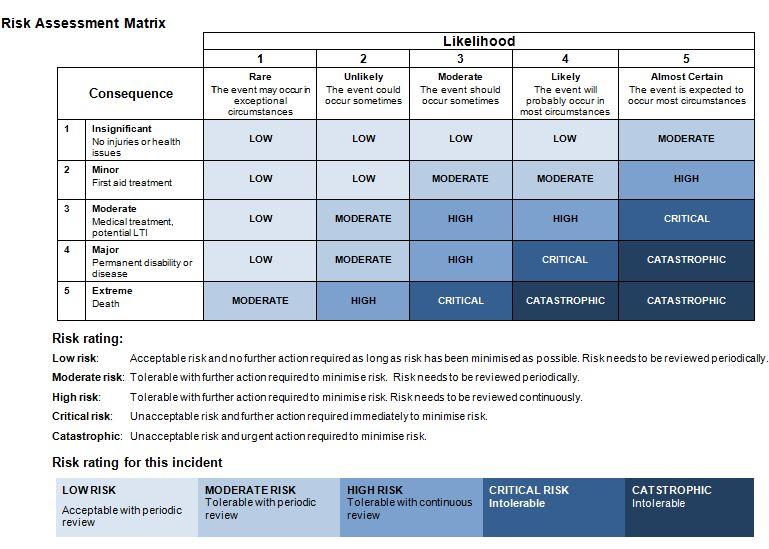
Refer to all the areas you have ticked as “no” and explain why you ticked “no”. Describe all the actual or foreseeable hazards you have identified and explain what the risk is for each one.
 |
||
|---|---|---|
| Description of hazard/risk | Risk level | |
| Injuries or health issues | low | Use gloves, aprons, wet floor signs, hairnets etc because it is prevent to injuries |
| First aid treatment | moderate | Available the bandage, liquid medicine. |
| Disability | high | Gloves, wet floor signs, etc. |
Your assessor will complete this checklist and provide feedback.
Read the scenario below and implement a risk control method to eliminate this future risk.
| The term manual handling covers a wide variety of activities including lifting, lowering, pushing, pulling, carrying. Manual handling is when you hold, lift, push, pull, shove or use your body to move things. The occupational healthand safety regulations 2007. |
|---|
| WHS training needs | Organisation who will deliver the training | Duration | Cost per person | Total costs (for 10) |
|---|---|---|---|---|
| WHS online induction | Asbestos assessor | 1-2 hours | 120 | 1200 |
| Manual handling training | assessor | 2 hours | 120 | 1200 |
| Safety committee training | Assessor | 3-4 hours | 140 | 1400 |
Emergency evacuation
This task will enable you to demonstrate how you follow procedures in emergency situations such as fire in the workplace and maintain WHS records and reports. To successfully complete this assessment task, you MUST participate in the demonstration.
Print a copy of the incident report form below and save this to your e-learning to demonstrate minimal use of printed materials and using electronic transmissions when filing documents to reduce waste.
Below is a copy of an Incident Report Form.
| The evacuation process is typically complex and involves a number of agencies, several stages and a combination of factors which can influence its efficiency and the evacuees safety. This complexity is evident across multiple scales, from incidents involving a single building to a full scale city or area. Steps to take in an evacuation. Our businesses are some of our most cherished possessions. Mandatory evacuation checklist. |
| ASSESSORS CHECKLIST | |
|---|---|
| Did the student demonstrate the following? | Satisfactory |
| Ability to implement and monitor procedures for an emergency evacuation | yes |
| Evaluated the evacuation plan identifying any requirements for further training of team members or changes to the plan required. | y Yes No |
| Completed the emergency evacuation incident report | y Yes No |
Satisfactory: Yes No Trainers are to provide comments of questions or tasks which have been marked as Not Satisfactory so that the student has the opportunity to correct the answers and present the corrected work to the trainer and assessor for remarking.. |
|
This is the third (3rd) assessment task you have to successfully complete to be deemed competent in this unit of competence. You must complete all tasks to the required level to be deemed satisfactory in this task. Student must not use non-discriminatory language. The language used should not devalue, demean, or exclude individuals or groups on the basis of attributes such as gender, disability, culture, race, religion, sexual preference or age. Gender inclusive language should be used.
Assessor should not accept answers copied directly from texts without acknowledgement of the text.
Level 2, 401 Sussex Street, Sydney, NSW 2000 and 81A Foveaux Street, Surry Hills, NSW 2010
Purpose of the assessment task
measure current resource usage
solve problems and generate ideas for improvements
apply change management techniques to support sustainability performance.
Resources and equipment required to complete this task
Learner guide, PowerPoint, additional reading material, templates
Benchmark for Assessment
Read the scenario below and complete the activity.
Scenario Currently, organisation is using plastic bags for packaging that are not recyclable, costly and hazardous to environment. There is nobody at the restaurant who is responsible for ensuring that the restaurant complies with sustainability practices. The government is also considering banning bottled water and plastic bags at official even bags as it takes lot of oil to make plastic, creating CHG emission in manufacturing and even though they can be recycled they often end up in landfill taking 1000 years to break down.
Currently the organisation has no policies or procedures in place regarding sustainable practices.
|
|---|
(Guide: 1.5 to 2 pages – Font: Arial or Century Gothic Font Size: 12pt)
As a food and beverage business owner, you must be familiar with NSW food safety legislation, including the food act 2006, the food regulation 2006, the food production act 2000 and the food production regulation 2014. Food safety standards outlined by food standards Australia apply to every business involved in the handling of food for sale, or the sale of food, in Australia. The only exception is businesses involved solely in primary production that do not process their products or sell them directly to the public. NSW health has overall responsibility for food safety in NSW, including food safety for restaurants and food retailers, and issues with food labelling and food tampering issues. Safe food production manages the operational aspects of food safety through industry based food safety schemes for meat, diary products, seafood and eggs. |
|---|
Collect, analyse and organize information from a range of sources on environmental and resources efficiently systems and procedures and discuss with your assessor. Obtain your assessor’s feedback prior to the role play;
Conduct the role play and inform your work group on any improvement opportunities.
| RESOURCE USAGE | |||
|---|---|---|---|
| Staff member name: | Abhijot sharma | ||
| Job role: | supervisor | ||
| Department: | Production department | ||
| Date: | 21-04-2020 | ||
| Resources used | Qty per week | Price per item | Comments |
| Plastic bags | 150 | 2.00 | good |
| Plastic cups | 100 | 1.00 | good |
| Plastic bottles for drinks | 120 | 3.50 | good |
| Paper napkins | 60 pack | 3.00 | good |
| Table linens | 60 | 3.00 | fair |
| Energy usage | 70% | 4.00 | good |
| Oil usage | 50 | 8.00 | good |
Access La pochette restaurant’s current purchasing policy (copy attached as Appendix A). Document the restaurant’s purchasing strategy in your own words below. (Guide: Short)
| Appliances | Strategies to minimise waste |
|---|---|
| Freezers and fridges |
|
| Lighting |
|
| Food |
|
| Dishwasher | |
| Ovens | |
| Refrigeration |
|
|
|---|
In this task you are required to set targets for improvements, implement performance improvements and monitor performance. You can undertake this task in small groups however your answers must be in your own words.
Read the scenario regarding La pochette restaurant again and complete the following activities:
|
|---|
Action plan to implement the improvement.
Compliance requirements of the suggested improvement.
• Biological determinants such as hunger, appetite, and taste • Economic determinants such as cost, income, availability |
|---|
Meet with your team (your colleagues from your class) and relevant stakeholders such as sustainability specialist (your assessor) and seek their feedback and discuss any of their additional ideas on improved practices and any improvements they may suggest. You can address the following points in your email:
Outline what could be the possible reasons for any barriers to improvements
(include timeframes and responsibilities for each communication method) |
Costing strategy | Target |
|---|---|---|
| Number1 | ||
| Staff training program that looks at where the issues have been last 3 months and how to approach the issue | All staff paid for 2 hours on full training on how the business is going to reduce cost overall with energy efficiency. | Reduce cost 30% in 6 months |
| Number 2: | ||
| Staff training program to generate ideas and solutions. | All staff paid for 2 hours on half training on how to reduce the cost energy efficiency. | Reduce cost 20% in 3 months |
| Number 3: | ||
| Take some time to develop a plan and build in ways to measure impact | All staff paid for 3 hours on full training on how to reduce the cost energy efficiency. | Reduce cost 30% in 6 months. |
In this task you are required to use the following evaluation and monitoring tools and technology to monitor the performance of the fridge/freezer. (Guide: Short)
To The manager |
|---|
You have implemented the strategies to the restaurant. All stakeholders have taken the implementation on board and working towards maintaining a sustainable work practices. You have decided to reward the staff to ensure that they continue to embrace workplace sustainability. List some ways you are going to reward the employees. (Short)
|
|---|
Appendix A
PURCHASING AND PROCUREMENT POLICY
We look at how we can use all the material reducing waste and transport with smaller and environmentally friendly packaging, use toxic free substances and be more energy efficient.
We achieved this by exploring ways to achieve our statement promises by looking at the following.
Automated print preview before printing papers
Motion sensor for lighting throughout our office
As our “Green” culture becomes established and embedded we aim to:
Encourage our stakeholders (student, teachers, employees and suppliers) to be responsible corporate green citizens.
It is our intention to operate our business in an environmentally friendly and sustainable way as possible.
Approved by: Management
| Date of check | Checked by (Initials) | Time | Cabinet temperatures oC | Action required / notes | Action completed (date) | Supervisor (initials) | |||||
| 1 | 2 | 3 | 4 | 5 | 6 | ||||||
| Monday | | am | |||||||||
| 11-05-20 | kim | pm | | 3 | no | 13-05-20 | |||||
| Tuesday | | am | |||||||||
| 12-05-20 | kajal | pm | 2 | no | 13-05-2002 | carl | |||||
| Wednesday | | am | |||||||||
| 13-05-20 | kim | pm | 4 | no | 16-05-20 | carl | |||||
| Thursday | | am | |||||||||
| 14-05-20 | kajol | pm | 2 | no | 16-05-20 | carl | |||||
| Friday | | am | |||||||||
| 15-05-20 | shree | pm | 4 | no | 16-05-20 | carl | |||||
| Saturday | | am | |||||||||
| 16-05-20 | shivati | pm | 2 | no | 20-05-20 | carl | |||||
| Sunday | | Am | 4 | ||||||||
| 17-05-20 | kim | pm | 5 | no | 20-05-20 | carl | |||||
Recommended readings:
Some recommended reading for this unit includes:
Department of the Environment, viewed April 2015,
<http://www.environment.gov.au>.
Besides this information, you can also use internet and other relevant legislative documents.