American national standard sji where angle leg length
American National Standard SJI 200 - 2015
1.1 SCOPE
The Standard Specification for CJ-Series Composite Steel Joists, hereafter referred to as the Specification, covers the design, manufacture, application, and erection stability and handling of CJ-Series Composite Steel Joists in buildings or other structures, where other structures are defined as those structures designed, manufactured, and erected in a manner similar to buildings. CJ-Series joists shall be designed using Load and Resistance Factor Design (LRFD) in accordance with this Specification.
User Note: User notes are intended to provide practical guidance in the use and application of this Specification.
1.4 DEFINITIONS

21
1.5 STRUCTURAL DESIGN DRAWINGS AND SPECIFICATIONS
The structural design drawings and specifications shall meet the requirements in the Code of Standard Practice for Composite Steel Joists, except for deviations specifically identified in the design drawings and/or specifications.
ACI International (ACI), Farmington Hills, MI
ACI 318-14, Building Code Requirements for Structural Concrete and
Commentary ACI 318M-14, Metric Building Code Requirements for
Structural Concrete and Commentary
American Institute of Steel Construction, Inc. (AISC), Chicago, IL ANSI/AISC 360-10 Specification for Structural Steel Buildings
American National Standard SJI 200 - 2015
User Note: The following references provide additional practical guidance in the use and application of this Specification:

Steel Joist Institute (SJI), Florence, SC
ANSI/SJI-CJ COSP-2015, Code of Standard Practice for Composite Steel Joists
Technical Digest No. 9 (2008), Handling and Erection of Steel Joists and Joist Girders
Technical Digest No. 10 (2003), Design of Fire Resistive Assemblies with Steel Joists
SSPC Paint 15 Steel Joist Shop Primer/Metal Building Primer (Includes 2004 Revisions) 05/01/1999
Alsamsam, Iyad (1988), An Experimental Investigation Into the Behavior of Composite Open Web Steel Joists, Master’s Thesis, Department of Civil and Mineral Engineering Institute of Technology, University of Minnesota, MN.
Band, B.S. and Murray, T.M. (1999), Floor Vibrations: Ultra-Long Span Joist Floors, Proceedings of the 1999 Structures Congress, American Society of Civil Engineers, New Orleans, Louisiana, April 18-21.
Boice, Michael and Murray, T.M. (2002), Report of Floor Vibration Testing, University of Tennessee Medical Center, Knoxville, TN, Report CE/VPI–ST02/10, Department of Civil and Environmental Engineering, Virginia Polytechnic Institute and State University, Blacksburg, VA.
Cran, J.A. (1972), Design and Testing Composite Open Web Steel Joists, Technical Bulletin 11, Stelco, January.
Curry, Jamison Hyde (1988), Full Scale Tests on Two Long-Span Composite Open-Web Steel Joists, Master’s Thesis, Department of Civil and Mineral Engineering Institute of Technology, University of Minnesota, MN.
Easterling, W.S., Gibbings, D.R. and Murray, T.M. (1993) Strength of Shear Studs in Steel Deck on Composite Beams and Joists, AISC Engineering Journal, Second Quarter, pp 44-55.
Easterling, W. Samuel (1999) Composite Joist Behavior and Design Requirements, ASCE Structures Congress, New Orleans, LA, April 18-21.
Lembeck, Jr., H.G. (1965), Composite Design of Open Web Steel Joists, M.Sc. Thesis, Washington University, St. Louis, MO.
Leon, R.T. and Curry, J., (1987), Behavior of Long Span Composite Joists, ASCE Structures Congress Proceedings., Florida, August, pp. 390-403.
Robinson, H. and Fahmy, E.H. (1978), The Design of Partially Connected Composite Open-Web Joists, Canadian Journal of Civil Engineering, Volume 5, pp. 611-614.
Roddenberry, Michelle; Easterling, Sam; and Murray, Tom (2000), Strength Prediction Method for Shear Studs and Resistance Factor for Composite Beams, Volume No. II, Department of Civil and Environmental Engineering, Virginia Polytechnic Institute and State University, Blacksburg, VA.
Samuelson, David (2002) Composite Steel Joists, AISC Engineering Journal, Vol. 39, No. 3, Third Quarter.
Samuelson, David (2004) SJI Updates – Expanded Load Tables for Noncomposite Joists/Joist Girders and Development of New Composite Joist Series, North American Steel Construction Conference, Long Beach, CA, March 24-27.
Sublett, Charles and Easterling, Sam (1992), Strength of Welded Headed Studs in Ribbed Metal Deck on Composite Joists, CE/VPI-ST92/03, Department of Civil and Environmental Engineering, Virginia Polytechnic Institute and State University, Blacksburg, VA.
Tide, R.H.R. and Galambos, T.V. (1970), Composite Open-Web Steel Joists, AISC Engineering Journal, January, Vol. 7, No. 1.
3.1 STEEL CHORD AND WEB MEMBERS
The steel used in the manufacture of CJ-Series joists shall conform to one of the following ASTM specifications:
High-Strength Low-Alloy Columbium-Vanadium Structural Steel, ASTM A572/A572M
High-Strength Low-Alloy Structural Steel up to 50 ksi [345 MPa] Minimum Yield Point with Atmospheric Corrosion Resistance, ASTM A588/A588M
EXCEPTION: Steel used in the manufacture of CJ-Series joists shall be permitted to be of suitable quality ordered or produced to other than the listed ASTM specifications, provided that such material in the state used for final assembly and manufacture is weldable and is proven by tests performed by the producer or manufacturer to have properties, in accordance with Section 3.2.
3.2 MECHANICAL PROPERTIES
American National Standard SJI 200 - 2015
User Note: The term "Yield Strength" as used herein designates the yield level of a material as determined by the applicable method outlined in paragraph 13.1 “Yield Point”, and in paragraph 13.2 “Yield Strength”, of ASTM A370, Standard Test Methods andDefinitions forMechanical Testing of Steel Products, or as specified in Section 3.2.3.
b) The specimens shall exhibit a yield strength equal to or exceeding the design yield strength.
c) The specimens shall have an elongation of not less than 20 percent in 2 inches (51 mm) for sheet strip, or 18 percent in 8 inches (203 mm) for plates, shapes and bars with adjustments for thickness for plates, shapes and bars as prescribed in either ASTM A36/A36M, A242/A242M, A500/A500M, A529/A529M, A572/A572M, A588/A588M, or A992/A992M, whichever ASTM specification is applicable, on the basis of design yield strength.
c) Where compression tests are used for acceptance and control purposes, the specimen shall withstand a gross shortening of 2 percent of its original length without cracking. The length of the specimen shall be not greater than 20 times the least radius of gyration.
d) If any test specimen fails to pass the requirements of subparagraphs (a), (b), or (c) above, as applicable, two retests shall be made of specimens from the same lot. Failure of one of the retest specimens to meet such requirements shall be the cause for rejection of the lot represented by the specimens.

27
or any of those listed in Section 3.3.1(a).
3.3.2 Other Welding Methods: Other welding methods, providing equivalent strength as demonstrated by tests, shall be permitted to be used.
b) Or, shall be a shop paint which meets the minimum performance requirements of SSPC Paint Specification No. 15.
User Note: The standard shop paint is intended to protect the steel for only a short period of exposure in ordinary atmospheric conditions. It is usually considered preferable to leave CJ-Series joists unpainted due to concerns that paint may potentially hinder the installation of welded shear studs to the joist top chord.
a) Members are simply-supported and are not considered part of a designated lateral force resisting system, such as a braced frame or moment frame.
b) Horizontalshear connection is achieved using welded steel stud anchors, except as provided in Section 8.

28
The load combinations shall be specified by the specifying professional on the structural drawings in accordance with the applicable building code. In the absence of an applicable building code, the load combinations shall be those stipulated in SEI/ASCE 7 Section 2.3 for Load and Resistance Factor Design.
At a minimum, the required stress for LRFD designs shall be computed for the factored loads based on the factors and load combinations as follows:
Lc = construction live load due to the work crews and the construction equipment, lb/ft2 (kPa)
b) Composite
1.4D (4.1-3)S = snow load, lb/ft2 (kPa)
R = load due to initial rainwater or ice exclusive of the ponding contribution, lb/ft2 (kPa)
= resistance factor
Fn = design stress, ksi (MPa)
American National Standard SJI 200 - 2015
Design Stress = 0.9Fcr (4.2-2)
Where:
| kr | 4.71 E | F e | (4.2-3) | |||||
|---|---|---|---|---|---|---|---|---|
| QF y | ||||||||
| F =Q 0.658 cr | ||||||||
| kr >4.71 E |
|
(4.2-4) | ||||||
| F cr | 0.877F e | |||||||
Where Fe = Elastic buckling stress determined in accordance with Equation 4.2-5
Where a compression web member, either a hot-rolled section or a cold-formed angle, is a crimped-end angle member intersecting at the first bottom chord panel point, then Q shall be determined as follows:
Q = [5.25/(w/t)] + t 1.0 (4.2-6a) Where:
30
| Design Stress = | (4.2-7) |
|---|
For web members of solid round cross section: Fn = 1.6 Fy
| 4.2.2.4 Weld Strength: | Design Stress = | (4.2-9) | |
|---|---|---|---|
E70 series electrodes or F7XX-EXXX flux-electrode combinations E60 series electrodes or F6XX-EXXX flux-electrode combinations
Aw = effective throat area, where:
T = 0.12D + 0.11 (in.) (4.2-12a) or,
For flare bevel groove welds, the effective weld area is based on a weld throat width, T (mm) and web diameter, D (mm), where:
American National Standard SJI 200 - 2015
4.3 MAXIMUM SLENDERNESS RATIOS
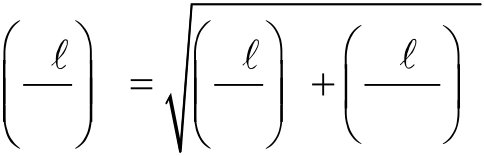
The slenderness ratios, 1.0 /r and 1.0 s/r of members as a whole or any component part shall not exceed the values given in Table 4.3-1, Part A.
Compression web members shall be those web members subject to compressive axial loads under gravity loading.
4.3.3 Tension Members: Tension web members shall be those web members subject to tension axial loads under gravity loading, and which shall be permitted to be subject to compressive axial loads under alternate loading conditions.
| modified slenderness ratio | k | shall replace | k | ||||||||||
|---|---|---|---|---|---|---|---|---|---|---|---|---|---|
| r y | m | r y |
|
k | i s |
|
(4.3-1) | ||||||
| k | k | ||||||||||||
| r | r | ||||||||||||
Where:
ki = 0.50 for angles back-to-back
American National Standard SJI 200 - 2015
TABLE 4.3-1
B. The effective slenderness ratio for CJ-Series joists, k /r, to determine Fcr where k is:
1. Two shapes with fillers or ties 0.75 0.94 --- 1.0
II. TOP CHORD END PANELS
A. The slenderness ratios, 1.0 /r and 1.0 s/r, of members as a whole or any component part shall not exceed 120.
C. For bending, the effective slenderness ratio, k /r, to determine F e where k is:
1.0 --- --- ---
1. Two shapes with fillers or ties 0.9 0.94 --- 1.0
2. Two shapes without fillers or ties --- --- 0.9 ---
A. The slenderness ratios, 1.0 /r and 1.0 s/r, of members as a whole or any component part shall not exceed
240 for a tension member or 200 for a compression member.
2. Two shapes without fillers or ties --- --- 1.0 ---
3. Single component members 0.75 0.9* --- ---
American National Standard SJI 200 - 2015
4.4 MEMBERS
made using an effective depth of the joist to determine the member forces due to construction loads. The effective depth
for a non-composite joist shall be considered the vertical distance between the centroids of the top and bottom chord
|
|
(4.4-1) |
|---|
Pu = required axial strength using LRFD load combinations, kips (N)
A = area of the top chord, in.2 (mm2)

34
e |
|||||||
|---|---|---|---|---|---|---|---|
|
|||||||
| = | 2 | E |
|
||||
| E | k /r x | ||||||
| is the length, k is the effective length factor, and rx is the corresponding radius of gyration of the | |||||||
The top chord and bottom chord shall be designed such that at each joint complies with Equation 4.4-4:
fv = shear stress = V/bt, ksi (MPa)
fvmod = modified shear stress = 12 f + f t 4v 2
The distance between the centroid of the tension bottom chord and the centroid of the concrete compression block, de, shall be computed using a concrete stress of 0.85f c and an effective concrete width, be, taken as the sum of the effective widths for each side of the joist centerline, each of which shall be the least value of the following:
a) one-eighth of the joist span, center-to-center of supports;

35
When the metal deck ribs are perpendicular to the CJ-Series joists, the concrete below the top of the metal deck shall be neglected when determining section properties and in calculating the concrete compressive stress block.
The first top chord end panel member shall be designed for the full factored load requirements as a non-composite member per Section 4.4.1.1.
| M u | (4.4-7) |
|---|
The design flexural strength of the composite section, Mn, shall be computed as the least value of the following limit states:
36
b) Tension web members controlled by (a) shall be designed for a compressive force resulting from a factored shear value of:
| V | (1.6w )L L | (4.4-12) |
|---|---|---|
| cmin | 8 |
Where:
Redundant web members in end panels shall be designed to resist the gravity loads supported by the member plus an additional load of ½ of 1.0 percent of the top chord axial force.
4.4.2.2 Single Component Web Member: In those cases where a single component web member is attached to the outside of the stem of a tee or double angle chord or any other orientation of a single web member which creates an out-of-plane moment, the web member design shall account for the stresses due to eccentricity.
at the panel point, combined axial and bending stresses shall be proportioned in accordance with Equation 4.4-1.
at the mid length, the strength shall meet Equations 4.4-2 or 4.4-3, and 4.4-13:
|
|
||||
|---|---|---|---|---|---|
| 0.5P u | chordgap | y | |||
| 2 | |||||
37
where k = 1.0
Alternate methods of design shall be permitted provided they provide strength equal to or greater than those given. Alternate design procedures shall be submitted to the Steel Joist Institute’s consulting engineer for approval.
Design criteria for CJ-Series joist extensions shall be specified using one of the following methods:
(1) A CJ-Series joist top chord extension (TCX), extended end, or full depth cantilevered end shall be designed for the load based on the design length and designation of the specified CJ-Series joist. In the absence of other design information, the joist manufacturer shall design the joist extension for this loading as a default.
Design of concrete reinforcing steel in the negative moment region shall be the responsibility of the specifying professional.

4.5.1 Methods
Member connections and splices shall be made by attaching the members to one another by arc or resistance welding or other accredited methods in accordance with the following:
User Note: The weld design length is the minimum weld length needed for the connection force and weld thickness. Portions of the actual weld length with imperfections or discontinuities such as porosity or lack of a full profile are not included when comparing the actual weld length to the weld design length.
3. One unrepaired arc strike shall be permitted per joint provided it does not result in other unacceptable defects.
User Note: Joist manufacturers use tack welds in the assembly process, and so long as they do not diminish the strength of the base metal and are not incorporated into the final weld for strength, they are not required to meet other inspection criteria.
6. The weld profile shall be considered acceptable provided neither the weld leg nor the weld throat is undersized less than AWS D1.1 limits within the weld design length.

39
c) Welded Connections for Crimped-End Angle Web Members
1) The connection of each end of a crimped angle web member to each side of the chord shall consist of a weld group made of more than a single line of weld. The design weld length shall include an end return of no less than two times the nominal weld size.
1) The agency shall arrange for visual inspection to determine that welds meet the acceptance standards of Section 4.5.1.
User Note: Ultrasonic, X-ray, and magnetic particle testing are inappropriate for joists due to the configurations of the components and welds.
4.5.3 Field Splices
Field Splices shall be designed by the manufacturer and shall be either bolted or welded. Splices shall be designed for the member force, but not less than 50 percent of the member strength.