3 chapter 3: research methodology
Meat Industry
⭳ 79 Download 📄 15 Pages / 3645 Words
1 Chapter 1: Introduction
1.1 Introduction
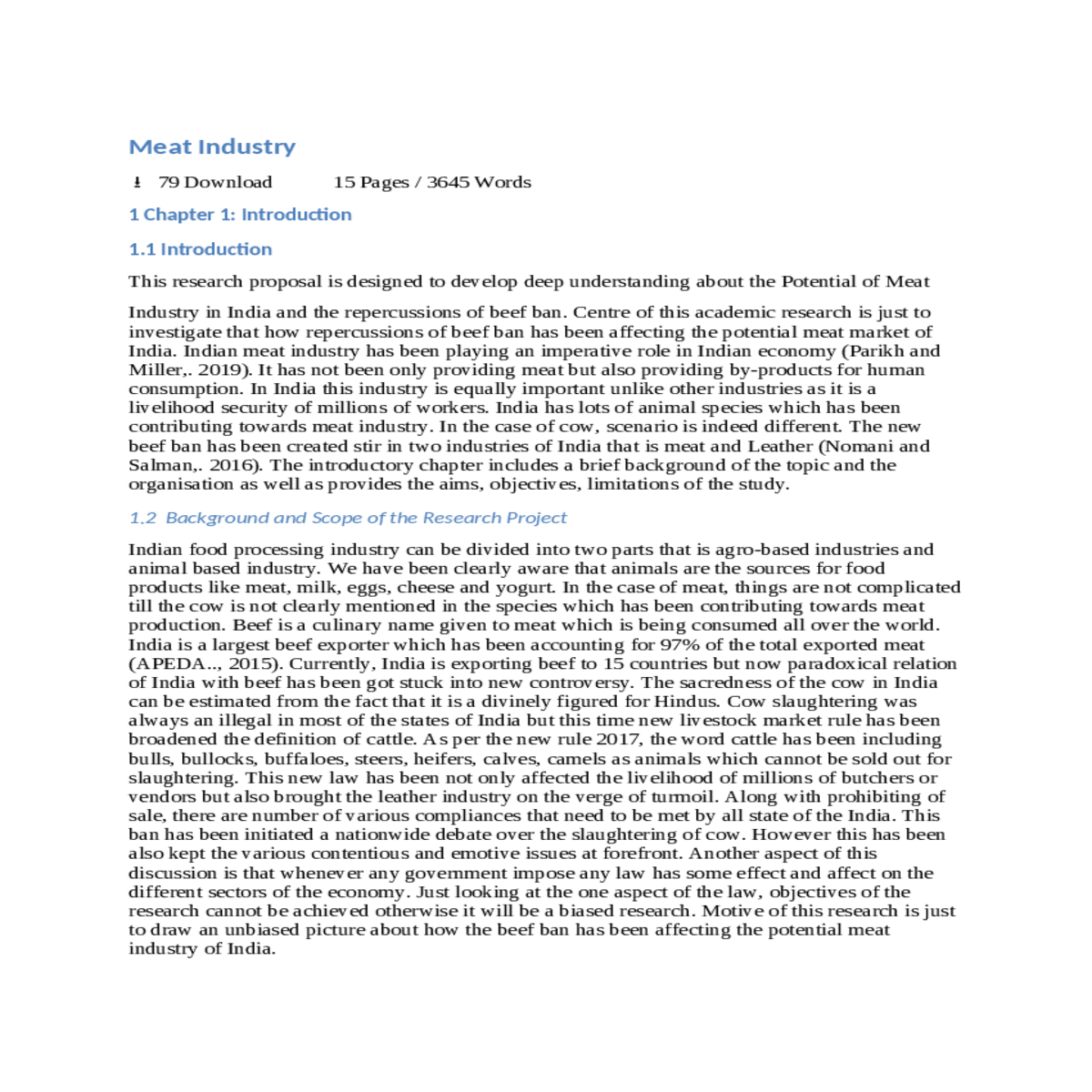
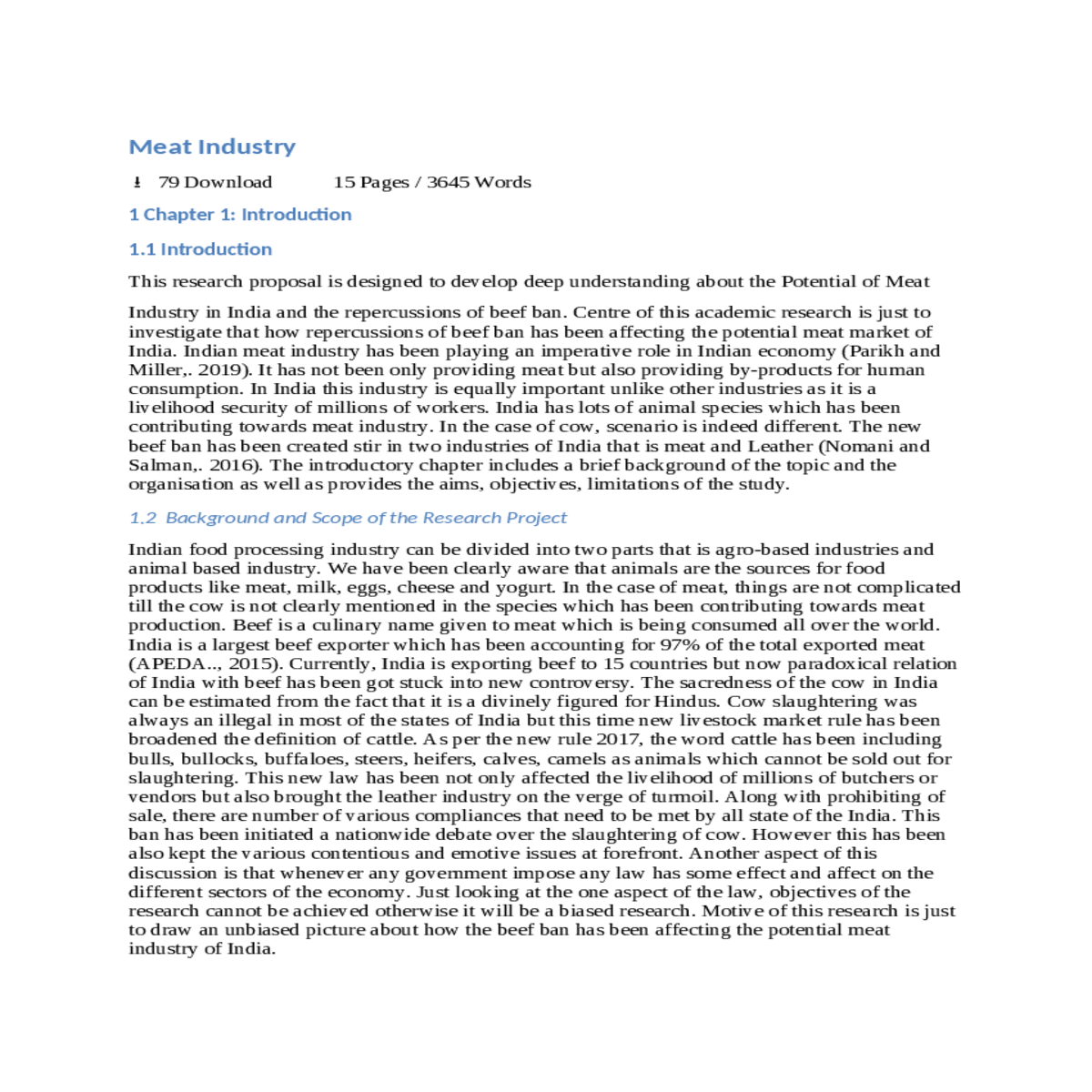
This research proposal is designed to develop deep understanding about the Potential of Meat
1.2 Background and Scope of the Research Project
1.3 Rational Of the Research
1.4 Problem Of The statement
1.5 Research Question
The primary question of the research paper is presented below:
“How the repercussions of the beef-ban have been affecting the potential meat market of India?”
1.6 Research Aim and Objectives
- To critically analyse the social, political and cultural repercussions of the beef ban in India.
- To critically analyse the impact of notification over the different sector.
- To explore the possible reasons for the notification by the ruling party
1.7 Layout of the research:
Chapter 2: In this section researcher has been summarizing the data related to research questions and objectives that already exists in the previous literature.
Chapter 3: The methodology chapter has been explaining about the methods and techniques that are to be adopted by the researcher in its research so that research work can be conducted appropriately.
2 Chapter2- Literature Review
2.1 Beef Ban In India and Possible Reason to Impose
2.2 Effect of Beef-Ban
Khan et al., (2016) has been discussed in its journal that government has been taken the initiation with a motive to modernize the supply chain of meat industry. So that whenever any quality issue pop up then back tracing can be done for the meat across the nation. However it is also fact that imposition of this act has been stuck the business of various industries like leather industry, milk industry and meat industry itself. It is a fact that not only Muslim but Christians as well as scheduled tribes have also been forced to look for alternatives (Natrajan., 2018). This is because buffalo meat has been rich source of protein which is available at cheap price as compared to others.
Another direct repercussion of beef ban is being faced by the people who have been working in the meat industry. Most of these people working in this industry has been belonging to minority or backward classes. Farmers, workers, retailers, middleman are the just few example of same. Following figure has been showing the meat value chain of buffalo.
2.3 Effect Of Ban on Industry
2.4 Literature Gap
There have been various researches conducted in relation to repercussion of beef ban in the potential meat market of India. Still there have been very few studies which are including every facts and figures that are related to topic. The traditional reviews were based on the single factor that present government has been making efforts just to protect religious sentiments of majority section rather than protecting the breed. Most of the studies have been presenting the one aspect of the law. That is what the aftermaths of this ban are? No one has been discussing about the facts that why this ban has been imposed and what are the intentions behind the implementation?. Therefore in this study will try its best to make deep investigation about the repercussion of beef ban and will try to draw clear and unbiased picture about the economic and social impact of the bills.
3 Chapter 3: Research Methodology
3.1 Research Design and Approach:
Exploratory research design is the type of research design which has been adopted by the researcher in these papers. This type of research design will assist the researcher in exploring the research topic related to the potential of meat industry in India and the repercussions of beef ban and the research paper will not give any conclusive or final answers to the research questions. Therefore the users will take advantage of the opportunity to utilize the concerned study for deep exploration about the effects of beef ban over the Indian meat industry (Morgan, 2013).
3.2 Research Method
3.3 Data Collection and Analysis
3.4 Research Ethics
3.5 Time-line
| Activities in the research process | June | July | Aug | Sept | Oct | Nov | Dec |
| Identification of aims and objectives | |||||||
| Investigating the gaps in the exiting literature work | |||||||
| Designing and structuring the research | |||||||
| Introduction Chapter of the research | |||||||
| Conducting the literature review | |||||||
| Collection of primary data (questionnaire survey) | |||||||
| Collection of secondary data (secondary sources) | |||||||
| Analysis and Interpretation |
4 Conclusion
From above it can be concluded that mixed method od approach has been adopted by the researcher in order to measure and evaluate the effect of beef ban over the potential meat industry of India. The current study will help us understand the potential that lies within the sector and how adequate government policies and a positive outlook towards the industry can help it grow and provide the boost that the current Indian Economy requires.
The study will also highlight the factors that led to the implication of the beef ban and how it not only affects the country on socio-cultural grounds but also the economic front. How some policies by the government can lead to a bias against some minorities and harm their right to equality leading to feelings of suppression and mutual hate.
5. References
Sharma, N., 2020. Government Dilutes Rules On Cattle Sale In Animal Market. [online] The Economic Times. Available at: <https://economictimes.indiatimes.com/news/politics-and-nation/government-dilutes-rules-on-cattle-sale-in-animal-market/articleshow/63690408.cms> [Accessed 18 June 2020].
Banerjee, P., 2020. Meat Of The Matter: How Beef Ban Affects Leather, Exports And Chemical Industry. [online] Hindustan Times. Available at: <https://www.hindustantimes.com/india/meat-of-the-matter-how-beef-ban-affects-leather-exports-and-chemical-industry/story-q6qLCPfV2hpijG0xSHQNGJ.html> [Accessed 18 June 2020].
Sunder, J., 2019. Religious Beef: Dalit Literature, Bare Life, and Cow Protection in India. Interventions, 21(3), pp.337-353.
Mahendra, S.K., 2016. Ban on beef and the politics of food: An intercultural analysis. New Life Theological Journal, 6(1), pp.84-94.
Natrajan, B., 2018. Cultural identity and beef festivals: toward a ‘multiculturalism against caste’. Contemporary South Asia, 26(3), pp.287-304.
Ahuja, J. and Prakash, P., 2017. Cow Vigilantism in India: Modi’s Dilemma or Legacy?.
Resources
- 24 x 7 Availability.
- Trained and Certified Experts.
- Deadline Guaranteed.
- Plagiarism Free.
- Privacy Guaranteed.
- Free download.
- Online help for all project.
- Homework Help Services