The importance of advocacy
Advocacy in Community Services
Reference: CHCDIS003_AT1_V1
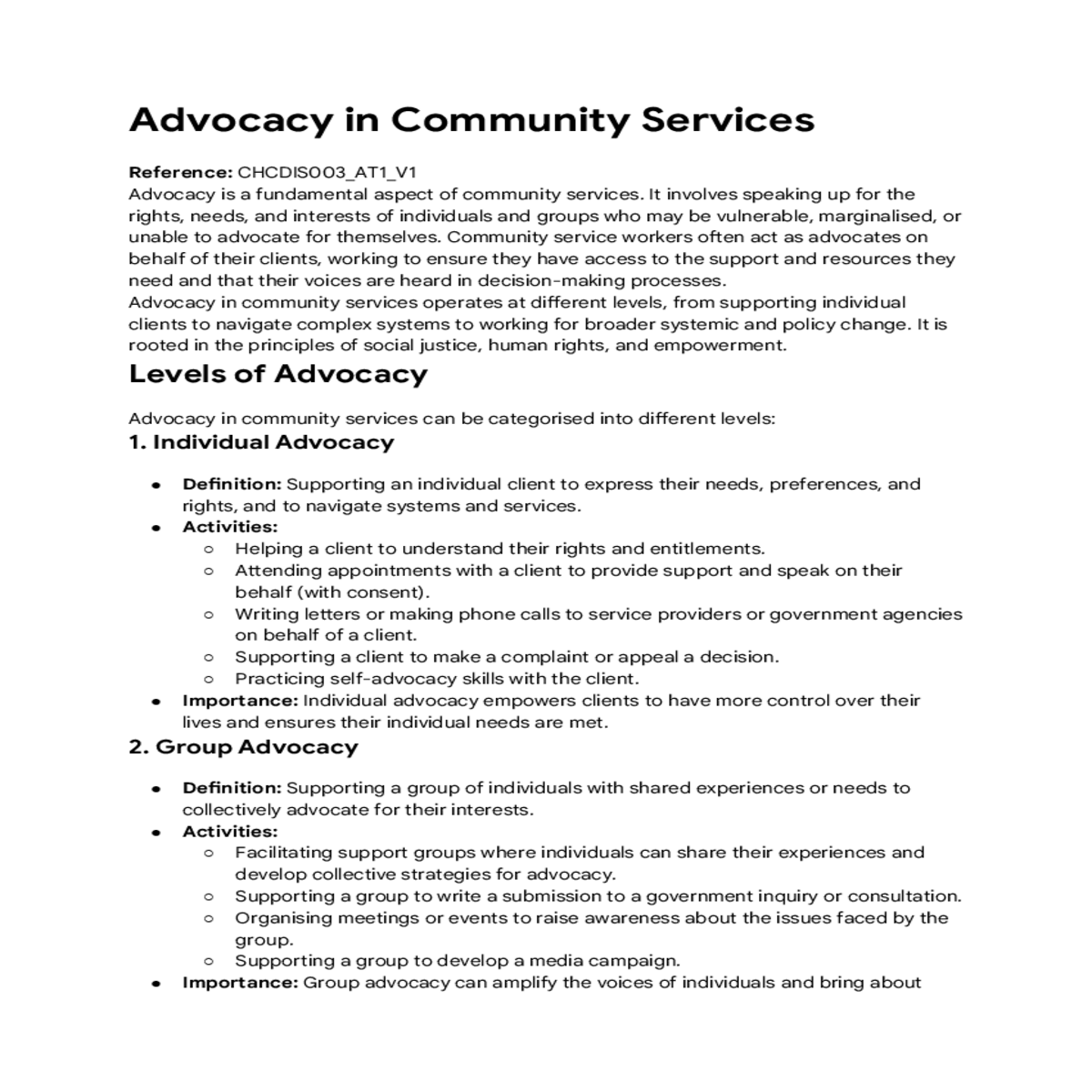
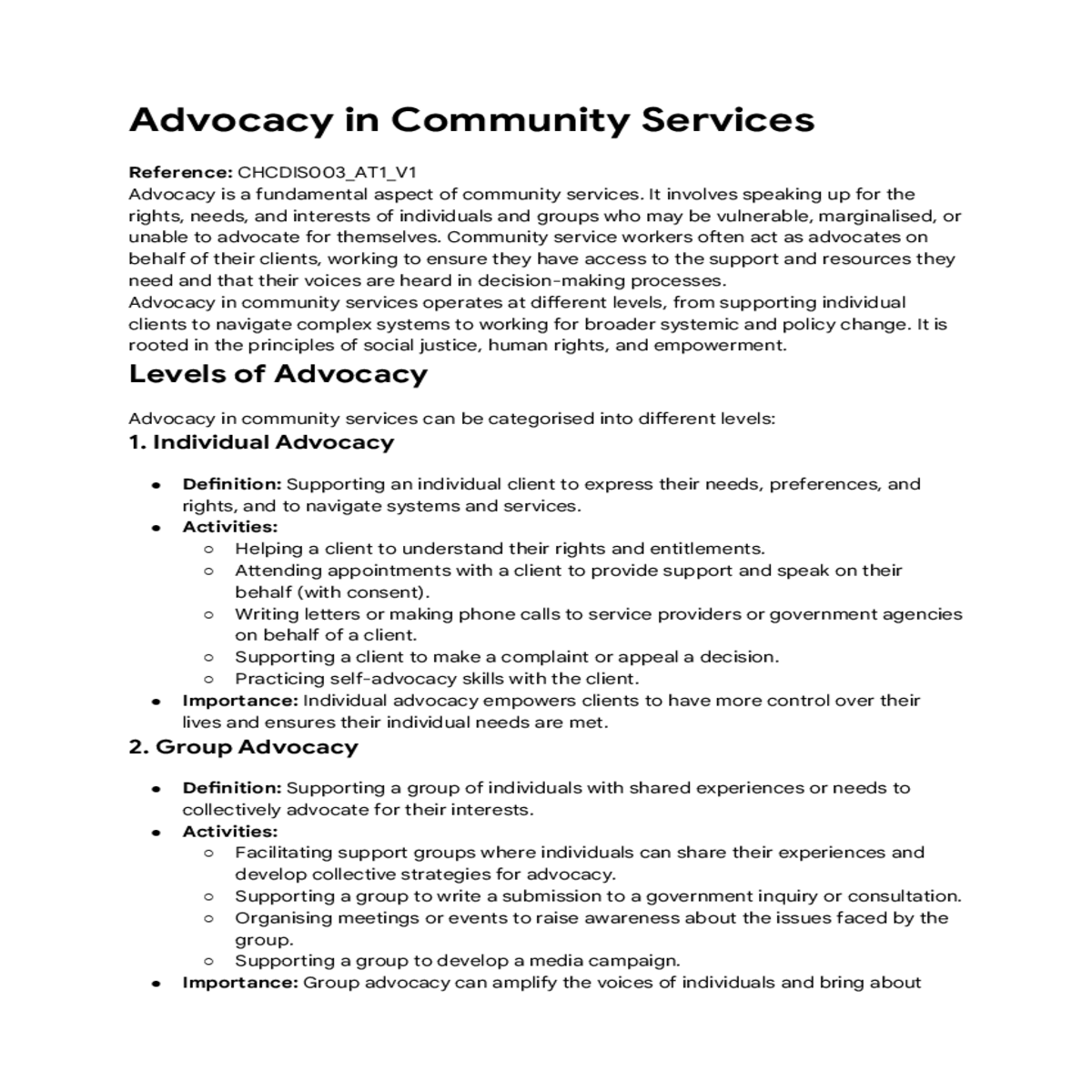
Advocacy is a fundamental aspect of community services. It involves speaking up for the rights, needs, and interests of individuals and groups who may be vulnerable, marginalised, or unable to advocate for themselves. Community service workers often act as advocates on behalf of their clients, working to ensure they have access to the support and resources they need and that their voices are heard in decision-making processes.
Levels of Advocacy
1. Individual Advocacy
Helping a client to understand their rights and entitlements.
Attending appointments with a client to provide support and speak on their behalf (with consent).
2. Group Advocacy
Definition: Supporting a group of individuals with shared experiences or needs to collectively advocate for their interests.
Activities:
Importance: Group advocacy can amplify the voices of individuals and bring about change on issues that affect a larger number of people.
3. Systemic Advocacy
Definition: Working to bring about changes to policies, procedures, and practices within organisations or systems that create barriers or disadvantage for clients.
Contributing to internal reviews or evaluations of services.
Importance: Systemic advocacy addresses the root causes of disadvantage and can have a widespread positive impact on many individuals.
4. Policy Advocacy
Meeting with politicians or their advisors.
Participating in campaigns for policy reform.
Principles of Advocacy
Empowerment-Focused: Advocacy should aim to empower individuals and groups to advocate for themselves in the future.
Respectful: Advocacy should be conducted in a respectful manner, even when challenging systems or individuals.
The Role of the Community Service Worker as Advocate
Community service workers are often in a unique position to act as advocates due to their close relationships with clients and their understanding of the challenges they face. Their role as advocate involves:
Identifying Advocacy Needs: Recognising when a client or group needs advocacy support.
Evaluating the Outcome: Assessing the effectiveness of the advocacy effort and adjusting the approach as needed.
Supporting Self-Advocacy: Empowering clients to develop their own advocacy skills.
Challenges in Advocacy
Burnout: The emotional demands of advocacy can lead to burnout.
Retaliation: Advocates may face negative consequences for speaking out.
The Importance of Advocacy
Improving Access to Services: Removing barriers that prevent people from accessing the support they need.
Promoting Social Justice: Working towards a more equitable distribution of resources and opportunities.
Conclusion
This document has defined advocacy in community services, explored its different levels, outlined key principles, described the role of the community service worker as advocate, discussed common challenges, and highlighted the importance of advocacy. A commitment to advocacy is essential for all those working to make a difference in the lives of others.
Reference: CHCDIS003_AT1_V1